
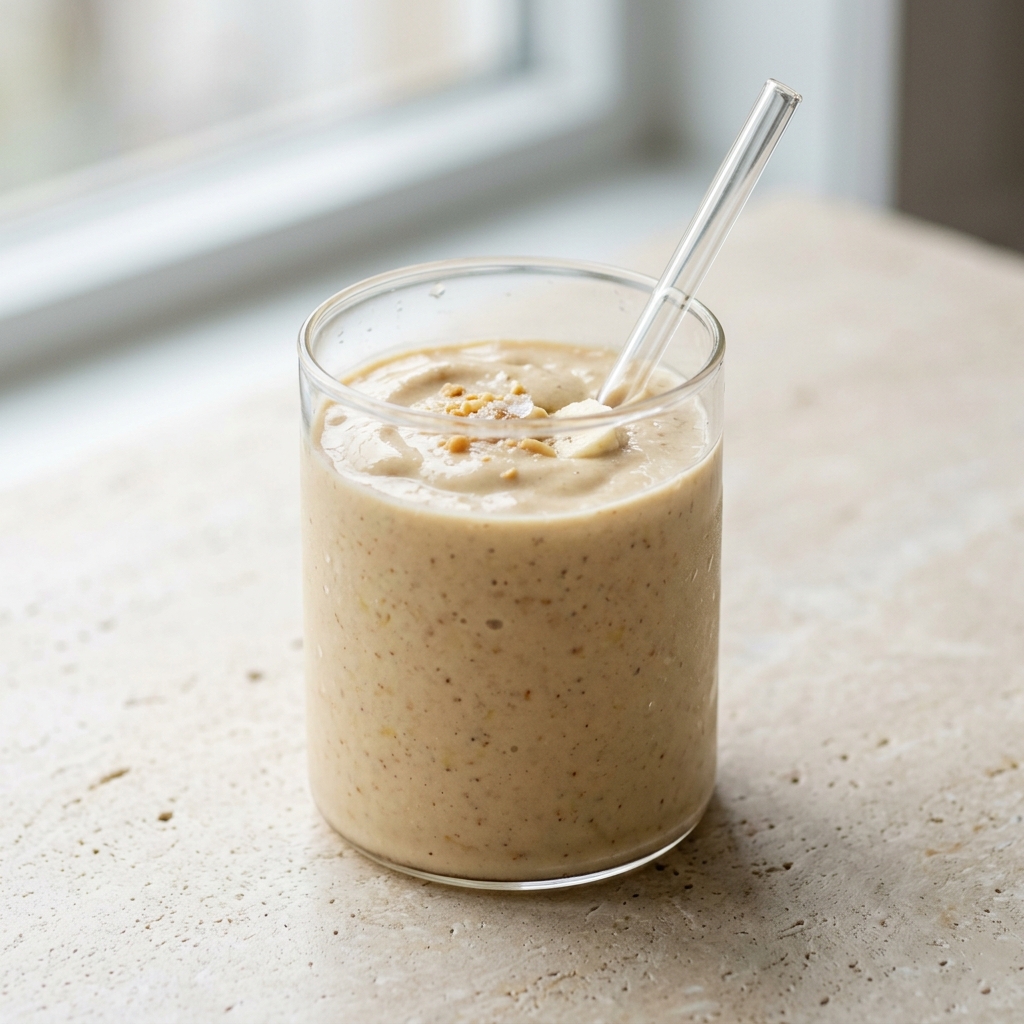
A banana peanut butter smoothie should taste cold, creamy, and a little milkshake-like without becoming heavy. This version uses frozen banana for body, natural peanut butter for roasted richness, and a small amount of Greek yogurt and oats to make it more filling without turning it gritty.
Watch the Method
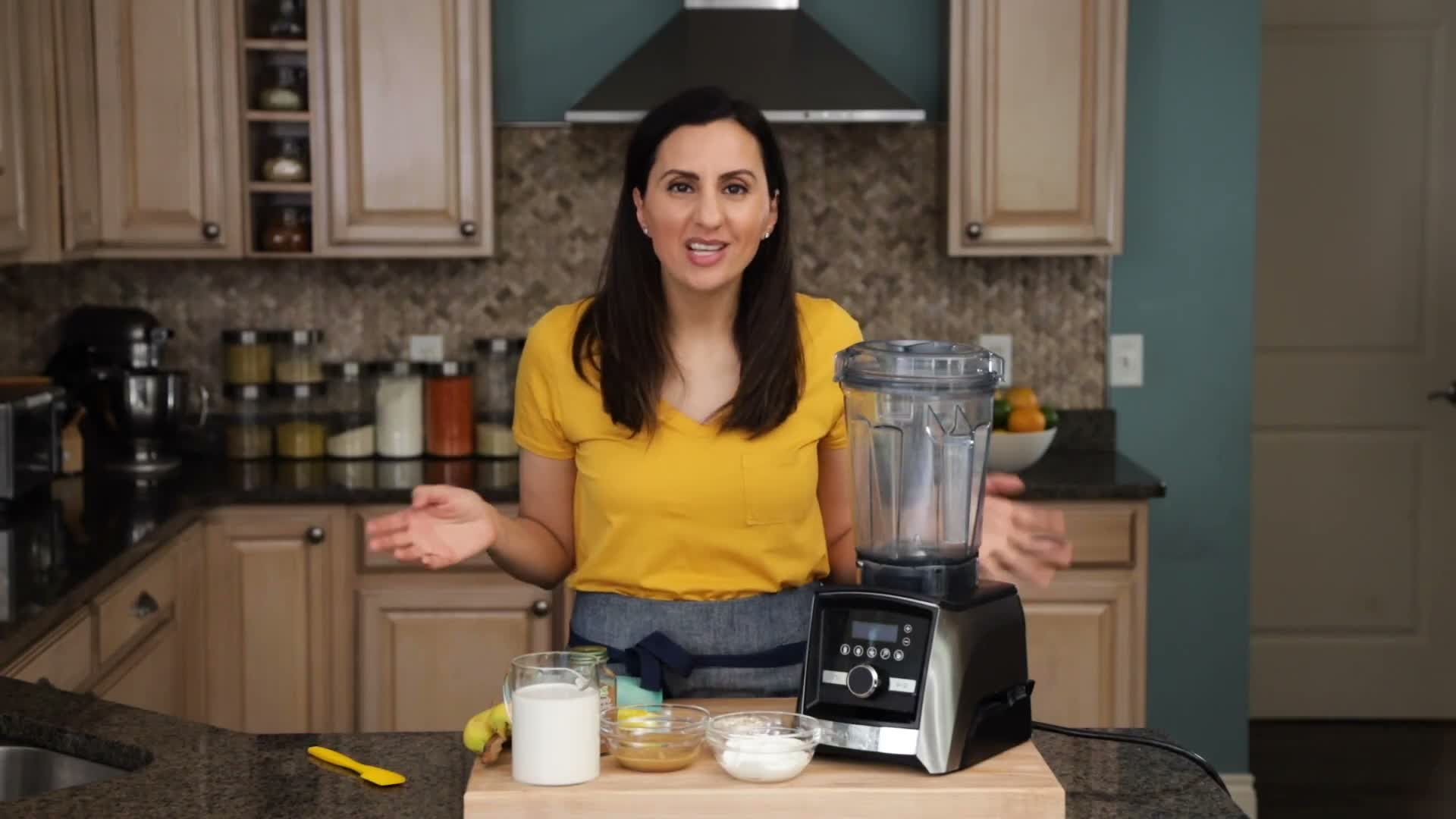
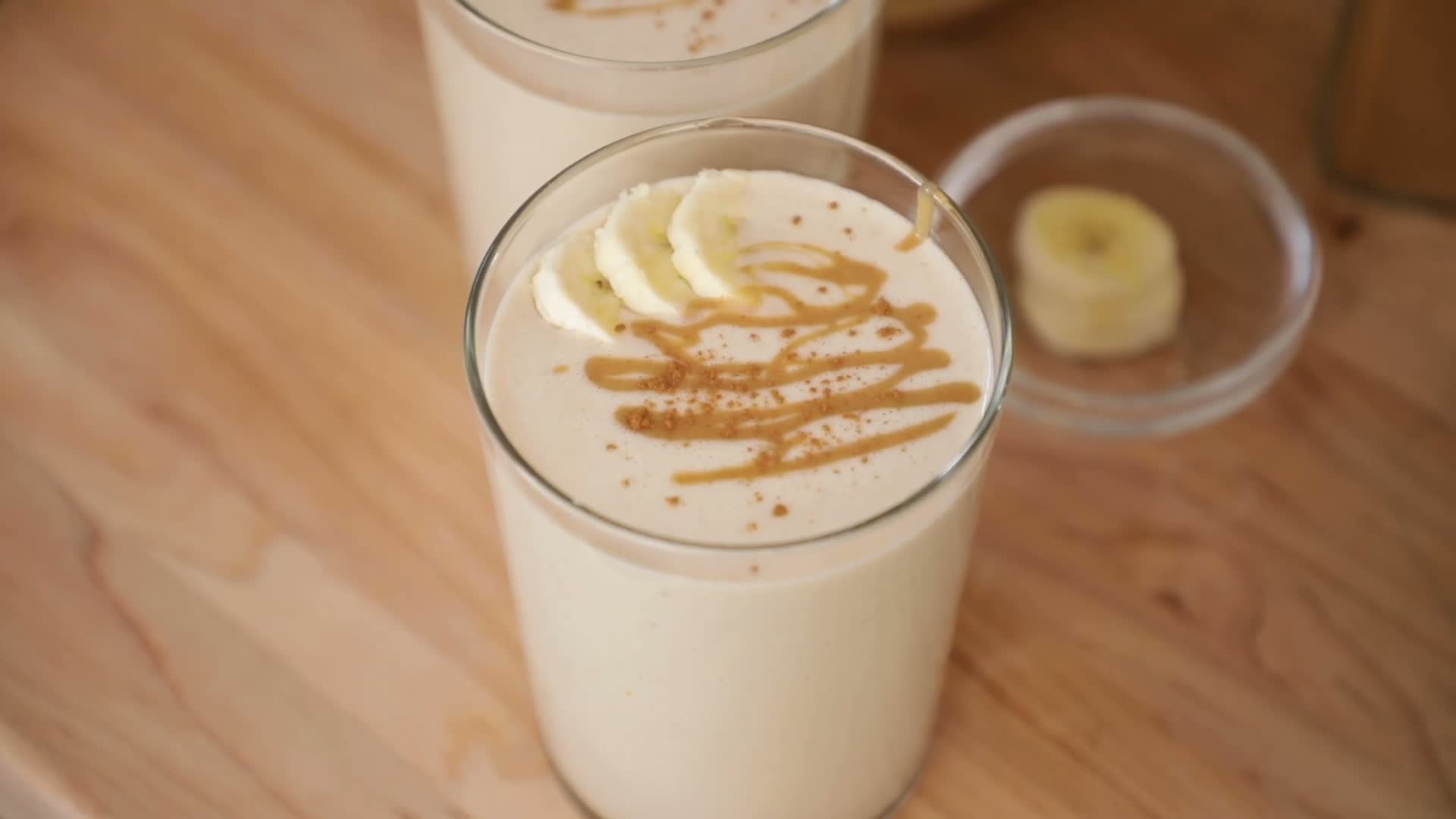
Use the video as a quick texture check before you blend. The goal is simple: the smoothie should look thick and pale, pour slowly, and hold a soft swirl on top. If it runs like milk, add more frozen banana or oats before serving.
Banana Peanut Butter Smoothie
Ingredients
- 1 ripe frozen banana
- 2 tablespoons natural peanut butter
- 1/4 cup Greek yogurt
- 1/4 cup rolled oats
- 1/2 cup almond milk
- Pinch of cinnamon
Instructions
Add the frozen banana, peanut butter, Greek yogurt, rolled oats, almond milk, and cinnamon to a blender.
Blend on high until the oats are fully broken down and the smoothie is completely creamy.
Pour into a glass and serve immediately while cold.
Visual Texture Cues
The most useful visual cue is not a complicated step sequence; it is the thickness of the finished drink. The blender setup should look simple and uncluttered, and the final smoothie should be creamy enough to support a peanut butter drizzle without sinking immediately.
 Support Non-AI Creator
 Support Non-AI Creator
Why Frozen Banana and Oats Work
Frozen banana is the main texture builder because it blends into a cold, creamy base without ice. Rolled oats work as a quiet thickener: they absorb some liquid, help the drink feel more filling, and keep the smoothie from separating too quickly after blending.
Ingredient Functions & Swaps
Every ingredient in this blend serves a specific purpose, so small swaps should protect the texture first. Almond milk provides the blending liquid, banana and oats create body, Greek yogurt adds creaminess and protein, and peanut butter brings roasted flavor, fat, and mouthfeel.
If you cannot consume peanut butter, almond butter or sunflower seed butter will provide the same structural fat and richness. If you are out of Greek yogurt, you can skip it and add an extra splash of milk, though the result will be less creamy. For those exploring other bases, the oat base in a blueberry oat smoothie or the earthy profile of a banana matcha smoothie are excellent alternatives.
Troubleshooting & Adjustments
Because blenders vary in power and bananas vary in size, the same recipe can turn out too thick, thin, bland, or slightly gritty. Use this table to adjust the texture in small steps instead of adding a large splash of milk and losing the creamy peanut butter flavor.
| The Issue | The Fix | Why It Works |
|---|---|---|
| Too thick to blend | Add 2 tablespoons of almond milk at a time. | Provides just enough liquid for the blade to catch the frozen fruit and oats. |
| Watery or thin | Add 1 extra tablespoon of rolled oats. | Reintroduces bulk and soluble fiber to tighten the liquid structure. |
| Bland flavor | Add a pinch of salt and extra cinnamon. | Salt enhances the roasted notes of the peanut butter. |
| Gritty texture | Blend for an additional 30 seconds on high. | Allows the blade to fully break down the rolled oats. |
Make-Ahead and Storage Guidance
This smoothie is best consumed immediately while the frozen emulsion is stable. If you must store it, keep it in an airtight glass jar in the refrigerator for up to 24 hours. The rolled oats will continue to absorb liquid, making it much thicker the next day, so you may need to stir in a splash of milk.
Nutrition Notes
Bananas and peanut butter provide carbohydrates and fats, while Greek yogurt adds a meaningful protein boost compared with a fruit-only smoothie. The exact numbers depend on your yogurt, milk, and peanut butter brand, so treat this as a filling smoothie template rather than a fixed nutrition label.
For reference, the USDA FoodData Central profile for bananas shows that one medium fruit contains approximately 27 grams of carbohydrates. The USDA profile for peanut butter confirms that two tablespoons offer about 16 grams of fat and 7 grams of protein, and Greek yogurt contributes protein and calcium.
If you are looking to modify the macronutrient profile further, you might enjoy adding extra fruit in a banana blueberry smoothie or incorporating cocoa for a richer banana chocolate pistachio smoothie.
Frequently Asked Questions
Can I use fresh banana instead of frozen?
You can use fresh banana, but the smoothie will be significantly thinner and closer to room temperature. Add a small handful of ice to chill it, though this will slightly dilute the peanut butter flavor as it melts.
What is the best type of peanut butter to use?
Creamy, natural peanut butter made with only peanuts and salt blends best and provides the strongest roasted peanut flavor without adding unnecessary oils or refined sugars to your drink.
How long does this smoothie last in the fridge?
It is best consumed immediately for the thickest texture. However, you can store it in an airtight container for up to 24 hours. The mixture may separate slightly, so shake it well before drinking.
Do I need to cook the oats first?
No, rolled oats blend into the smoothie while raw. The almond milk and yogurt soften them as they puree, and blending long enough is more important than cooking them first.
Bottom Line
This banana peanut butter smoothie is a straightforward, satisfying drink that relies on frozen fruit, rolled oats, and Greek yogurt for its thick, milkshake-like texture. By understanding the role of each ingredient, you can easily adjust the consistency to fit your exact preferences.