
Epsom salt baths have been around long enough to collect a lot of internet folklore. They are often described as detox shortcuts or guaranteed magnesium boosters, but that version overreaches.
The more honest version is still useful. An epsom salt bath can be a warm, calming, low-cost ritual that helps tired feet feel better, rough skin feel softer, and evenings feel less rushed. Current research does not strongly prove meaningful magnesium absorption through the skin, but that does not stop the routine itself from being worthwhile.
What Is Epsom Salt?
Epsom salt is magnesium sulfate. It is not table salt, and it is not a detox ingredient with proven body-cleansing powers. It is a long-used compound that shows up in bath routines, foot soaks, and some OTC products.
There is still no robust, high-quality proof that soaking in epsom salt reliably boosts systemic magnesium in a clinically meaningful way. A small 2017 pilot study found only mixed signals, and a 2023 open-label pilot looked at a different transdermal setting, not epsom salt baths themselves.
Current U.S. OTC labeling still lists magnesium sulfate as a saline laxative for oral use and a soaking aid for minor sprains and bruises for external use on products such as the DailyMed entry. That is real, but it is different from claiming bathwater detoxes the body.
Key idea
Epsom salt baths may not be a proven magnesium fix, but they can still be a warm, soothing bath ritual for relaxation, tired feet, and practical self-care.
15 Epsom Salt Bath Benefits
Here are the benefits that make the most sense in real life. The strongest ones are usually about warm water, routine, and comfort rather than detox promises.
Can turn a basic bath into a real wind-down ritual.
Sometimes the biggest benefit is not biochemical at all. Epsom salt can make an ordinary bath feel more intentional, which makes people more likely to actually slow down and take one.
Warm water can feel soothing after long days.
If you spend a lot of time sitting, standing, traveling, or carrying tension through your shoulders and lower body, a warm soak can feel genuinely comforting.
May be helpful after exercise because the bath itself is relaxing.
Warm-water immersion has been studied for recovery comfort, although that does not prove the salt itself is doing the heavy lifting. The routine can still feel useful after training or long walks.
Can make a foot soak feel more rewarding.
Tired feet are one of the most practical reasons people reach for epsom salt. A warm foot soak is simple, low-effort, and easy to repeat after a long day.
Can help rough skin feel softer temporarily.
A bath or foot soak can soften rough-feeling areas before gentle exfoliation or moisturizer, especially around heels, ankles, and dry patches.
Creates a screen-free pause.
A soak gives you a built-in reason to step away from notifications, errands, and background noise for fifteen quiet minutes.
Can support a bedtime routine.
Many people use baths as part of an evening reset. The warm water, dim lighting, and predictable rhythm can help the whole night feel calmer.
Makes at-home self-care feel more spa-like.
Even when the main benefit is ritual, that still matters. If epsom salt makes your bath feel less rushed and more restorative, that can improve how often you keep the habit.
Pairs well with gentle stretching or breathwork.
A warm soak before or after light mobility work can make a simple recovery routine feel easier to keep, especially on high-stress weeks.
Can be a low-cost self-care habit.
Compared with more complicated recovery or relaxation products, epsom salt is one of the cheaper rituals to keep on hand.
Useful for cold, rainy, or stress-heavy days.
This is where epsom salt baths shine in real life. The combination of warmth and ritual can feel grounding when you want comfort more than hype.
Can encourage better foot care habits.
If a foot soak makes you more likely to trim nails carefully, moisturize cracked heels, or pay attention to irritation early, that is a practical benefit.
May offer short-term comfort for minor soreness.
The recognized external use of magnesium sulfate includes soaking aid language for minor sprains and bruises on OTC labeling, which is more grounded than broad detox promises.
Can make recovery feel more enjoyable.
A routine you enjoy is easier to repeat. If a plain bath feels boring but an epsom salt soak feels rewarding, that difference matters for consistency.
Lets you keep the ritual without pretending it is magic.
You do not need to oversell epsom salt for it to be worth using. Relaxation, warmth, tired-feet comfort, and a better evening routine are already enough.
How to Take an Epsom Salt Bath
The best routine is simple, warm, and easy to repeat. Warm-water immersion itself can support recovery comfort, which is part of why it helps to keep the routine realistic and pleasant. One older warm-water recovery study supports that broader point.
Use warm, not scalding hot, water so the bath stays comfortable and does not leave you overheated.
Add 1 to 2 cups of epsom salt to a standard tub and let it dissolve as the bath fills.
Soak for about 12 to 20 minutes rather than turning it into a very long bath.
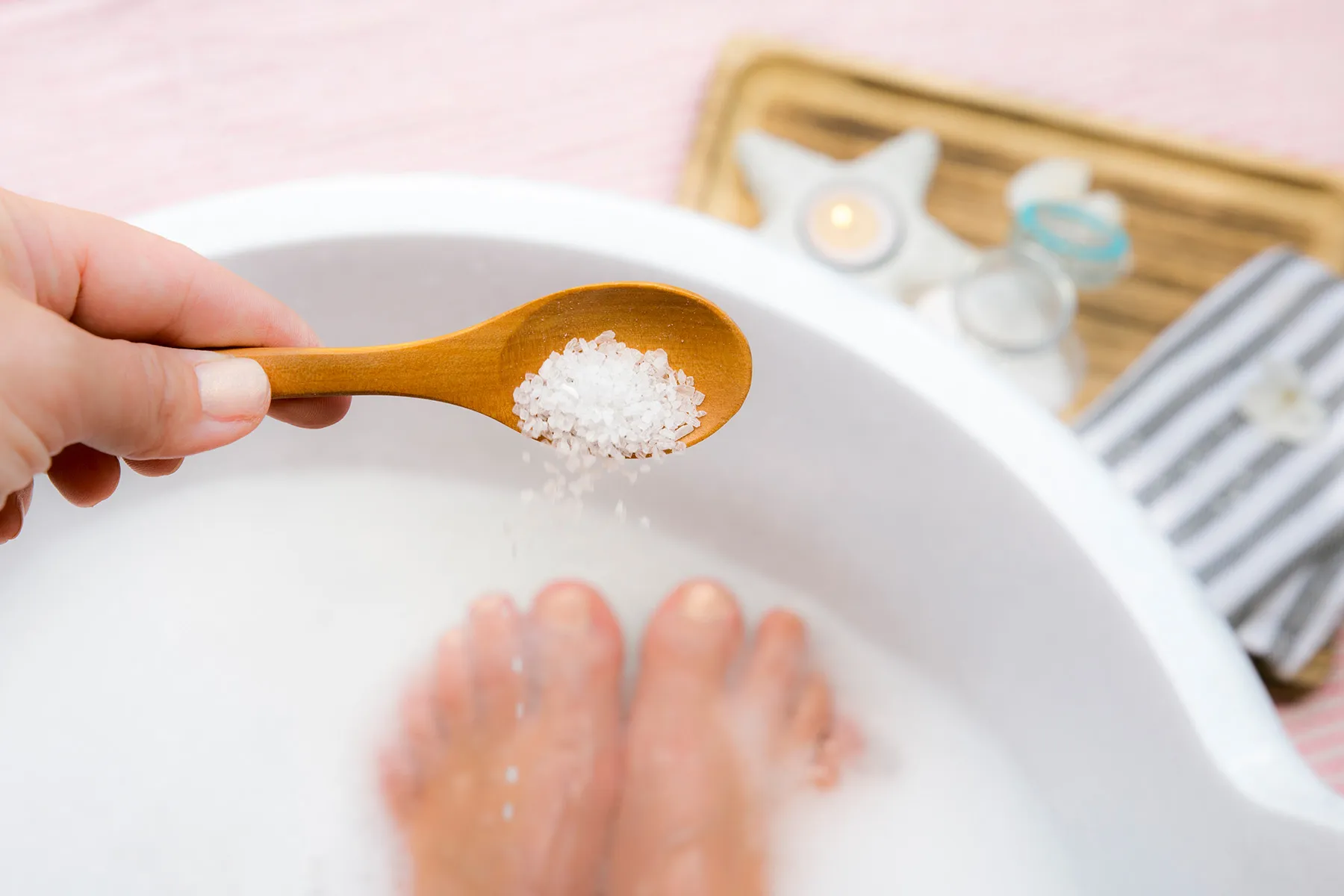
For a foot soak, use about 1/2 cup in a basin of comfortably warm water.
Drink some water afterward if you tend to feel warm or lightheaded after baths.
Follow with moisturizer if your skin tends to dry out after soaking.
Heads up
There is no strong evidence that epsom salt baths detox your body. Johns Hopkins notes that your liver and kidneys already handle detoxification.
Who Should Be Careful With Epsom Salt Baths?
People with broken or badly irritated skin: a soak may sting or make irritation feel worse.
People who get dizzy with hot baths: keep the water warm, not overly hot, and get out early if needed.
People with sensitive or very dry skin: reduce soak frequency and moisturize afterward.
People who are pregnant or managing a medical condition: check with a clinician before making it a routine.
Anyone thinking of drinking epsom salt casually: do not do that unless you are using an oral product exactly as directed.
Frequently Asked Questions
How much epsom salt should I add to my bath?
How long should I soak in an epsom salt bath?
How often can I take an epsom salt bath?
Can epsom salt baths really raise magnesium levels?
Are epsom salt baths safe during pregnancy?
Do epsom salt baths detox your body?
Can I drink epsom salt?
The Bottom Line
Epsom salt baths do not need miracle claims to earn a place in your routine. Warm water, a calmer evening rhythm, softer-feeling skin, and tired-feet comfort are already good reasons to keep them around.
You can enjoy the ritual without pretending it is magic. That is the more credible, more useful version of the story.