

Lemon water has become one of those wellness habits that gets loaded with promises. Depending on what you read, it can supposedly detox your body, alkalize your blood, erase bloating, melt fat, and transform your skin before breakfast. That is a lot to ask from water and citrus.
The more honest version is still useful. Lemon water can help if it makes plain water easier to drink, helps you swap out sugary beverages, or adds a little vitamin C and routine to your day. It is just better to talk about it as a practical habit instead of a miracle health hack.
What Is Lemon Water and What Does It Do?
Lemon water is exactly what it sounds like: water with fresh lemon juice or lemon slices added to it. Its value usually comes from convenience, taste, and the fact that it can make hydration feel a little more intentional.
Nutritionally, lemon water is not the same as eating whole fruit, and it is not a high-dose supplement. It does add some vitamin C, and the NIH Office of Dietary Supplements has a useful vitamin C fact sheet (Source: NIH).
It is also worth saying what lemon water does not do. There is no good reason to think it detoxes the body, and your blood pH is tightly regulated whether you drink citrus water or not. Mayo Clinic has a simple explainer on weak alkaline-diet claims in Mayo Clinic's alkaline diet explainer (Source: Mayo Clinic).
Key idea
Lemon water works best as a low-effort wellness habit. Think hydration, taste, and routine, not detox, fat-burning, or body-pH magic.
Hydration Profile Comparison Matrix
| Beverage | Vitamin C Content | Sugar Content | Primary Benefit |
|---|---|---|---|
| Lemon Water | Low/Moderate (Fresh Juice) | None | Hydration + Vitamin C |
| Plain Water | None | None | Pure Hydration |
| Orange Juice | High | High (Fructose) | High Antioxidants |
| Black Coffee | None | None | Caffeine / Alertness |
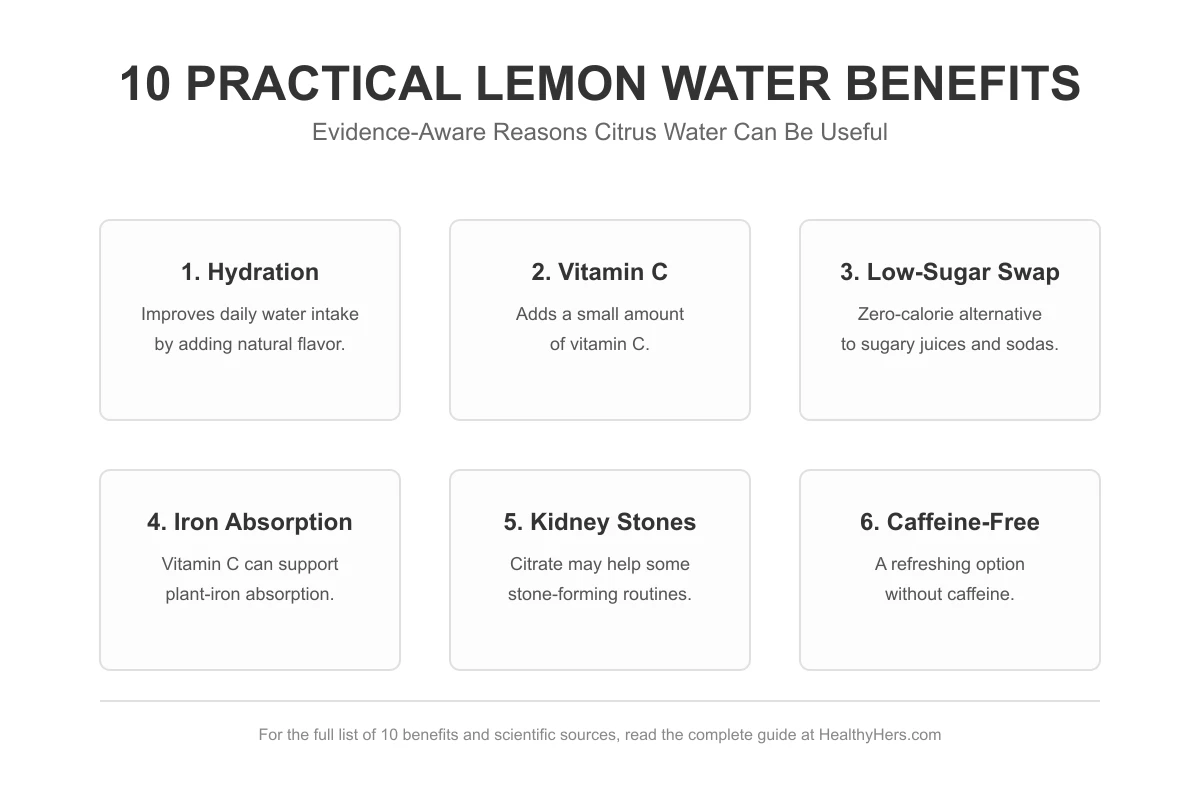
10 Practical Lemon Water Benefits
Here are 10 benefits that make sense in real life. We evaluated these claims based on nutritional science, behavioral psychology, and practical hydration benefits.
Can Make Plain Water More Appealing
What it does: By making plain water taste brighter, lemon can act as a sensory cue that helps some people drink fluids more consistently. The benefit is hydration support, not a special property that makes lemon water superior to water.
Adds Essential Vitamin C
What it does: The juice of half a lemon provides about 9mg of vitamin C. While not a megadose, it can contribute a small amount of vitamin C to the day, especially if lemon water replaces a less helpful drink.
Can Be a Lower-Sugar Swap for Juice or Soda
What it does: Substituting lemon water for sugary juice can lower the sugar and calorie load of your morning routine. The benefit usually comes from the swap itself, especially if it replaces a high-sugar beverage.
Helps Build a Consistent Hydration Habit
What it does: Establishing a morning ritual of drinking warm lemon water leverages behavioral habit-looping. The distinctive smell and taste act as an anchor, making it psychologically easier to maintain a lifelong hydration routine.

Enhances Plant-Based Iron Absorption
What it does: The ascorbic acid in lemon juice can improve absorption of non-heme iron from plant foods like spinach and lentils. The effect is most relevant when lemon juice is used with iron-containing meals, not when it is sipped alone.
May Increase Urinary Citrate to Prevent Stones
What it does: Lemon juice contains citrate, which is why lemonade-style therapy has been studied for some calcium oxalate stone-formers. That does not mean a casual squeeze of lemon reliably prevents kidney stones for everyone.
May Lower Glycemic Response of Starchy Meals
What it does: The acidity of lemon juice can slightly delay gastric emptying. When consumed alongside a heavy, starchy meal, this slowed digestion leads to a more gradual release of glucose into the bloodstream, moderating blood sugar spikes.
Works Thermostatically (Warm or Cold)
What it does: Lemon water works warm or cold because the main value is still hydration and a small amount of citrus flavor. Choose the temperature that helps you drink it consistently instead of assuming one version has special metabolic effects.

Freshens Flavor Without Caffeine
What it does: Lemon water provides an immediate refreshing stimulus without interacting with adenosine receptors in the brain. This makes it an ideal mid-afternoon pick-me-up that won't disrupt your circadian rhythm or cause insomnia.
Acts as a Psychological Reset
What it does: The clean, astringent profile of citrus naturally acts as a palate cleanser and psychological reset. It breaks the craving cycle for highly palatable, processed foods by satisfying the desire for flavor without calories.
How to Drink Lemon Water Without Overdoing It
The best lemon water routine is simple enough to repeat and gentle enough for your teeth and stomach.
Start with a small amount of lemon, such as a squeeze from a wedge into a glass of water.
Use cold or warm water based on preference. Warm water is fine, but it is not more detoxifying.
Drink it with a meal or in a shorter sitting if acid tends to bother your stomach or teeth.
Do not sip it for hours. Long acid exposure is harder on enamel than drinking it and moving on.
Rinse with plain water afterward if your mouth feels acidic.
Heads up
Lemon water is acidic. If you have reflux, mouth ulcers, or sensitive teeth, you may do better with less lemon, less frequent use, or plain water instead.
Who Should Be Careful With Lemon Water?
People with reflux or frequent heartburn: citrus can be a trigger.
People with sensitive teeth or enamel erosion: acidic drinks can make that worse over time.
People with mouth ulcers or irritated gums: lemon juice can sting.
People using it for kidney stones: get individualized advice if stone prevention is the goal.
Frequently Asked Questions
Is lemon water actually better than plain water?
Not automatically. Hydration still comes from the water. Lemon water is helpful when the taste makes it easier for you to drink enough fluids consistently.
Does lemon water give you a lot of vitamin C?
It adds some, but usually not a huge amount unless you use a generous squeeze of lemon juice.
Can lemon water help with kidney stones?
Possibly for some people, because lemon juice contains citrate. Older studies on lemonade therapy found higher urinary citrate in some stone-formers, but that does not mean a casual squeeze of lemon prevents stones for everyone.
Does lemon water detox your body?
No strong evidence supports that claim. Your liver and kidneys already handle detoxification. Lemon water can be a refreshing drink, but it is not a detox treatment.
Does lemon water help with weight loss?
Not in a magic way. It can be useful if it helps you replace sugary drinks or stick with a lower-calorie routine, but lemon water itself does not burn fat.
Can lemon water damage your teeth?
Frequent exposure to acidic drinks can contribute to dental erosion over time. If you drink lemon water often, try a straw, avoid sipping it for hours, and rinse with plain water afterward.
The Bottom Line
Lemon water is worth keeping if it helps you drink more water, enjoy a lower-sugar routine, or make healthy habits easier to repeat. Those are real benefits.
What it is not is a detox shortcut, a fat-burning trick, or a substitute for a balanced diet. The simplest framing is the most useful: it is water first, lemon second, and hype a distant third.