

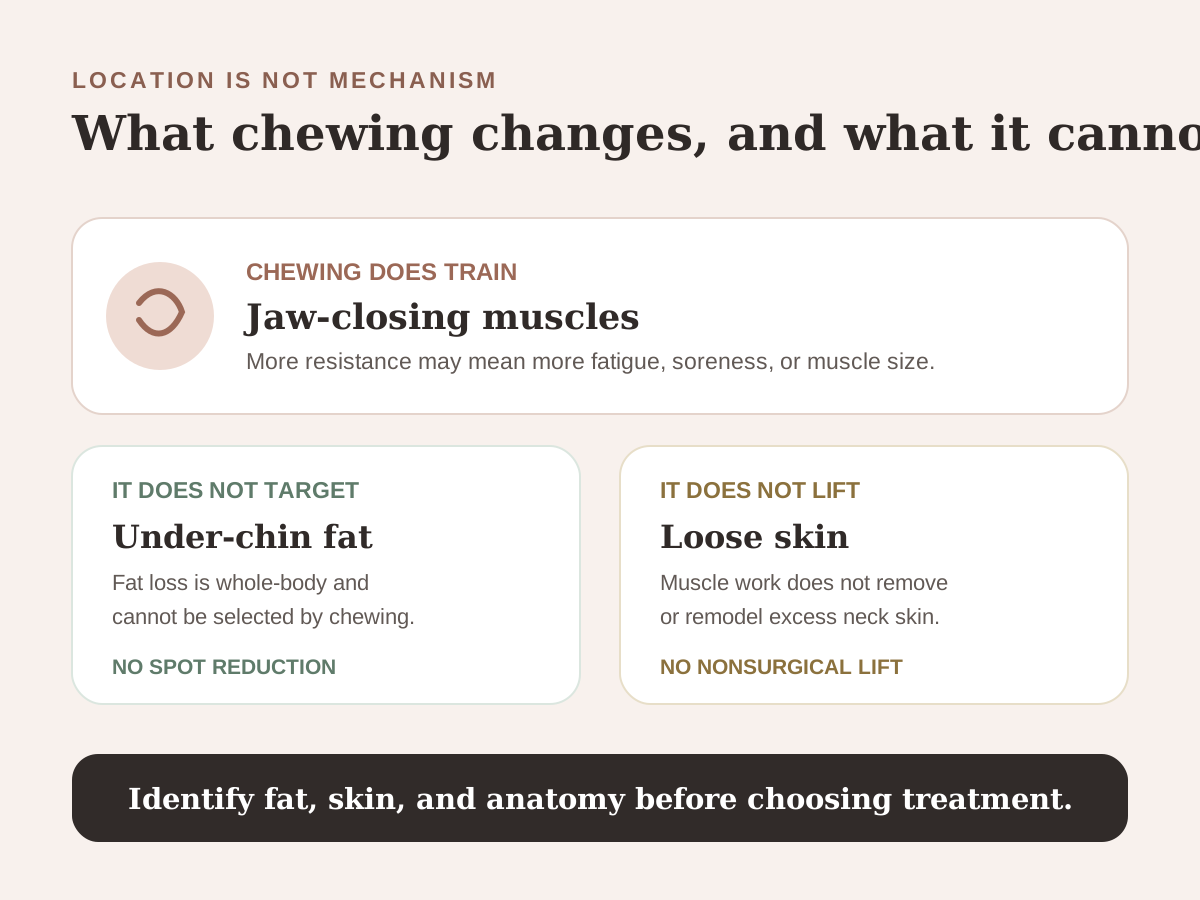
Chewing gum is sometimes promoted as a workout for a sharper jawline. It does make the jaw-closing muscles contract, but a double chin is usually related to fat beneath the chin, loose skin, bone structure, muscle position, or a mixture. Working one nearby muscle does not selectively erase those tissues.
Does Chewing Gum Get Rid of a Double Chin?
No. There is no good evidence that ordinary gum or extra-tough "facial fitness" gum spot-reduces under-chin fat or tightens neck skin. Chewing may strengthen the masseter muscles on the sides of the jaw. If those muscles enlarge, the lower face can look wider or squarer rather than leaner.
 Support Non-AI Creator
The American Dental Association's expert summary on facial fitness gum says evidence for jawline benefits is doubtful and warns that overuse may contribute to inflammation and jaw pain.
Why Does Chewing Gum Not Burn Chin Fat?
Fat loss is controlled by whole-body energy balance, hormones, genetics, and behavior over time. The body does not reliably pull fuel from the exact fat pad next to a working muscle. This is the same reason abdominal exercises do not selectively remove lower-belly fat.
Chewing mostly loads the masseter and temporalis muscles, which close the jaw. The soft fullness people call a double chin sits in a different region. Even if chewing uses a small amount of energy, the effect is far too small and nonspecific to serve as an under-chin fat-loss method.
The sensation of fatigue can also be misleading. A burning or tired jaw proves that the muscles are working; it does not prove that skin is tightening or local fat is disappearing.
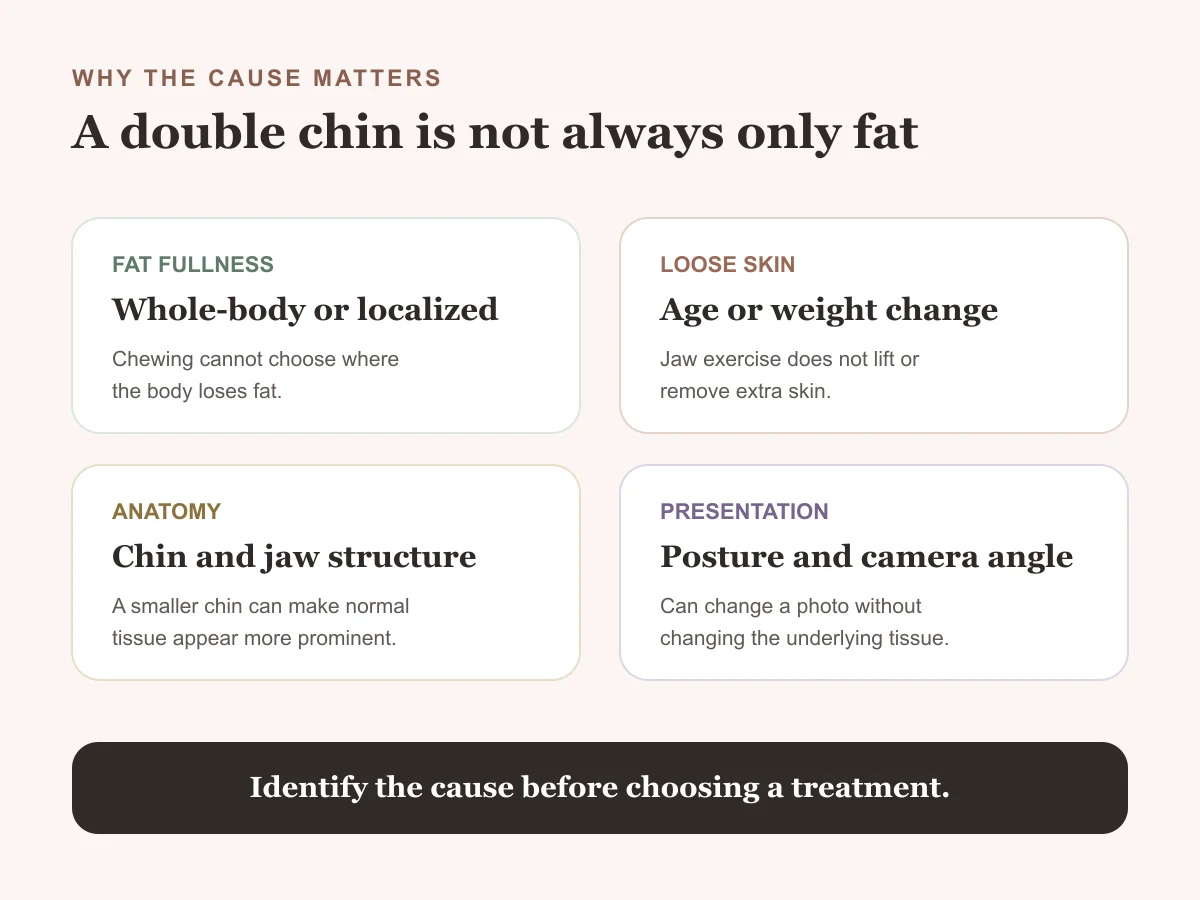
What Causes a Double Chin?
- Submental fat: A localized fat pad may remain even at a weight that is healthy for you.
- Overall body-fat distribution: Genetics influence where fat is stored and lost.
- Skin laxity: Aging, sun exposure, smoking, pregnancy-related changes, and weight loss can reduce firmness.
- Chin and jaw anatomy: A smaller or set-back chin can make under-chin tissue look more prominent.
- Neck muscle and gland anatomy: Normal structures shape the area and cannot be diagnosed from a selfie.
- Posture and camera angle: These can temporarily change appearance but are not the same as changing tissue.
 Support Non-AI Creator
If swelling is sudden, painful, firm, one-sided, or accompanied by trouble swallowing, voice change, fever, or a neck lump, seek medical assessment. That is not a cosmetic double-chin question.
Can Too Much Gum Chewing Hurt Your Jaw?
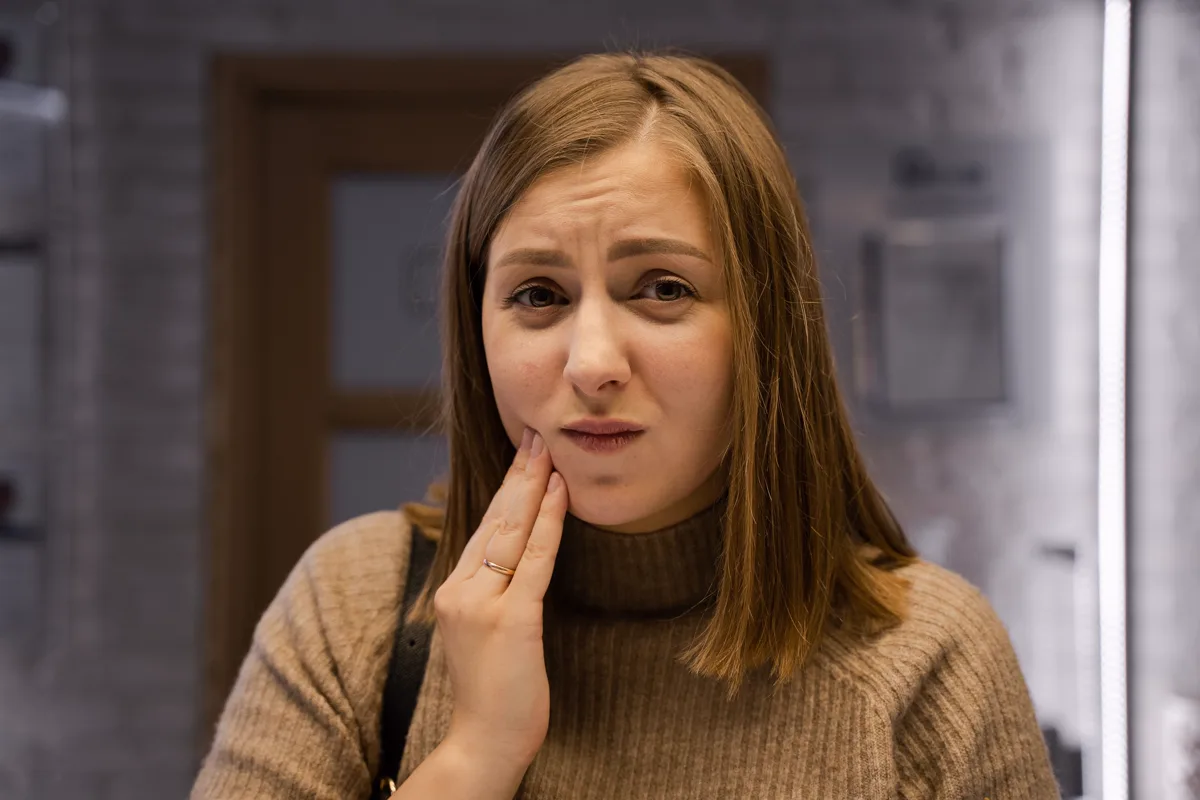
Yes. Long sessions, very resistant gum, clenching, and one-sided chewing can overload the temporomandibular joints and chewing muscles. Possible symptoms include jaw aching, temple headaches, clicking, limited opening, ear-area discomfort, and pain while eating.
 Support Non-AI Creator
Stop if Your Jaw Starts Complaining
Do not push through jaw pain to complete a social-media chewing challenge. Reduce chewing and seek dental or medical advice if pain persists, the jaw locks, opening becomes limited, or eating is difficult.
People with temporomandibular disorders, recent dental work, braces, dentures, cracked teeth, or frequent tension headaches may be especially uncomfortable with prolonged chewing. A piece of ordinary gum used occasionally is very different from treating high-resistance gum like strength equipment.
Sugar-free gum does have a separate dental role: chewing increases saliva, which can help neutralize acids after eating. It still does not replace twice-daily brushing with fluoride toothpaste and daily interdental cleaning, and this oral-health benefit does not translate into facial sculpting.
What Can Realistically Improve a Double Chin?
Gradual Overall Fat Loss, When Appropriate
If overall body fat contributes, sustainable eating, activity, sleep, and medical care can reduce fullness over time. There is no guarantee where fat will come off first. Avoid crash diets; rapid weight loss may also make loose skin more noticeable.
Posture for Presentation, Not Fat Loss
Bringing the screen to eye level and avoiding a constantly collapsed neck position may improve comfort and how the profile appears in a moment. Posture does not melt submental fat or permanently tighten skin.
Skin-Focused Procedures
For mild skin laxity, a dermatologist may discuss radiofrequency, ultrasound, or laser devices. Results are usually modest, gradual, and dependent on the device and candidate. Creams and aloe-based tightening remedies cannot reproduce a lift.
Fat-Reduction or Surgical Options
A qualified dermatologist or board-certified plastic surgeon can assess whether injectable deoxycholic acid, liposuction, a neck lift, chin augmentation, or another approach matches the anatomy. Each has different costs, downtime, contraindications, and risks. An in-person assessment matters because removing fat alone can worsen the look of loose skin in some people.
Acceptance Is Also a Valid Option
Under-chin fullness is common and often normal. Photos taken from below, wide-angle phone cameras, and rigid beauty standards exaggerate it. Choosing no treatment is not neglect.
Frequently Asked Questions
How long should I chew gum to reduce a double chin?
There is no proven chewing duration because gum does not selectively reduce under-chin fat or tighten loose skin. Longer or harder chewing can overwork the jaw and provoke pain without changing the tissue responsible for a double chin.
Can chewing gum sharpen your jawline?
Chewing may strengthen or enlarge the masseter muscles at the sides of the jaw. That does not remove fat beneath the chin, and larger masseters can make some faces look wider rather than more sharply defined.
Is sugar-free gum good for anything?
Sugar-free gum can increase saliva flow and may be useful after meals when brushing is not possible, but it does not replace brushing with fluoride toothpaste or cleaning between teeth. Its oral-health role should not be confused with facial sculpting.
What actually helps a double chin?
The useful option depends on the cause. Gradual overall fat loss may reduce fullness when body fat is involved. Loose skin, anatomy, or localized fat may require assessment by a qualified dermatologist or plastic surgeon for procedure-based options.
The Bottom Line
Chewing gum trains chewing muscles; it does not target under-chin fat or loose skin. Occasional sugar-free gum may support saliva flow, but prolonged or high-resistance chewing can create jaw problems. If you want to change the area, identify whether fat, skin, or anatomy is responsible before choosing a realistic option.