
Clove oil has a long history as a toothache remedy because its main aromatic compound, eugenol, can change pain sensation. That narrow use is often stretched into a much bigger claim: that clove oil strengthens gums, cures infection, or regrows tissue. Those claims are not supported by good clinical evidence.
Does Clove Oil Make Gums Stronger?
No. Clove oil does not rebuild the attachment between gum and tooth, restore periodontal bone, or move a receded gumline back over an exposed root. Temporary numbness can make an area feel better while decay, a crack, an abscess, or gum disease continues underneath.
 Support Non-AI Creator
Dental Pain Needs a Cause, Not Just Numbing
Seek urgent dental care for facial swelling, fever, pus, difficulty swallowing or breathing, severe pain, trauma, or a loose adult tooth. Do not keep applying essential oil to delay treatment.
What Does Research on Clove Oil Show?
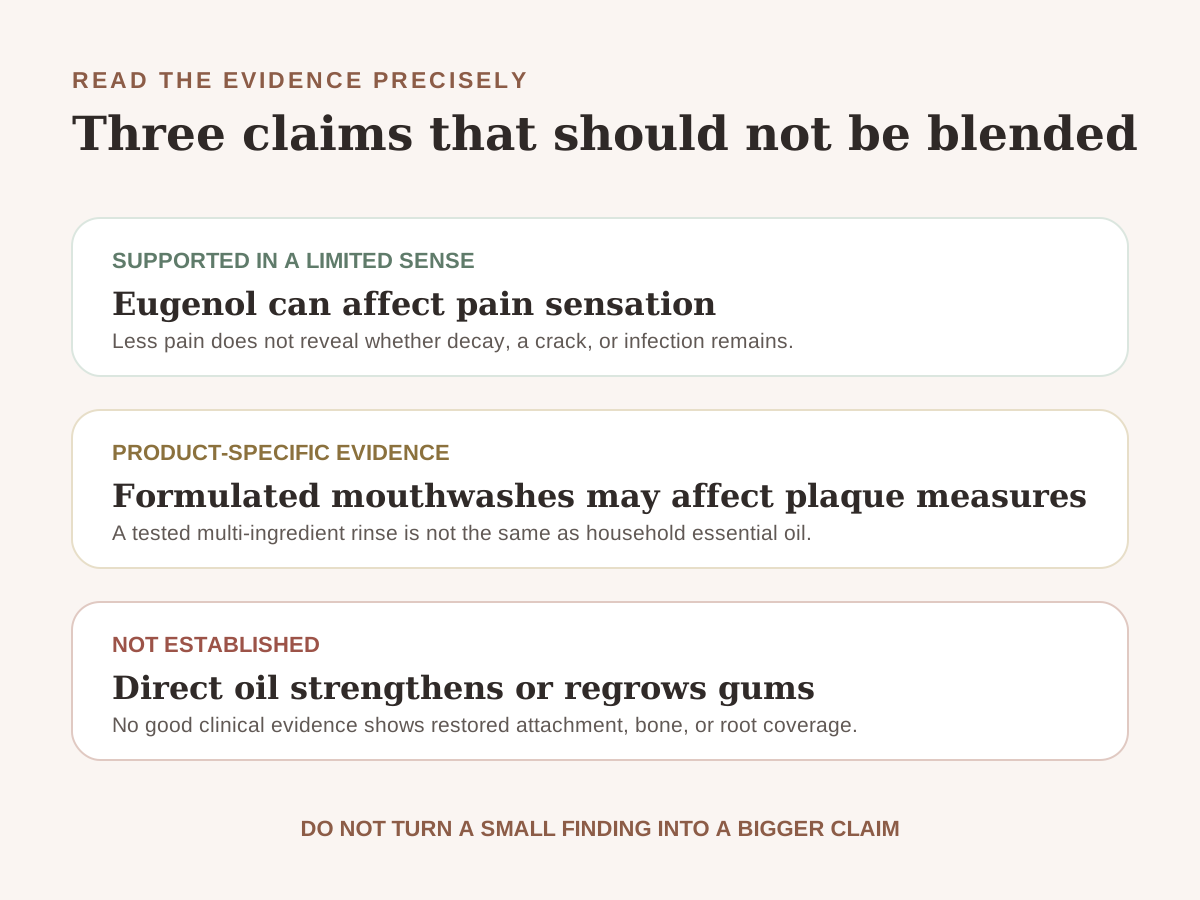
Eugenol Can Affect Pain Sensation
Dental professionals have used eugenol-containing materials in controlled products and procedures. That does not make a bottle of concentrated essential oil a safe home dental treatment. Dose, purity, formulation, exposure time, and contact with living tissue all change the risk.
Mouthwash Studies Are Not Direct-Oil Studies
Some research has compared formulated essential-oil mouthwashes with chlorhexidine or placebo for plaque and gingivitis measurements. A systematic review of mouthrinses found that multi-ingredient essential-oil rinses can affect plaque and gingivitis, but these commercial formulations are not equivalent to rubbing clove essential oil on the gums.
A later review of herbal and non-herbal mouthwashes also found mixed and generally short-term evidence. Neither body of research shows gum regrowth or proves that a homemade clove rinse treats periodontitis.
Laboratory Antimicrobial Activity Is Not a Cure
An ingredient may slow microbes in a dish while failing to reach bacteria inside dental plaque, a periodontal pocket, an infected root canal, or an abscess safely in a person. Gum disease is not simply loose bacteria on the surface; it involves a biofilm, inflammation, tartar, pocket depth, and sometimes loss of attachment and bone.
 Support Non-AI Creator
What Are the Risks of Putting Clove Oil on Gums?
Concentrated clove oil can irritate the mouth, create a chemical burn, worsen soreness, or trigger an allergic reaction. Repeated exposure may damage tissue rather than strengthen it. Swallowing essential oil can be toxic, especially for children, and "natural" does not make the dose harmless.
Do not place clove oil on a child's tooth or gum. Avoid homemade mixtures during pregnancy, while breastfeeding, or when taking medicines that affect bleeding unless a qualified clinician specifically advises otherwise. Keep essential oils out of reach and follow the labeled use of any regulated oral-care product.
If a commercial toothpaste or mouthwash contains clove flavoring, use it exactly as labeled and stop if it causes burning, peeling, swelling, rash, or worsening pain. Do not add extra essential oil to make it "stronger."
What Actually Helps Keep Gums Strong?
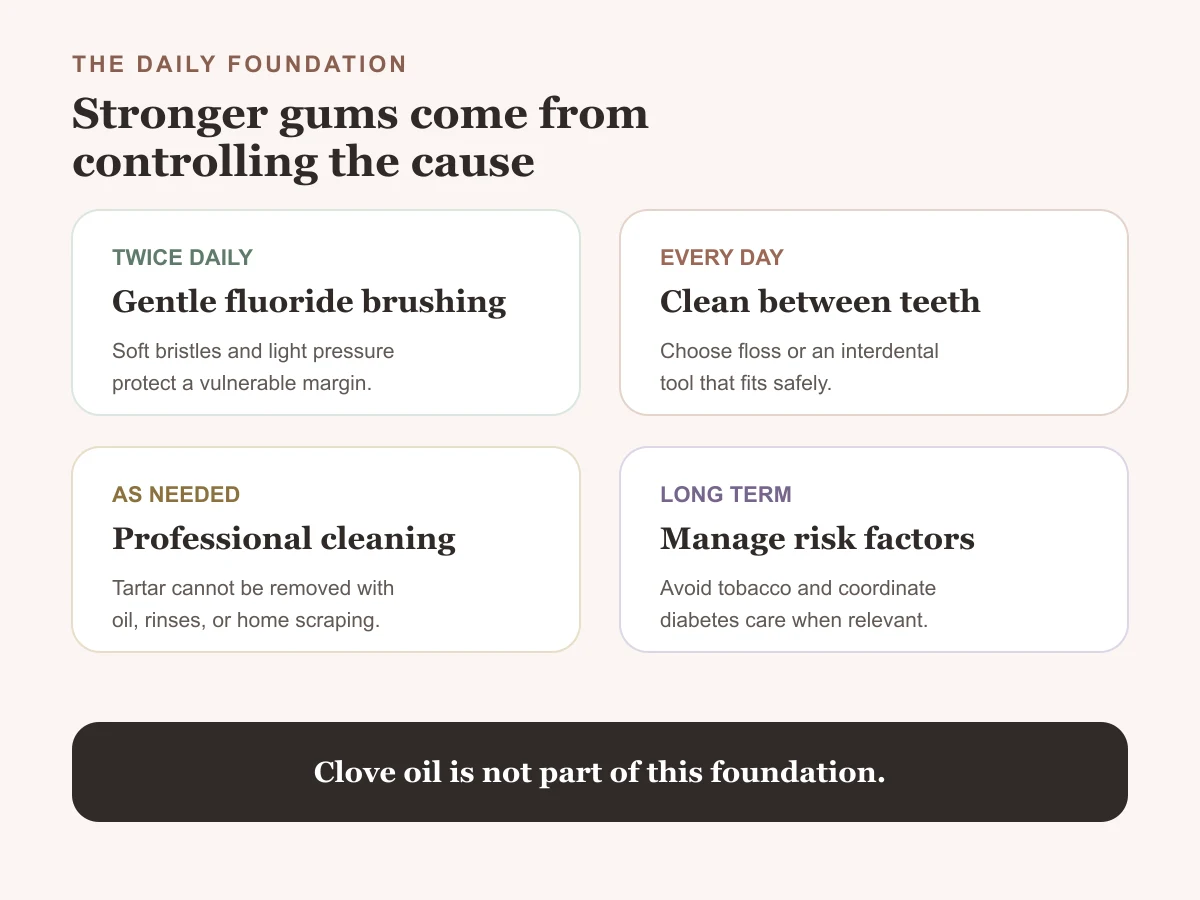
Brush Gently With Fluoride Toothpaste
Brush twice a day for about two minutes using soft bristles and light pressure. Hard scrubbing can traumatize a thin gumline. Fluoride protects teeth and exposed roots; clove oil does not replace it.
Clean Between Teeth Daily
Floss, interdental brushes, or another suitable tool disrupts plaque where a toothbrush does not reach. A hygienist can help choose a size and technique that cleans without cutting the tissue.
Remove Tartar Professionally
Once plaque hardens into tartar, home brushing cannot remove it. The NIDCR gum-disease guide explains that professional cleaning and, when needed, deeper periodontal treatment are part of controlling disease.
Avoid Tobacco and Manage Health Conditions
Smoking is a major risk factor for gum disease and can hide bleeding while damage progresses. Diabetes and gum health also influence one another. Work with medical and dental professionals rather than relying on a numbing oil.
Treat Recession According to Its Cause
Clove oil cannot replace missing gum tissue. Our guide to gum regrowth and periodontal procedures explains the difference between protecting a stable gumline, covering an exposed root, and regenerating selected supporting defects.
 Support Non-AI Creator
What Should You Do for Gum or Tooth Pain?
Rinse gently with plain warm water and clean the area carefully if food is trapped. Use an over-the-counter pain medicine only if it is normally safe for you and according to the label. Do not put aspirin against the gum, because it can burn tissue.
 Support Non-AI Creator
Then arrange dental care. Tooth pain can come from decay, a crack, an inflamed nerve, an abscess, food impaction, grinding, or gum disease. Bleeding gums may reflect gingivitis, but persistent or spontaneous bleeding also deserves assessment. Numbing the area cannot identify which problem is present.
Frequently Asked Questions
Can clove oil make gums stronger?
No good clinical evidence shows that clove oil strengthens gum attachment, regrows receded tissue, or rebuilds supporting bone. Eugenol can alter pain sensation, but feeling less pain is not the same as healing the cause.
Can I rub clove oil directly on my gums?
Direct concentrated application is not recommended because essential oil can irritate or burn the mouth and may trigger allergy. Do not swallow it or use it to postpone care for persistent pain, swelling, bleeding, or a suspected infection.
Does clove oil kill gum disease bacteria?
Laboratory antimicrobial activity and studies of formulated multi-ingredient mouthwashes do not prove that household clove oil treats periodontitis. Gum disease management requires plaque control, professional tartar removal, and cause-specific dental treatment.
What helps make gums healthier?
Brush gently twice daily with fluoride toothpaste, clean between teeth every day, avoid tobacco, manage diabetes with your clinician, and attend dental cleanings and periodontal treatment when recommended.
The Bottom Line
Clove oil may temporarily dull dental pain, but it does not strengthen gums, regenerate tissue, or cure gum disease. Direct concentrated use can injure the mouth and mask a problem that needs treatment. Build gum health with gentle plaque control, professional tartar removal, risk-factor management, and timely dental care.