
Hibiscus tea has a much better case behind it than many "detox" drinks. There is real human research on blood pressure and some broader cardiometabolic markers, which already puts it ahead of most wellness beverages making the rounds online.
Even so, it still needs honest framing. Hibiscus tea is not a cure for hypertension, a guaranteed weight-loss shortcut, or a magic metabolism drink. The strongest version of the story is more practical: it may support a heart-health routine in some people, and it can be a caffeine-free habit that feels genuinely enjoyable.
What Is Hibiscus Tea?
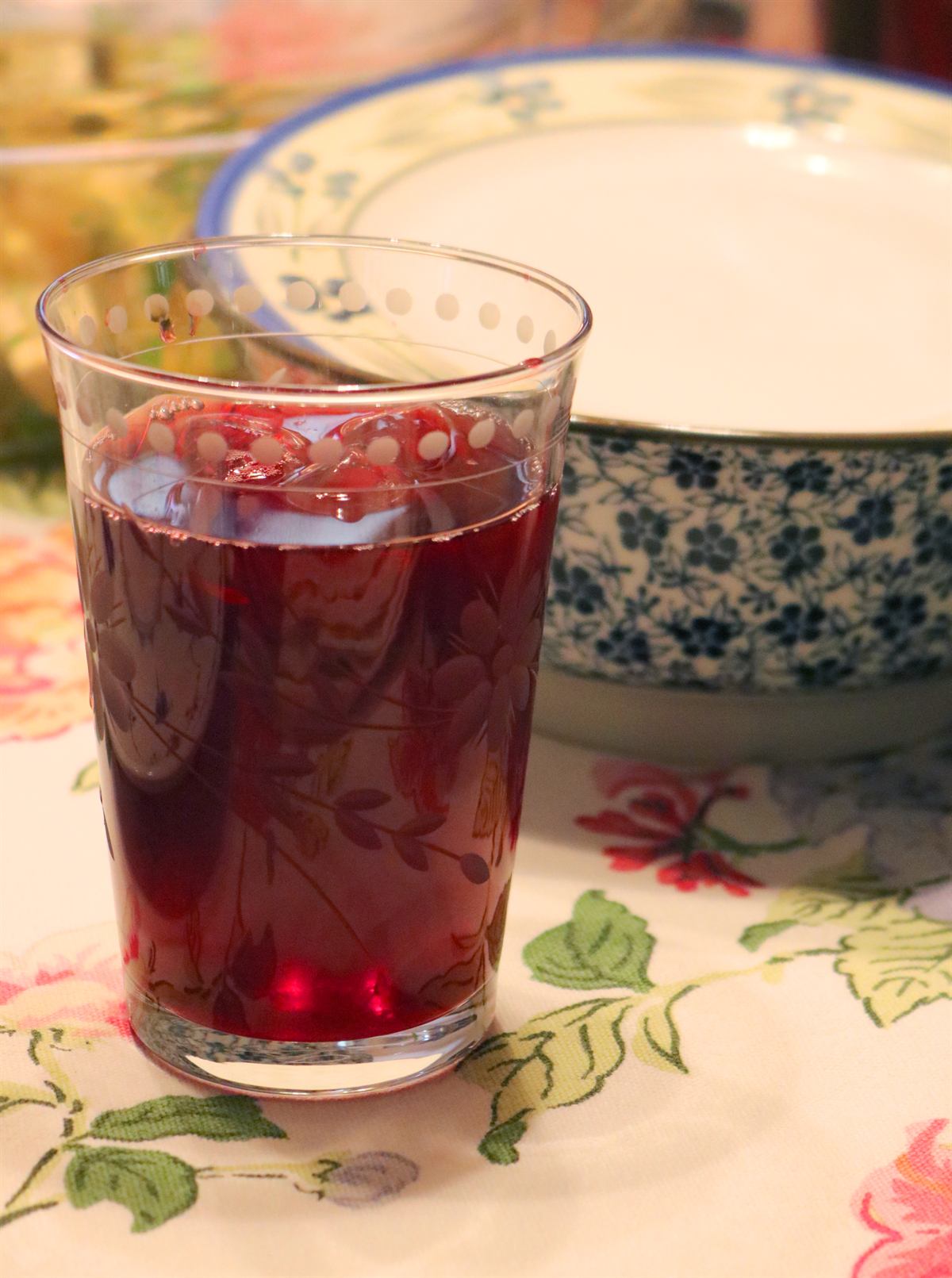
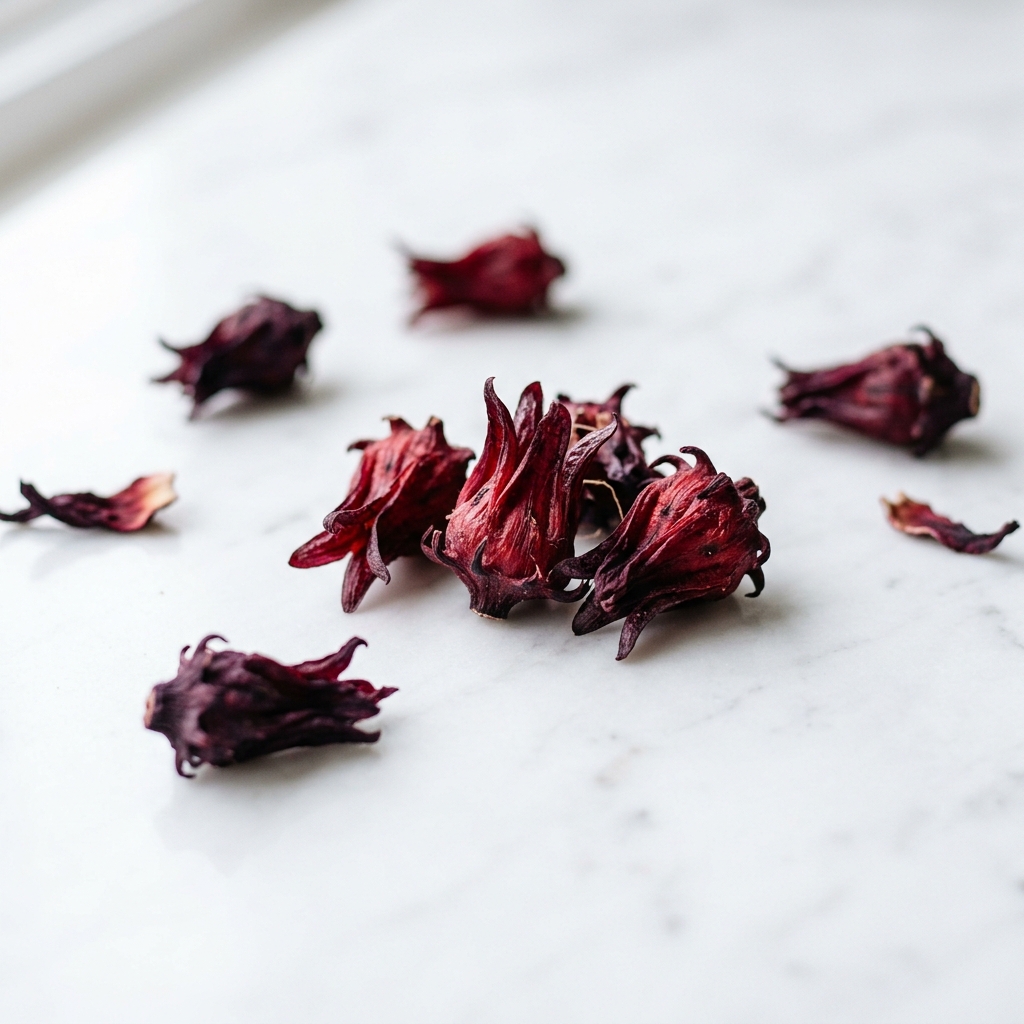
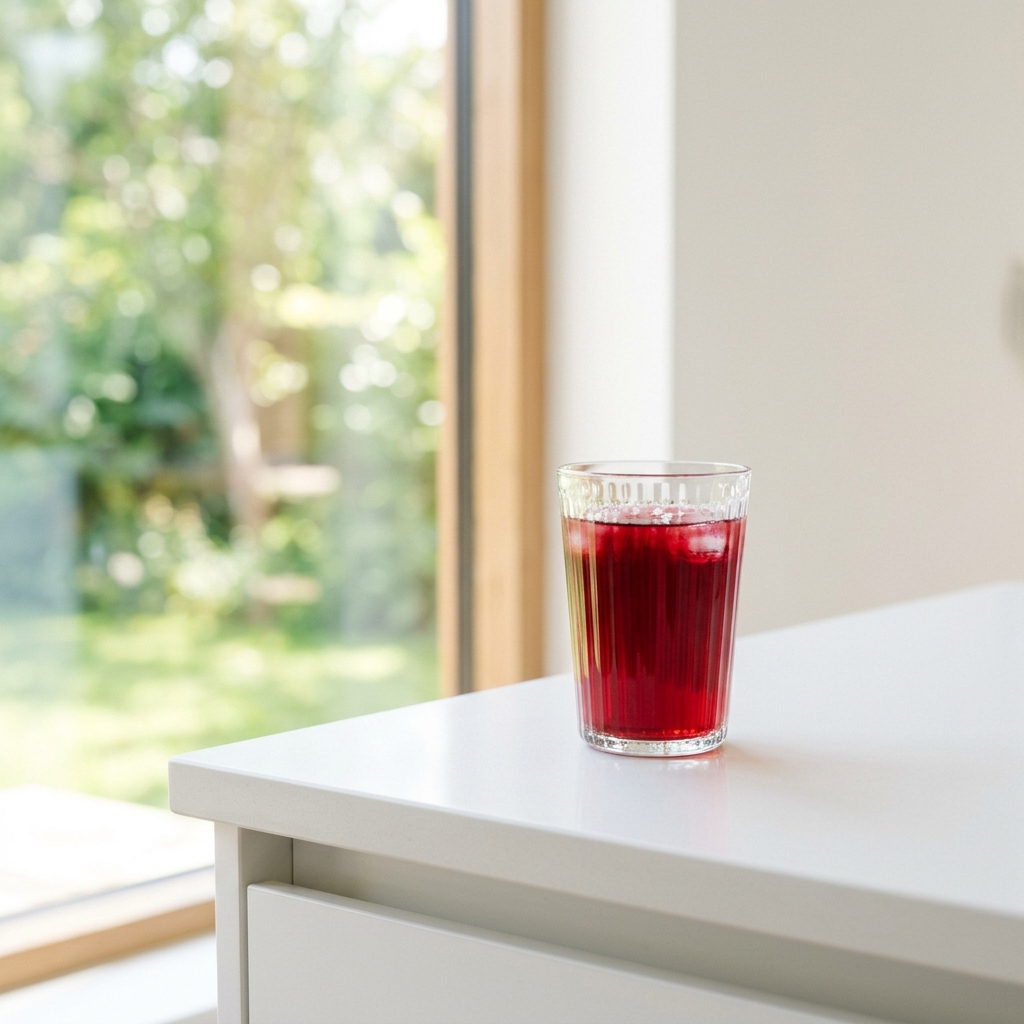
Hibiscus tea is usually made from the dried calyxes of Hibiscus sabdariffa, sometimes called roselle. It brews into a tart, ruby-red drink that can be served hot or cold.
Researchers keep studying hibiscus because it contains polyphenols, including anthocyanins and other plant compounds that may help explain its cardiometabolic effects. A 2022 clinical-trials review of Hibiscus sabdariffa (Source: PubMed) summarizes the main areas where human studies have looked most closely.
The practical detail many people miss is that preparation matters. Unsweetened hibiscus tea is very different from a sugar-heavy bottled hibiscus drink. If you are drinking it for wellness reasons, what you add to the cup changes the whole picture.
Key idea
Hibiscus tea looks strongest as a blood-pressure-friendly, caffeine-free tea with some broader cardiometabolic potential. The evidence gets thinner once the claims turn into detox, dramatic slimming, or cure-all promises.
| Tea Type | Caffeine Content | Blood Pressure Utility | Primary Profile |
|---|---|---|---|
| Hibiscus Tea | None | Strong | Tart, berry-like, sharp |
| Green Tea | Moderate | Moderate | Earthy, grassy, light |
| Chamomile Tea | None | Low | Floral, sweet, relaxing |
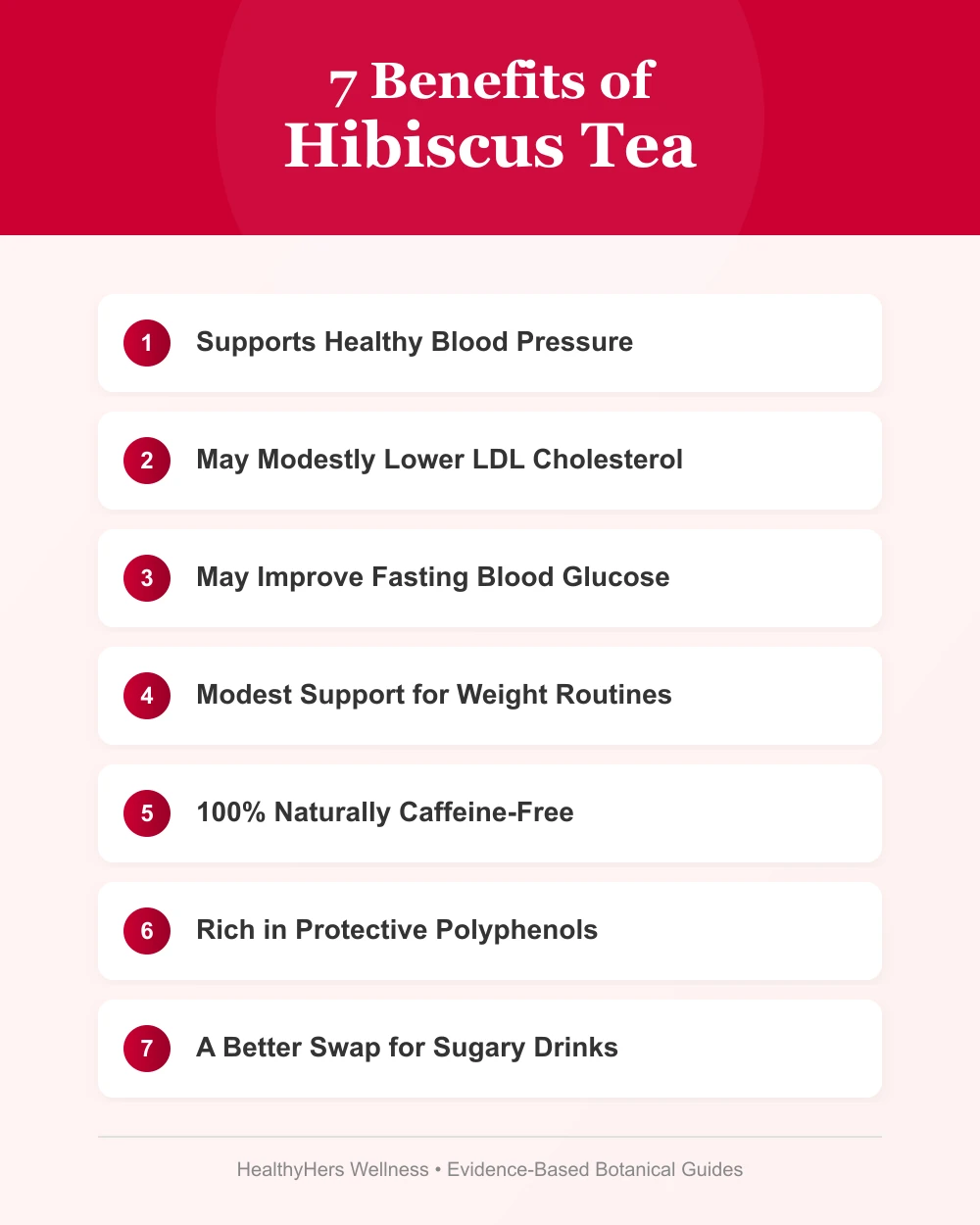
7 Hibiscus Tea Benefits
These are the benefits with the most believable evidence or the most practical real-life value. Some are stronger than others, and most are modest rather than dramatic.
May help lower blood pressure
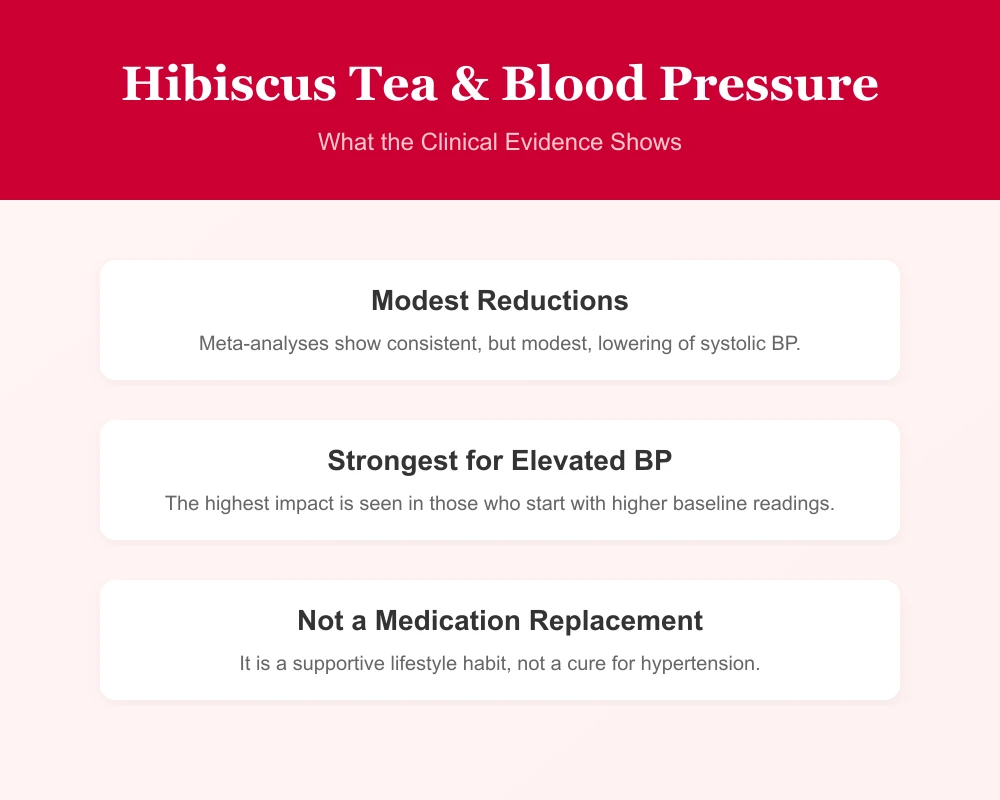
What it does: Hibiscus tea may support healthy blood pressure routines because of its polyphenols and mild diuretic-like effects. Studies suggest modest systolic blood pressure reductions, especially in people who start with elevated levels.
This is the headline benefit with the best research support. A 2022 systematic review and meta-analysis found hibiscus lowered systolic blood pressure compared with placebo, with the biggest changes in people who started out with higher blood pressure.
 Support Non-AI Creator
May modestly lower LDL cholesterol
What it does: The unique polyphenols found in hibiscus can slightly assist in lipid management by modestly lowering LDL (bad) cholesterol. While not a replacement for statins, it provides a supportive dietary adjustment for long-term cardiovascular health.
The same 2022 meta-analysis found hibiscus significantly lowered LDL compared with placebo and other teas, even though not every lipid marker moved consistently. That makes the lipid story supportive, but not as strong as the blood pressure story.
 Support Non-AI Creator
May slightly improve fasting blood glucose
What it does: Hibiscus tea contributes to metabolic stability by triggering a small but measurable reduction in fasting plasma glucose. It acts as a helpful, sugar-free beverage option for those looking to maintain steady daily energy levels.
A 2020 systematic review and meta-analysis of randomized trials found a small but significant reduction in fasting plasma glucose. That does not make hibiscus tea a diabetes treatment, but it is a more realistic claim than generic detox language.
May support weight-loss routines a little
What it does: Incorporating hibiscus tea offers extremely modest metabolic support during structured weight-loss routines. It primarily aids weight management by serving as a highly flavorful, near-zero calorie replacement for heavy juices and sodas.
A 2024 meta-analysis on hibiscus and obesity treatment suggests there may be modest weight-related benefits in some trial settings. The key word is modest. This is not the kind of evidence that justifies promising fast or dramatic fat loss.
 Support Non-AI Creator
Gives you a naturally caffeine-free tea option
What it does: Hibiscus provides a robust, fully flavored tea experience completely devoid of caffeine. This makes it an ideal afternoon or evening beverage choice that will not disrupt your circadian rhythm or cause late-night sleep delays.
Not every benefit has to come from a lab value. Hibiscus tea is naturally caffeine-free, which makes it a useful swap for people who want a flavorful drink later in the day without extra stimulation.
Provides a concentrated source of polyphenols
What it does: Deep red hibiscus tea provides plant polyphenols, including anthocyanins. These compounds are one reason researchers study hibiscus, but they should be framed as dietary support rather than guaranteed cellular protection.
Hibiscus is rich in plant compounds such as anthocyanins and other polyphenols. Even when a very specific health claim is not fully proven, that is still a meaningful reason researchers remain interested in it.
Can be a better routine than sugary drinks
What it does: Swapping to unsweetened hibiscus tea can reduce liquid sugar if it replaces soda, sweetened juice, or syrupy coffee drinks. This simple behavioral shift can lower empty calories while keeping a sharp, tart flavor in the routine.
If unsweetened hibiscus tea replaces soda, sweetened juice, or a high-sugar coffee drink, the habit itself can be helpful. That is not a special medicinal effect of hibiscus, but it is still a real lifestyle benefit.
If you want the strongest clinical reference for blood pressure, the 2022 Nutrients review meta-analysis on blood pressure and cardiometabolic markers (Source: PubMed) is the place to start.
For a more targeted hypertension-focused summary, there is also a 2022 meta-analysis in patients with mild-to-moderate hypertension (Source: PubMed). For another low-sugar drink habit with a different evidence profile, compare it with lemon water benefits.
How to Drink It
Hibiscus tea works best when the routine is simple enough to keep. That usually means an unsweetened or lightly sweetened cup once or twice a day, rather than turning it into a syrupy wellness punch.
Start unsweetened if you can. The tartness is part of the drink, and adding a lot of sugar changes the health tradeoff quickly.
Try it hot or iced. Hibiscus is flexible, which makes it easier to keep in your routine than many niche supplements.
Do not treat it like medication. If your goal is blood pressure support, think of it as a supportive habit, not a replacement for prescribed care.
Pay attention to blends. Some teas labeled "hibiscus" also contain caffeine, sweeteners, or extra herbs that change the experience.
Heads up
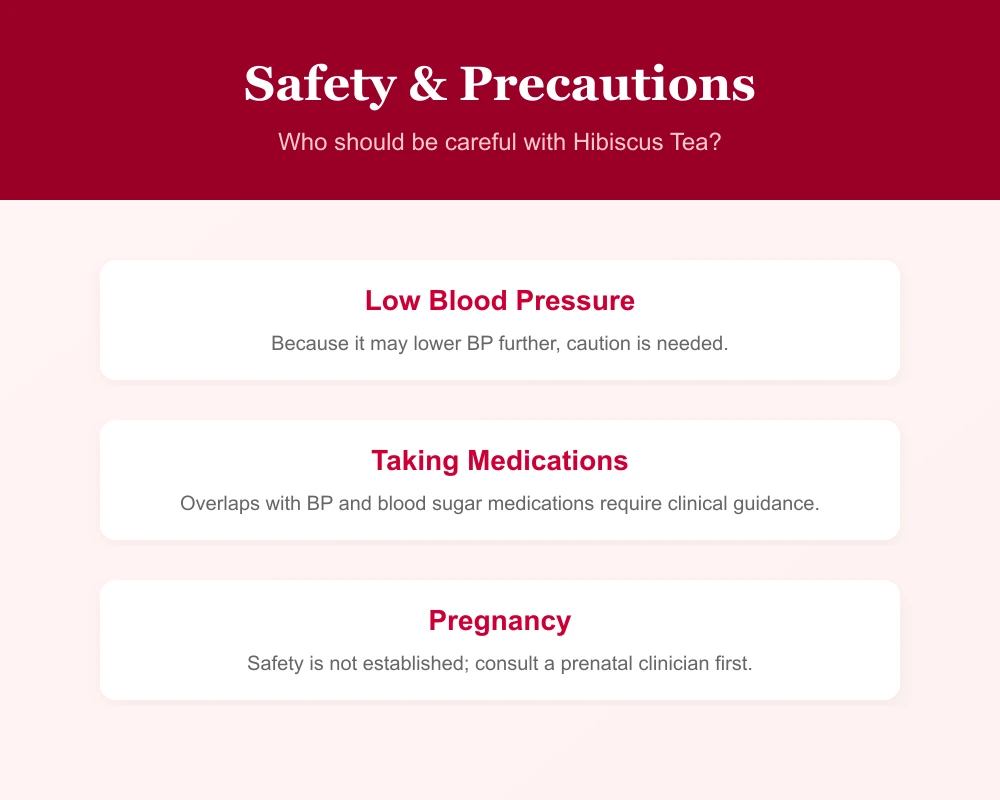
Hibiscus tea is not the best fit for everyone. If you already run on the low side for blood pressure, take medication for blood pressure or blood sugar, or are pregnant, it is smart to get individualized advice before using it regularly.
Who Should Be Careful?
People with low blood pressure: hibiscus may push it lower.
People on blood pressure or blood sugar medication: the overlap may matter more than it would for a casual tea drinker.
People who rely on sugary bottled versions: the added sugar can cancel out a lot of the value.
People who are pregnant or trying to be extra cautious with herbal products: safety is not established well enough to wave away the concern.
The good news is that the broader 2022 review of clinical trials (Source: PubMed) notes that adverse effects were not reported in the included studies. That is reassuring, but it is not the same thing as saying hibiscus is ideal for every person in every circumstance.
 Support Non-AI Creator
Frequently Asked Questions
Is hibiscus tea actually good for blood pressure?
That is the strongest case for it. Meta-analyses suggest hibiscus can lower blood pressure modestly, especially in people who start with elevated readings.
Does hibiscus tea help with weight loss?
Possibly a little, but not dramatically. Newer meta-analytic data suggest modest effects in some obesity-focused trials, not a miracle fat-loss result.
Can hibiscus tea lower cholesterol?
The evidence is mixed but somewhat supportive. Some meta-analyses suggest a modest LDL-lowering effect, while broader cholesterol changes are less consistent.
Is hibiscus tea caffeine-free?
Yes. Pure hibiscus tea is naturally caffeine-free, which is one reason people like it as an evening or lower-stimulation drink.
Can hibiscus tea interact with medication?
It can matter if you take medication for blood pressure, blood sugar, or other conditions that make further lowering a concern. That is a good reason to check with your clinician if you plan to use it regularly.
Is hibiscus tea safe during pregnancy?
Safety is not clear enough to make casual promises. It is better to check with your prenatal clinician instead of assuming herbal teas are automatically fine.
The Bottom Line
Hibiscus tea is one of the better wellness teas to take seriously, especially for blood pressure and broader cardiometabolic support. That is where the evidence is most believable.
What it does not need is hype. The strongest version is still the simplest one: an unsweetened, caffeine-free tea that may help in a few real ways without pretending to fix everything.