
Lower-belly fat is a frustrating target because the internet treats it like a separate substance with a special switch. It is not. You can strengthen the muscles in that area, but you cannot reliably command your body to remove fat from one small region first.
The workable approach is gradual overall fat loss, paired with habits that protect muscle, health, and quality of life. Before starting, it also helps to check whether the change you see is actually fat, because bloating, posture, loose skin, and a focal bulge need different responses.
How Do You Lose Lower Belly Fat and Keep It Off?
Create a modest, sustainable energy deficit through an eating pattern you can live with, regular aerobic activity, and full-body strength training. Sleep, stress, medications, health conditions, age, and hormones can affect the process. Ab exercises are useful for strength, but they are not a dependable lower-belly fat-removal method.
The CDC's healthy weight-loss guidance combines nutrition, physical activity, sleep, and stress management. It also notes that gradual loss, often about 1 to 2 pounds per week for people pursuing weight loss, is more likely to be maintained than faster loss.
Use a Health Goal, Not a Body Deadline
A smaller waist can accompany improved health, but a perfectly flat lower stomach is not a medical requirement. Build the plan around energy, strength, blood pressure, blood glucose, mobility, or another meaningful health outcome instead of a deadline tied to one body area.
Is It Fat, Bloating, Loose Skin, or a Focal Bulge?
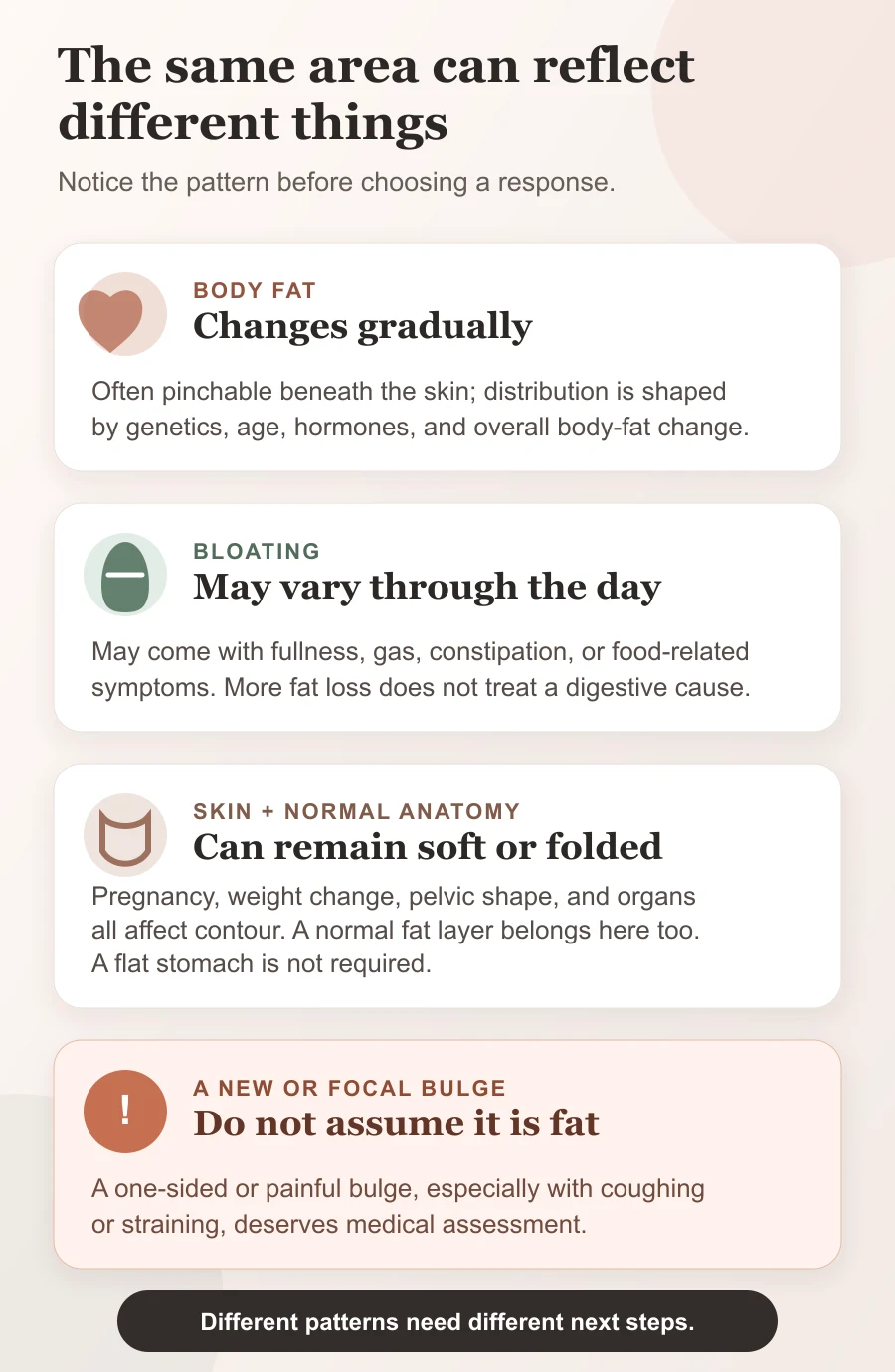
Body Fat
Subcutaneous fat sits beneath the skin and can be pinched. Visceral fat lies deeper around abdominal organs and cannot be judged accurately by looking at the lower abdomen alone. Waist circumference can be one useful health measure, but it is not a precise picture of where every type of fat is stored.
Bloating
Bloating often changes through the day and may come with gas, constipation, or a feeling of pressure. Losing body fat will not directly solve an intolerance, constipation, or another digestive cause. Persistent bloating, pain, vomiting, blood in stool, or unexplained weight loss warrants medical advice.
Loose Skin and Normal Anatomy
Skin can remain soft or folded after pregnancy or substantial weight change. The uterus, bladder, intestines, pelvic shape, and a normal layer of fat all contribute to the lower-abdominal contour. More weight loss is not always the appropriate answer.
A New or One-Sided Bulge
A localized bulge that appears with coughing, lifting, or straining may be a hernia. The National Institute of Diabetes and Digestive and Kidney Diseases advises urgent care for a bulge with sudden severe pain, redness, fever, nausea, vomiting, or a bulge that no longer goes back in.
 Support Non-AI Creator
Why Lower-Ab Exercises Are Not a Reliable Spot-Reduction Plan
Muscles and the fat layer above them respond to different signals. Crunches, leg raises, and planks train muscle. Fat loss depends more broadly on energy balance, hormones, genetics, and activity across time.
A small six-week study found that abdominal exercise improved muscular endurance but did not reduce abdominal subcutaneous fat or body-composition measures (Source: PubMed). A newer trial in men reported some localized trunk-fat use after a specific endurance protocol (Source: PubMed). Together, the evidence does not support promising that a short “lower belly” routine will predictably reshape one area for everyone.
Core training still belongs in a balanced program because it can improve strength, function, and exercise technique. Just judge it by those benefits rather than by whether it burns the fat directly above the working muscle.
Build a Fat-Loss Plan You Can Maintain
1. Find the Easiest Calories to Change
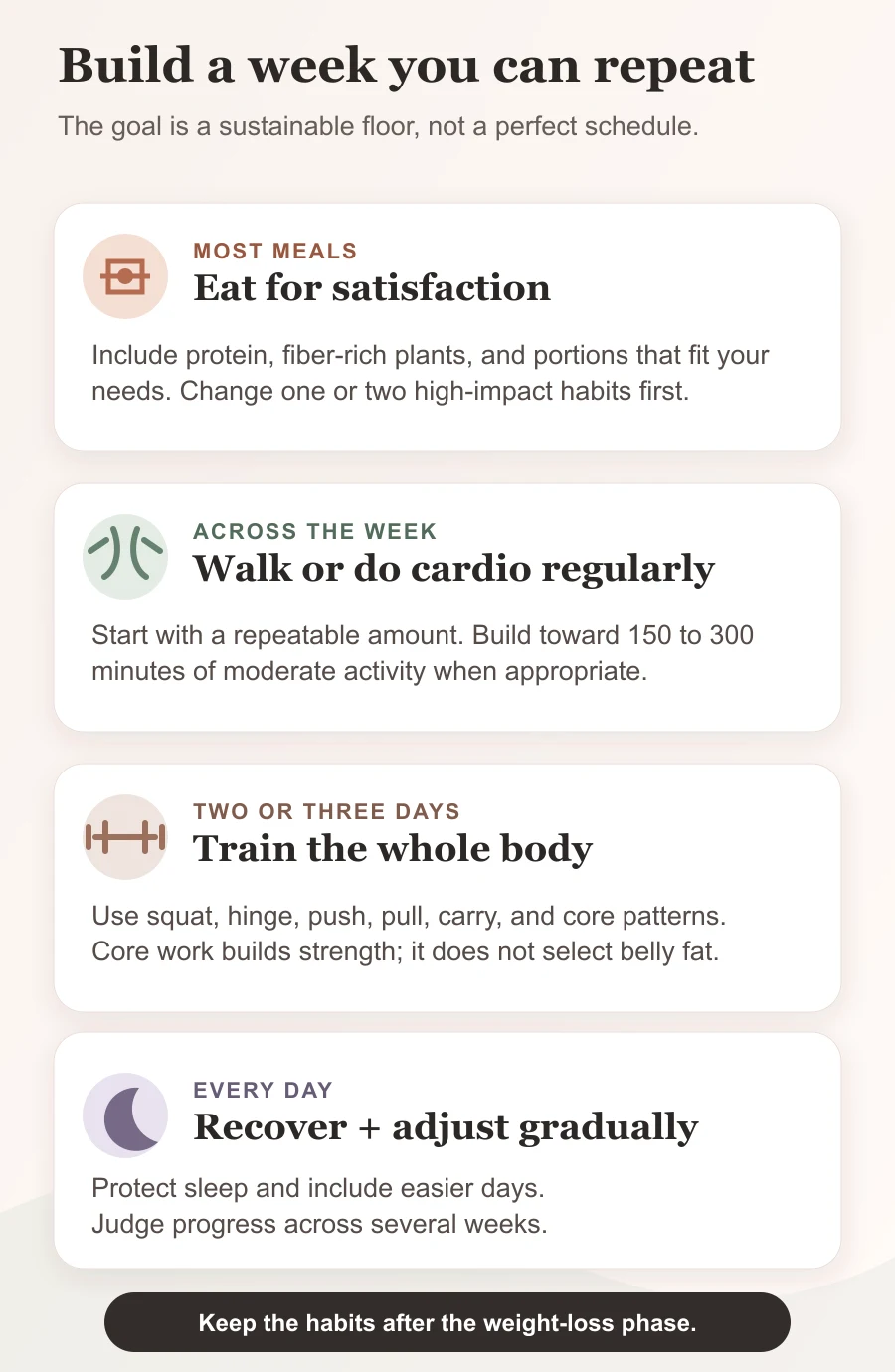
Start with one or two high-impact patterns: sugary drinks, frequent alcohol, oversized restaurant portions, grazing while distracted, or low-fiber meals that leave you hungry. You do not need to remove every enjoyable food. A smaller change that survives weekends and stressful days is more valuable than a perfect seven-day menu.
2. Build Meals Around Satiety
Include a protein source, high-fiber plant food, and a portion of carbohydrate or fat that fits your preferences and needs. Examples include eggs with vegetables and whole-grain toast, yogurt with fruit and nuts, lentils with rice and salad, or chicken or tofu with potatoes and vegetables.
The CDC's healthy-eating guidance emphasizes a varied pattern of nutrient-dense foods rather than a single belly-fat ingredient. Lemon water, detox drinks, vinegar shots, and fat-burning teas do not override the overall pattern.
3. Track the Pattern, Not Every Fluctuation
Body weight can shift from water, sodium, menstrual-cycle changes, bowel contents, and glycogen. If tracking is helpful and emotionally neutral for you, look at a multiweek trend rather than reacting to one day. You can also monitor waist measurements, clothing fit, walking pace, strength, blood pressure, or laboratory markers.
4. Adjust Gradually
If nothing changes after several consistent weeks and weight loss is medically appropriate, make one small adjustment: slightly reduce a frequent calorie source, add a walk, or improve meal structure. Repeated large cuts raise hunger and make the maintenance phase harder.
Avoid Aggressive Restriction
Skip plans that promise rapid lower-belly loss, require prolonged fasting, eliminate broad food groups without a medical reason, or encourage laxatives and “detox” products. If tracking food or weight triggers guilt, compulsive exercise, bingeing, or restriction, stop and seek support from a qualified clinician or eating-disorder professional.
The Exercise Mix That Supports Fat Loss
Aerobic Activity
Walking, cycling, swimming, dancing, jogging, and similar activities increase energy use and improve cardiovascular health. The federal Physical Activity Guidelines recommend 150 to 300 minutes of moderate aerobic activity per week for the most health benefits, plus muscle strengthening on at least two days.
Start below that if needed. A 10-minute walk after one meal, repeated most days, is a legitimate beginning. Increase duration or pace only when your joints, recovery, and schedule can support it.
Full-Body Strength Training
Train the major movement patterns: squat or sit-to-stand, hinge, push, pull, carry, and core stabilization. Two or three sessions per week can help preserve muscle during weight loss and improve strength. Machines, resistance bands, dumbbells, and body-weight movements can all work.
Core Training
Choose two or three exercises you can perform with control, such as a dead bug, bird dog, side plank, or loaded carry. Core work can improve bracing and posture, but it should not replace walking, full-body resistance work, or the eating changes that drive overall fat loss.
Recovery
More is not always better. Keep at least one easier day, increase training progressively, and address persistent pain. Sleep supports appetite regulation, exercise recovery, and decision-making, although “sleeping off belly fat” is another overstatement.
 Support Non-AI Creator
How to Keep Weight Off After Losing It
Maintenance is not the moment to abandon the habits that produced the change. It is a new phase in which you practice a slightly more flexible version of them.
- Keep a minimum activity routine. Decide what you can maintain during busy weeks, such as two strength sessions and three walks.
- Retain meal anchors. A repeatable breakfast, stocked protein options, and ready-to-eat fruit or vegetables reduce decision fatigue.
- Use an early-warning range. If weighing is appropriate for you, choose a small range rather than one exact number and respond to a sustained trend, not a single fluctuation.
- Plan for predictable disruptions. Travel, holidays, illness, and stressful work periods need a simpler fallback plan, not an all-or-nothing restart.
- Expect maintenance to require attention. NIDDK explains that metabolism and energy needs change after weight loss, which is one reason regain is common and not a personal failure.
The NIDDK guide to weight-loss programs recommends a plan for keeping weight off, ongoing support, and realistic goals rather than a short challenge with no maintenance strategy.
When Professional Help Makes Sense
Talk with a health professional before pursuing weight loss if you are pregnant, breastfeeding, under 18, have diabetes, take medication affected by food or body-weight changes, or have a history of an eating disorder. A registered dietitian can help tailor intake to medical needs, culture, budget, and preferences.
Seek evaluation for a sudden abdominal change, a painful or firm bulge, persistent digestive symptoms, unexplained weight change, menstrual changes, or symptoms that began after a medication change. Weight-management medicines and bariatric procedures may be appropriate for some adults, but they require individualized assessment and long-term follow-up rather than online dosing advice.
Frequently Asked Questions
What exercise burns the most lower belly fat?
No exercise reliably selects lower-belly fat. Aerobic activity helps increase energy use, and full-body strength training helps preserve or build muscle. Choose activities you can repeat consistently rather than relying on one ab exercise or very intense workout.
Do lower-ab workouts flatten the lower stomach?
Lower-ab exercises can strengthen abdominal muscles and improve control, but they do not guarantee fat loss from the skin over those muscles. A flatter appearance may also be affected by posture, bloating, skin, anatomy, and overall body-fat change.
How quickly can lower belly fat go away?
There is no reliable area-specific timeline. The CDC notes that people who lose weight gradually, about 1 to 2 pounds per week, are more likely to keep it off, but individual rates vary and not everyone needs or should pursue weight loss.
Why is lower belly fat often the last to go?
Genetics, sex hormones, age, pregnancy history, and individual fat-distribution patterns influence where the body stores and releases fat. You cannot force a preferred order with special foods or exercises.
The Bottom Line
You cannot reliably target lower-belly fat, but you can improve overall body composition and health through a modest sustainable eating change, regular aerobic activity, full-body strength work, sleep, and a maintenance plan. Keep core exercises for strength, reject rapid-fix promises, and get a new or painful abdominal bulge assessed rather than assuming it is fat.