
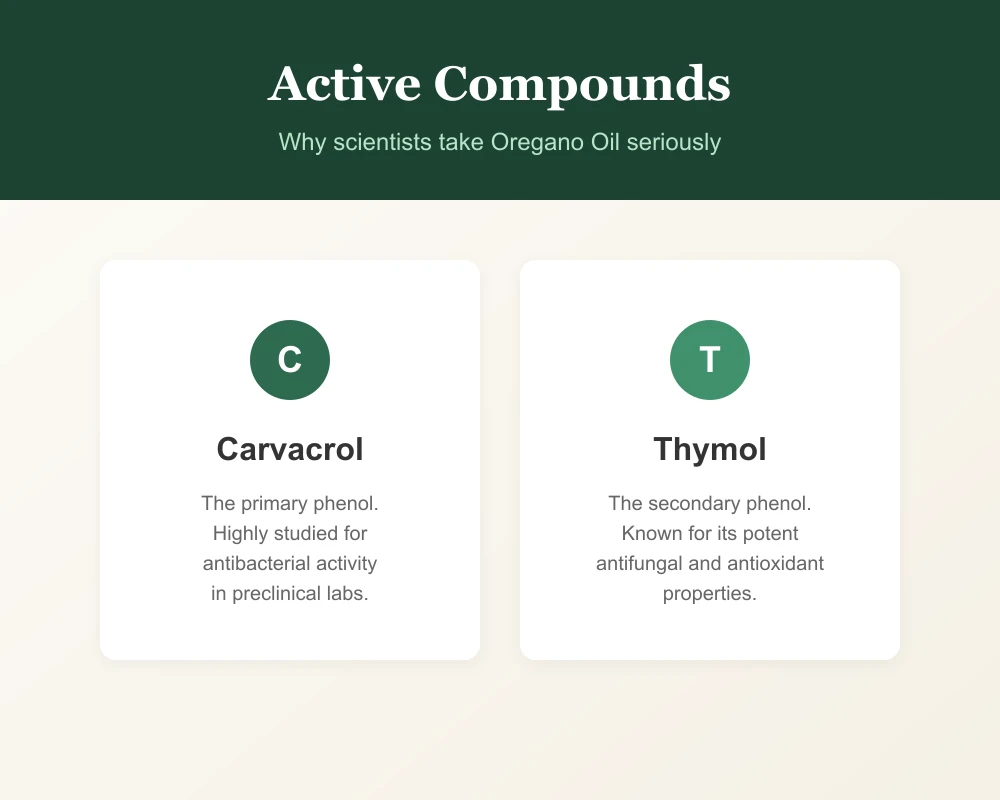
Oregano oil has one advantage over a lot of trendy supplements: there is a real reason scientists study it. The plant contains volatile compounds, especially carvacrol and thymol, that show antimicrobial and anti-inflammatory activity in lab research.
The problem is that public claims move much faster than human evidence. A bottle of oregano oil is not the same thing as a proven treatment for infection, acne, cough, or gut issues. The most useful way to talk about oregano oil is as a promising, biologically active herbal product with important safety limits and still-limited clinical proof.
| Essential Oil | Primary Active Compounds | Preclinical Focus | Primary Usage Caution |
|---|---|---|---|
| Oregano Oil | Carvacrol & Thymol | Antibacterial & Antifungal | High skin irritation risk |
| Tea Tree Oil | Terpinen-4-ol | Topical antimicrobial (Acne) | Toxic if swallowed |
| Peppermint Oil | Menthol | Antispasmodic (IBS/Digestion) | Heartburn/Reflux trigger |
What Is Oregano Oil?
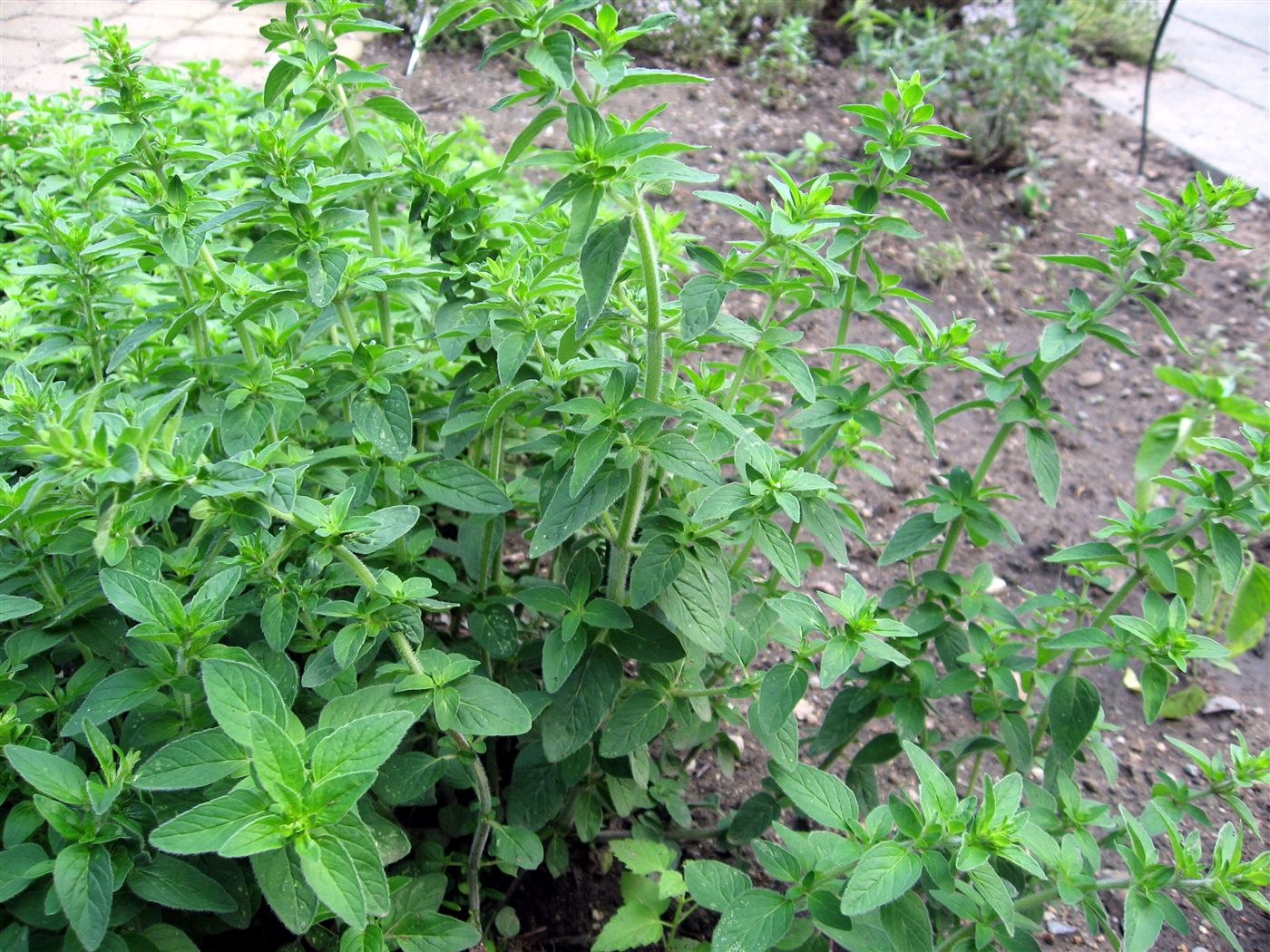
Oregano oil is a concentrated extract or essential oil derived from oregano-related plants, commonly Origanum vulgare. It is very different from sprinkling dried oregano on food.
That chemical profile is the main reason researchers keep studying it. Reviews on carvacrol (Source: PubMed) describe antimicrobial, antioxidant, and anti-inflammatory activity, but the same review also notes that meaningful human trials are still lacking.
The LiverTox oregano monograph (Source: LiverTox) makes the same point clearly: oregano oils show interesting in vitro and in vivo effects, but those actions have not been well demonstrated in humans.
Key idea
Oregano oil is promising because it is biologically active, not because it is magically proven. That difference matters.
 Support Non-AI Creator
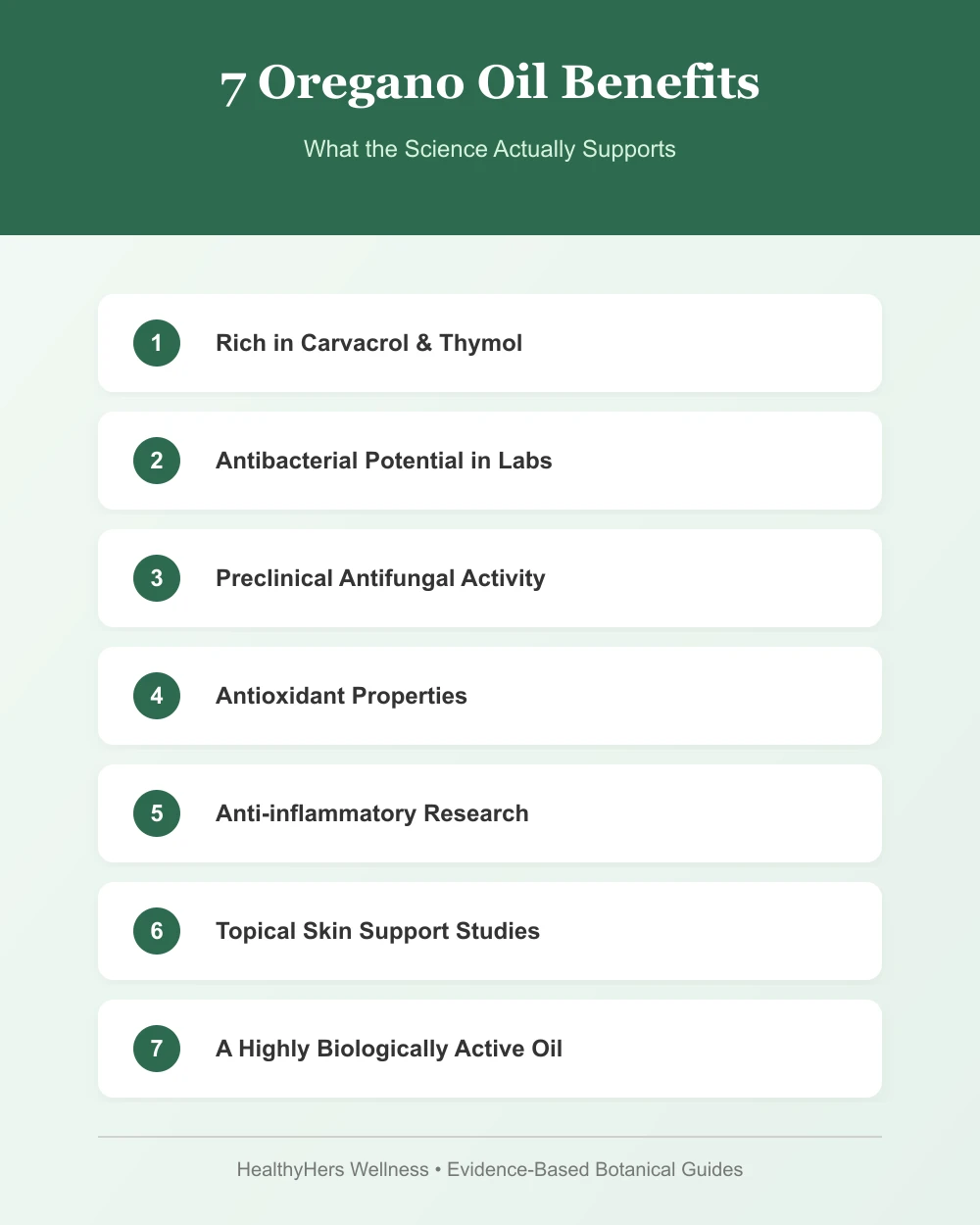
7 Oregano Oil Benefits
These are the benefits that have the best scientific footing right now. Some are better described as research-backed potential than as settled clinical fact.
Rich in carvacrol and thymol
What it does: Oregano oil delivers two highly active phenolic compounds: carvacrol and thymol. These compounds are the main reason oregano oil shows measurable biological activity in lab and preclinical research.
This is the starting point for almost every oregano oil claim. Oregano oil is rich in volatile compounds such as carvacrol and thymol, and carvacrol is the main reason researchers keep studying it.
Antibacterial activity in lab studies
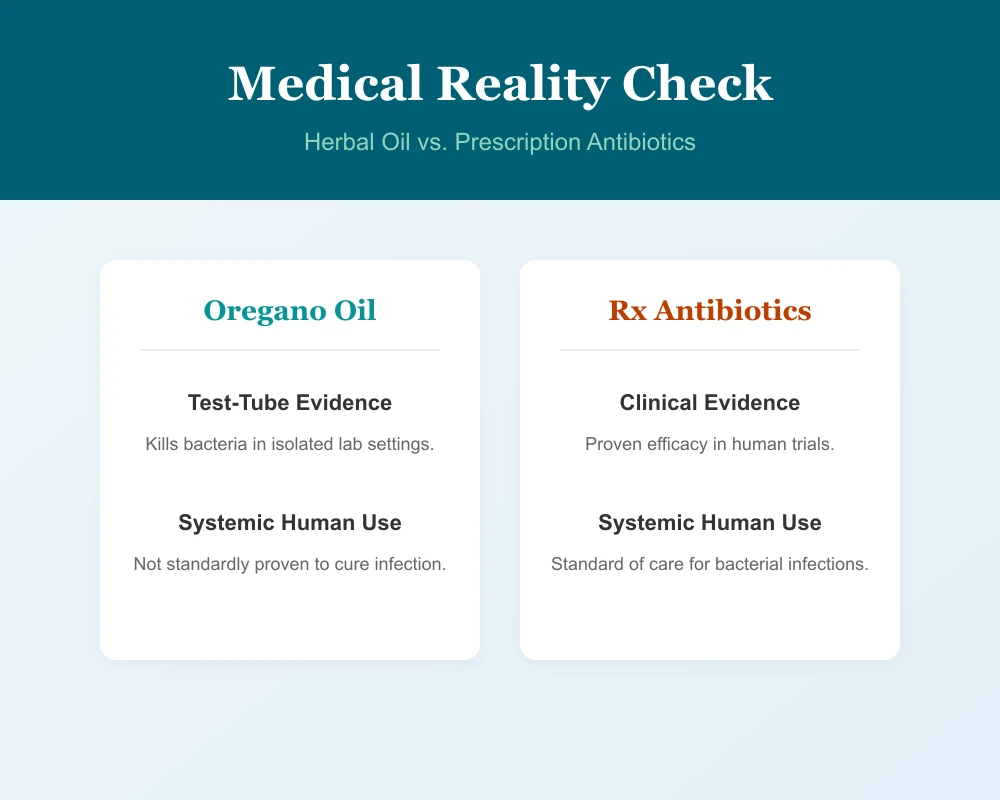
What it does: In isolated test-tube environments, oregano oil's active compounds can disrupt bacterial cell membranes. That preclinical activity is interesting, but it does not mean oregano oil can safely clear a systemic bacterial infection in people.
Oregano oil and carvacrol have repeatedly shown antibacterial effects in test-tube and preclinical work. That matters scientifically, but it does not mean an over-the-counter oil works like a prescription antibiotic in humans.
Preclinical antifungal potential
What it does: Thymol and related oregano compounds are studied for antifungal activity in vitro. That helps explain why diluted oregano extracts appear in topical folk remedies, but it is still not proof of a reliable clinical treatment.
Oregano oil is not only studied against bacteria. Reviews and preclinical work also describe antifungal activity, which is one reason it shows up in folk remedies and topical products.
Antioxidant activity in models
What it does: Carvacrol neutralizes free radicals and reduces oxidative stress markers in controlled cellular models. While it demonstrates strong antioxidant capacity in the lab, substantial human trials are required to confirm if these effects translate to long-term systemic health.
Carvacrol is also studied for antioxidant effects. That sounds promising, but most of the strong data still comes from lab and animal models rather than robust human trials.
Possible anti-inflammatory effects
What it does: Specific oregano compounds are studied for inflammation-related pathways in preclinical respiratory models. However, activity in a model is very different from reliably treating asthma, cough, or respiratory infection in a person.
Systematic reviews on carvacrol and respiratory inflammation suggest anti-inflammatory and antioxidant effects are plausible. That is interesting, but it still does not turn oregano oil into a proven treatment for asthma, cough, or infection.
Topical skin support studies
What it does: Diluted oregano essential oil shows early promise in acne and wound-healing models. Because it is very potent, it should be carefully formulated to reduce the risk of irritation or contact dermatitis.
Researchers have looked at oregano essential oil in acne and wound-healing models. That is early-stage evidence, but it does suggest oregano compounds may have a role in carefully formulated topical products.
A highly biologically active oil
What it does: Unlike many passive wellness trends, oregano oil contains concentrated phytochemicals that provoke genuine biological responses. Researchers take it seriously because its mechanisms are repeatable, even if large-scale human evidence currently lags behind aggressive marketing claims.
A lot of supplements have vague claims and thin mechanisms. Oregano oil at least has identifiable active compounds and repeatable preclinical data behind them. The honest caveat is that human evidence still lags behind the hype.
How to Use Oregano Oil Safely
Safety is where oregano oil gets oversimplified online. Because it is concentrated, the stronger it seems, the less casually it should be used.
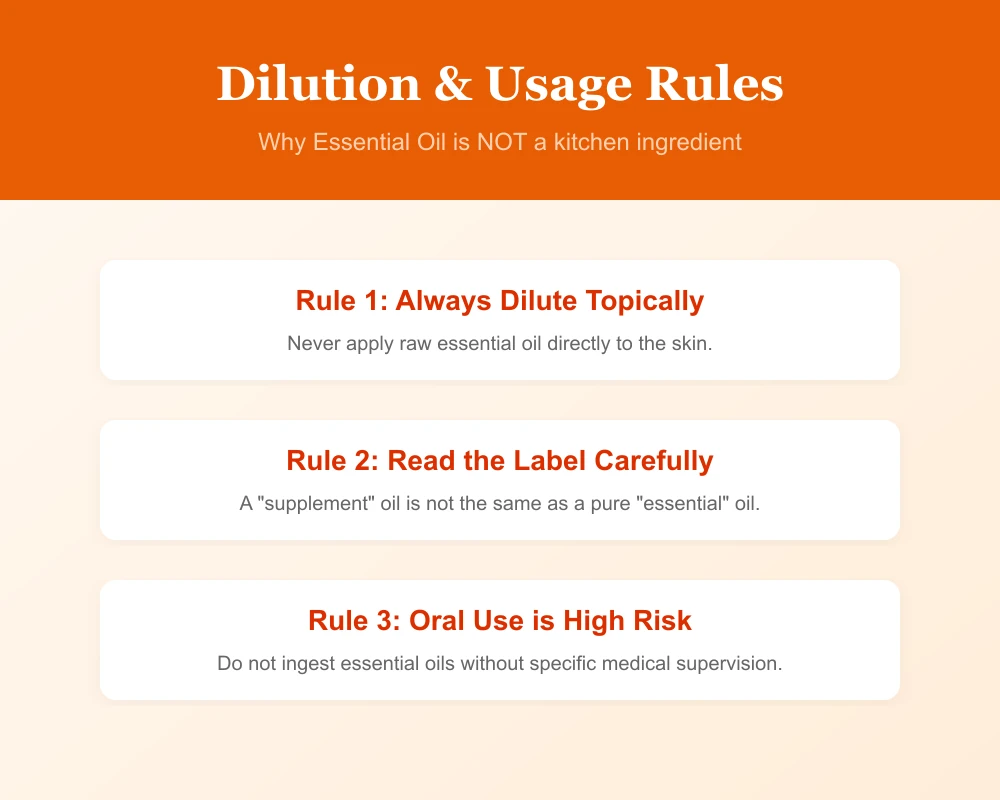
Do not treat concentrated essential oil like a kitchen ingredient. Culinary oregano and oregano essential oil are not interchangeable.
Be careful with topical use. Essential oils should be properly diluted, and irritated or broken skin needs extra caution.
Do not assume oral use is automatically harmless. Potency, formulation, and recommended dosing vary widely across products.
Use more caution if you are pregnant or take medications. Herbal products can still have meaningful effects and interactions.
Heads up
Oregano essential oil can irritate skin. There is a published contact dermatitis case report (Source: PubMed), which is exactly why raw essential oil should not be treated casually.
Who Should Avoid It?
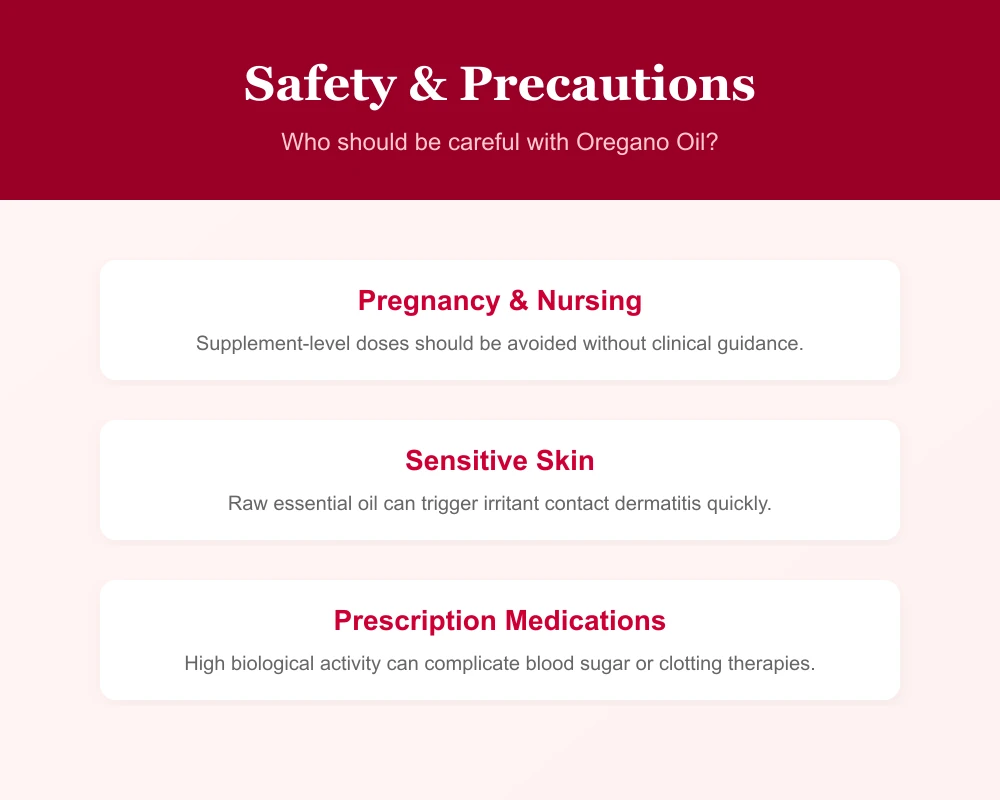
People who are pregnant: supplement-level use should be treated cautiously and discussed with a clinician.
People with sensitive or reactive skin: concentrated essential oils can irritate quickly.
People taking prescription medications: especially if they are already managing blood sugar, clotting, or other conditions where adding potent supplements can complicate things.
Anyone tempted to replace standard treatment with a supplement: oregano oil should not be used as a substitute for evidence-based care.
Frequently Asked Questions
Does oregano oil work like an antibiotic?
Not in any proven over-the-counter way. Oregano oil has antibacterial activity in lab studies, but that is not the same as showing it can safely replace antibiotics in people.
Is oil of oregano the same as oregano essential oil?
Not always. Product names are used loosely. Some products are diluted extracts or supplement oils, while oregano essential oil is much more concentrated and can irritate skin or mucosa if used incorrectly.
Can you put oregano oil on your skin?
Only with caution and proper dilution. Undiluted oregano essential oil can irritate skin and has been linked to irritant contact dermatitis.
Can you take oregano oil every day?
That is not something to assume is safe just because it is herbal. Product potency varies, long-term dosing is not standardized, and people who are pregnant or taking medications should be especially careful.
Is oregano oil safe in pregnancy?
Supplement-level doses should be avoided during pregnancy. That is a good reason to get medical guidance rather than guessing.
The Bottom Line
Oregano oil has stronger scientific plausibility than many trendy supplements because its main compounds really are biologically active and well studied in the lab.
What it does not have yet is enough strong, standardized human evidence to justify treating it like a proven fix for infection, skin disease, cough, or gut issues. The fairest framing is that oregano oil is promising, concentrated, and worth respecting, not a shortcut that gets to skip clinical reality.