
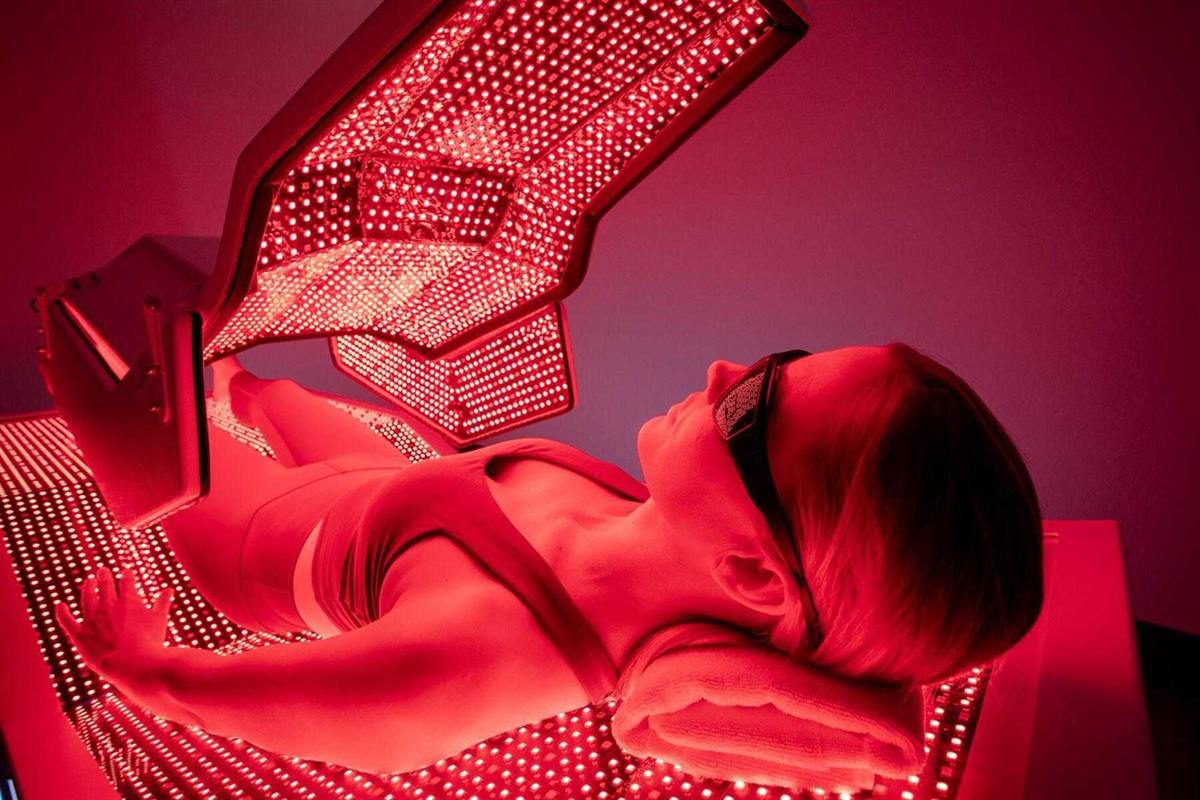
Red light therapy, often grouped under the broader term photobiomodulation, sits in an unusual spot. It is more evidence-backed than a lot of aesthetic wellness trends, but it is still marketed far beyond what the research actually proves.
The details matter: wavelength, dose, treatment schedule, target tissue, and device quality all change outcomes. That is why the fairest way to describe red light therapy is not as a universal biohack, but as a legitimate treatment category with some strong use cases and plenty of overpromising around the edges.
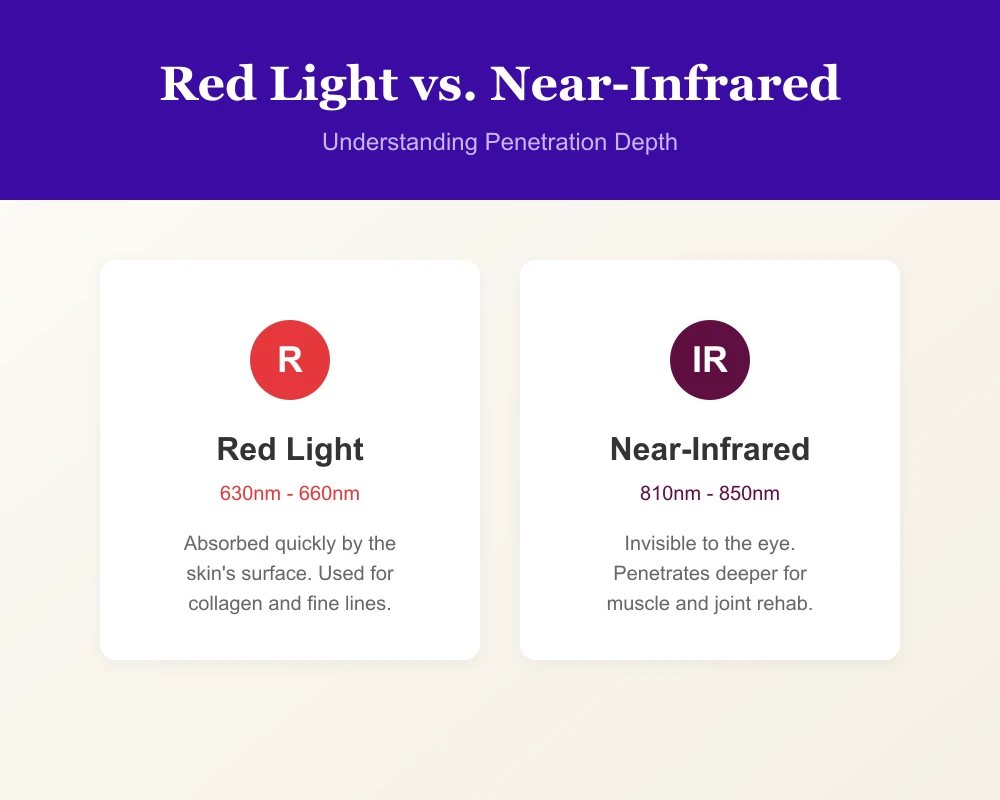
| Light Wavelength | Typical Range | Penetration Depth | Primary Clinical Focus |
|---|---|---|---|
| Red Light | 630nm - 660nm | Shallow (Epidermis/Dermis) | Skin tone, collagen, hair growth |
| Near-Infrared (NIR) | 810nm - 850nm | Deep (Muscle/Joints) | Pain relief, tissue repair, joints |
| Blue Light | 415nm - 450nm | Surface Level | Acne-causing bacteria destruction |
What Is Red Light Therapy?
Red light therapy uses specific wavelengths of visible red light, and often near-infrared light in related protocols, to affect cellular activity. The broader scientific term is photobiomodulation.
It is not one single treatment. A hair-growth cap, an oral mucositis protocol in a cancer center, and a home LED panel are all very different uses. That helps explain why the evidence looks strong in some niches and much thinner in others.
If you want the shortest possible summary, it is this: red light therapy has real science behind it, but the benefits depend heavily on the exact condition being treated and the protocol being used.
Key idea
Red light therapy is a real treatment category, not a single guaranteed result. Benefits are strongest where protocols are well studied.
 Support Non-AI Creator
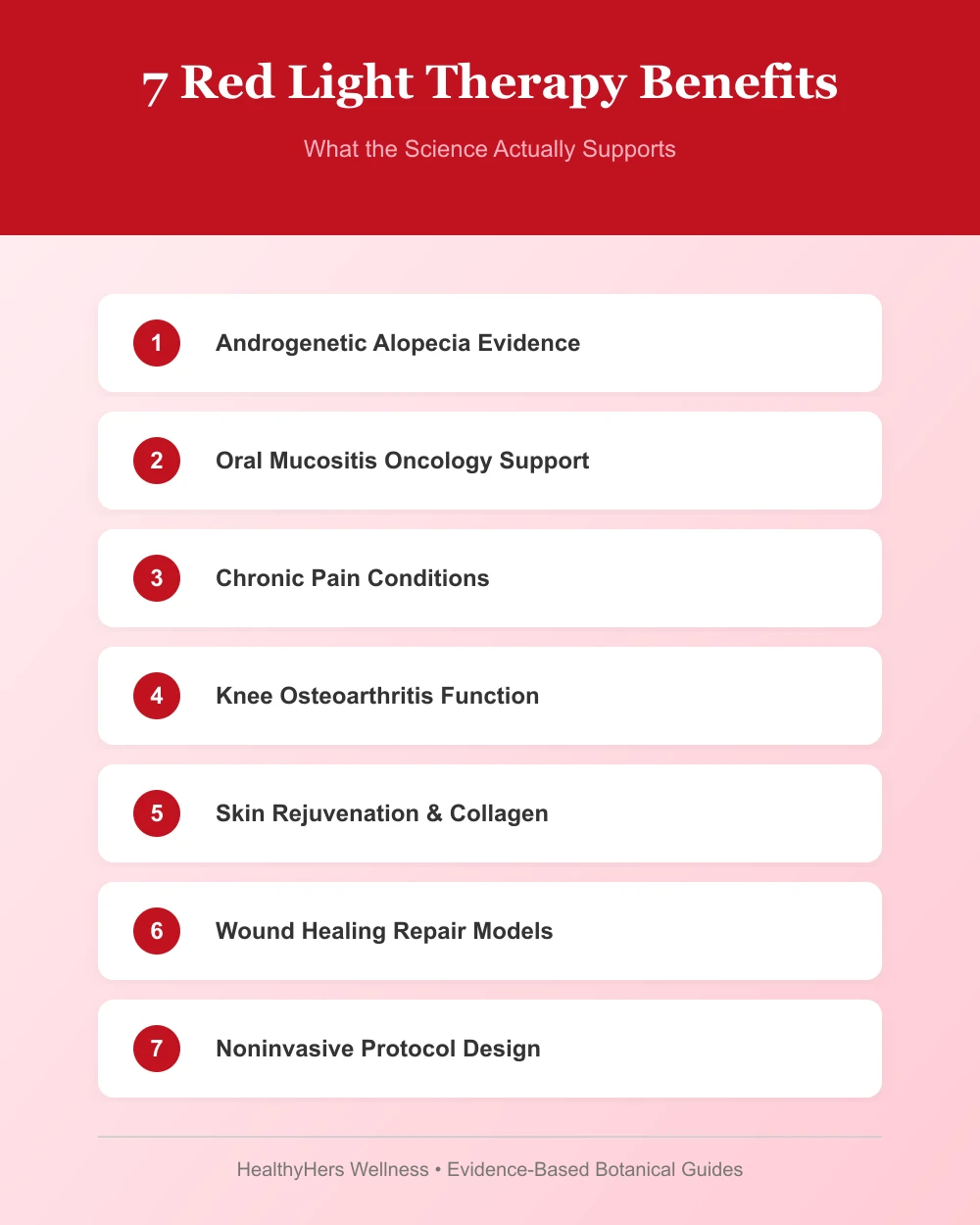
7 Red Light Therapy Benefits
These are the benefits with the clearest research footing right now. Some are much stronger than others, and a few are better described as promising than fully settled.
Strong evidence for androgenetic alopecia
What it does: Low-level light therapy may influence hair follicle activity and growth-phase signaling in androgenetic alopecia. Review-level evidence suggests it can improve hair density and thickness when the device and protocol are appropriate.
Among consumer-facing uses, hair growth is one of the stronger evidence areas. Systematic reviews and meta-analyses (Source: PubMed) suggest low-level light therapy can improve hair density and thickness in androgenetic alopecia.
Supportive-care tool for oral mucositis
What it does: In clinical oncology settings, photobiomodulation can be used as supportive care for oral mucositis under specific protocols. The evidence is strongest when treatment parameters are supervised rather than improvised at home.
Photobiomodulation is not just a wellness trend. In oncology supportive care, it has meaningful evidence (Source: PubMed) for helping prevent or reduce oral mucositis severity when used with the right protocols.
 Support Non-AI Creator
May help with chronic pain conditions
What it does: Near-infrared light can reach deeper tissues than visible red light and is studied for pain-related pathways. When protocols match the condition, it may work as an adjunct for some chronic musculoskeletal pain settings.
Systematic reviews and meta-analyses suggest photobiomodulation can reduce pain in some settings, but the results depend heavily on the condition being treated and the device parameters used.
Improves function in knee osteoarthritis
What it does: Red light therapy is studied for inflammation and circulation-related mechanisms in knee osteoarthritis. When combined with physical therapy, some protocols may improve mobility, stiffness, and function.
Network meta-analyses suggest that certain photobiomodulation approaches perform well for knee osteoarthritis outcomes, especially when paired with exercise rather than treated as a magic standalone fix.
Supports skin rejuvenation and photoaging
What it does: Superficial red wavelengths around 630nm are studied for fibroblast and collagen-related skin outcomes. Over repeated sessions, some people may see modest improvements in texture, fine lines, or photoaging signs.
There is growing evidence for skin-focused uses such as fine lines, texture, and photoaging support. Review-level literature suggests red and near-infrared light can improve collagen-related skin outcomes when applied consistently. For a botanical angle on skin-support claims, see our guide to anti-aging herbs for youthful skin.
 Support Non-AI Creator
Shows promise for wound healing
What it does: Photobiomodulation is studied for tissue-repair pathways, including cellular energy and wound-healing signals. The research suggests possible support, but wound care should stay clinically guided when the wound is serious or slow to heal.
Wound healing is another area with longstanding photobiomodulation interest. The evidence is mixed in quality, but umbrella-level reviews support a real biologic signal rather than pure placebo.
Noninvasive and usually well tolerated
What it does: Unlike chemical peels or ablative lasers, red light therapy does not intentionally damage the skin surface first. It is usually low-downtime and well tolerated when used with the right eye-safety and device precautions.
This is one reason red light therapy remains appealing. It can be delivered without needles, downtime, or tissue damage, although proper protocols still matter and not every home device is equally well designed.
Who Sees the Most Benefit?
The people most likely to see a meaningful benefit are usually the ones using red light therapy for the conditions with the clearest protocols and research base.
- People with androgenetic alopecia: one of the better-supported consumer uses.
- Patients receiving guided supportive care: especially in oral mucositis settings under clinical supervision.
- People using it as an adjunct, not a replacement: for knee osteoarthritis, rehab, or pain care.
- People treating realistic goals: such as modest skin texture or fine-line improvement rather than dramatic overnight change.
Safety and Limits
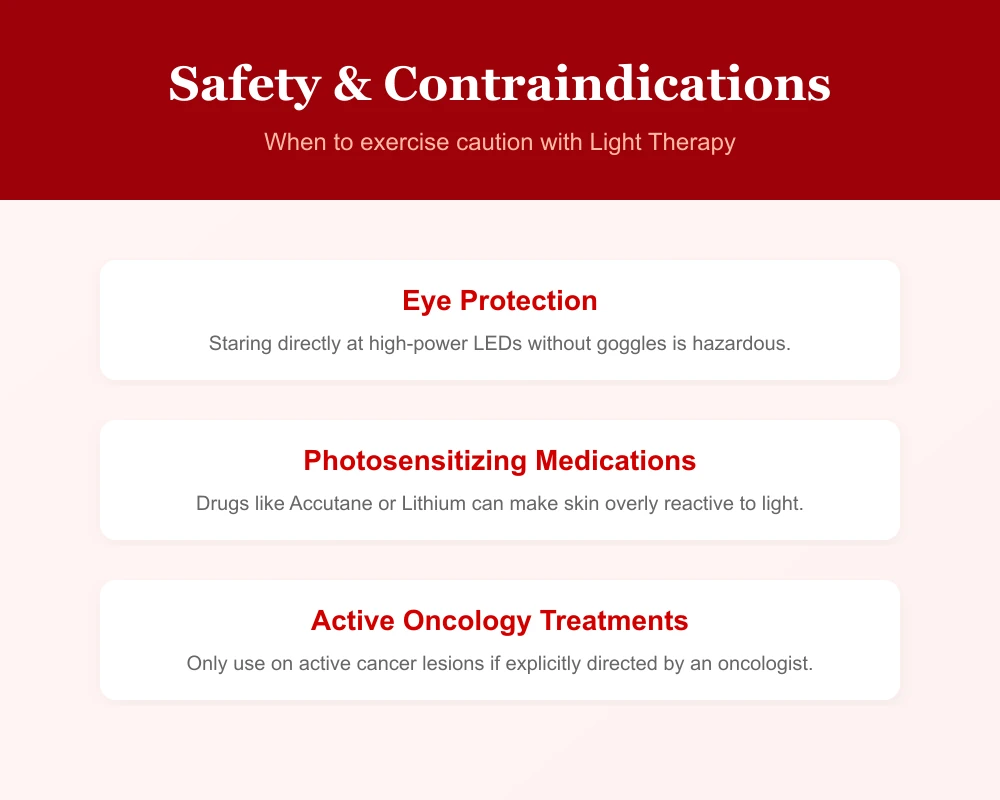
Red light therapy is generally well tolerated, but that does not mean there are no rules. The biggest practical problems are poor device specs, unrealistic claims, and users treating it like more light is automatically better.
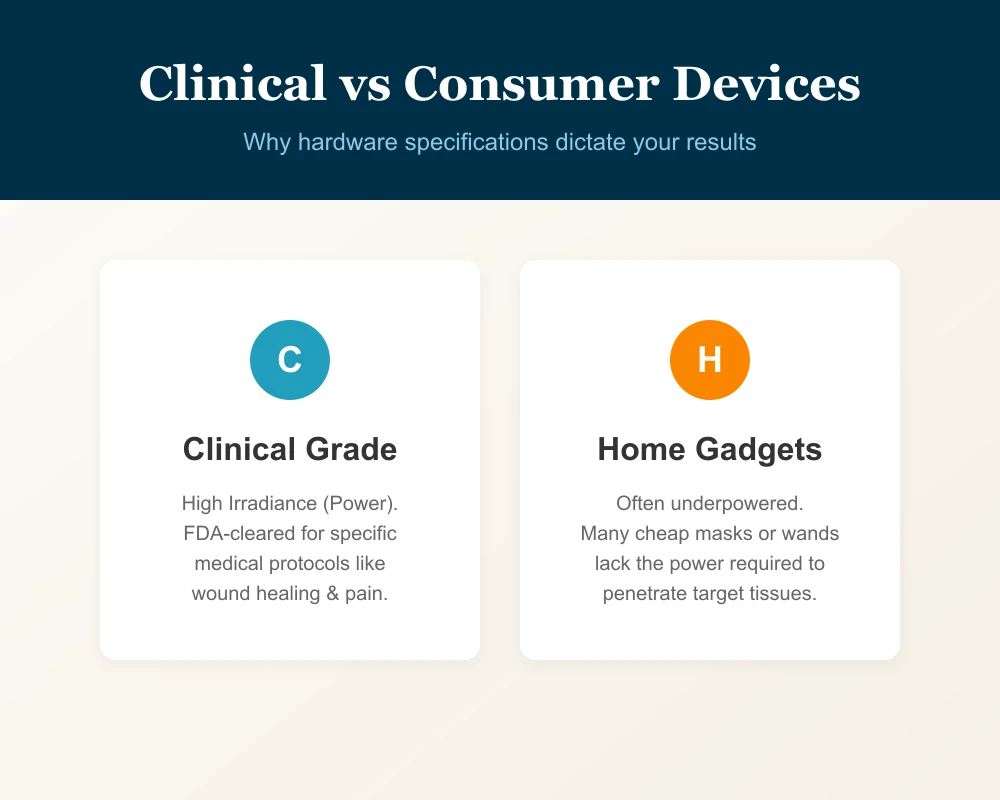
- Not all red lights are therapeutic devices. Wavelength and dose matter.
- Eye safety still matters. Strong direct exposure is not something to improvise around.
- It should not replace standard treatment. This is especially true for pain, skin disease, wounds, and anything cancer-related.
- Clinical use is different from consumer use. The more serious the condition, the more important supervised protocols become.
Heads up
A positive result in a study usually reflects a specific wavelength, session length, and treatment schedule. You cannot assume any red-glowing gadget will reproduce those results.
Frequently Asked Questions
Does red light therapy actually work?
Sometimes, yes, but it depends on the condition, wavelength, dose, and device quality. Hair loss, oral mucositis support, and some pain and skin uses have better evidence than many social-media claims.
Is red light therapy the same as near-infrared therapy?
Not exactly. They are often grouped together under photobiomodulation, but they use different wavelengths and may penetrate tissue differently.
How long does it take to see results?
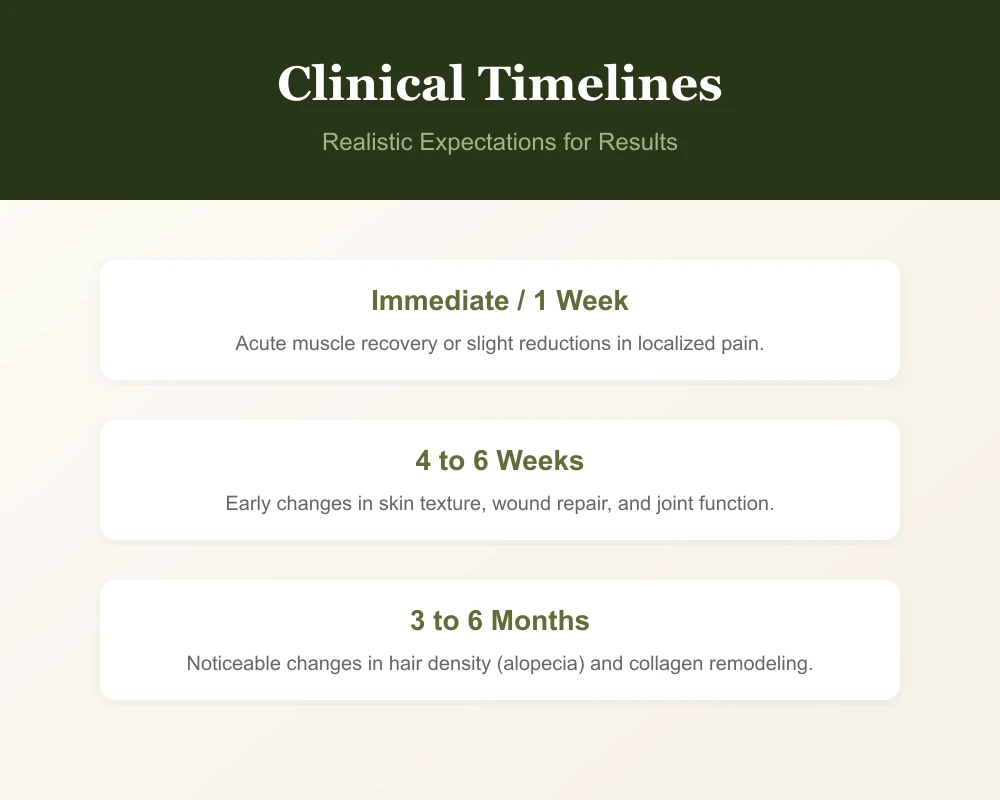
Usually weeks, not days. Skin and hair outcomes especially depend on repeated sessions over time rather than one or two treatments.
Can a home red light device work?
Possibly, but device quality and treatment parameters matter a lot. A weak or poorly specified device may not match the kinds of protocols used in clinical studies.
Is red light therapy safe for everyone?
It is generally well tolerated, but eye safety, photosensitivity, active medical conditions, and cancer-related use all deserve caution and sometimes clinician input.
The Bottom Line
Red light therapy is not empty hype. It has real evidence in a handful of important areas, especially hair loss, oral mucositis support, some pain conditions, and certain skin-focused uses.
It is also not a universal fix. The fairest framing is that photobiomodulation can be genuinely helpful when the target condition and treatment parameters match the evidence, and much less convincing when marketers blur all those differences away.