
Magnesium helps regulate muscle and nerve function, blood sugar, blood pressure, and the production of protein, bone, and DNA. Many people consume less than the recommended amount, but low dietary intake is not the same as a diagnosed magnesium deficiency.
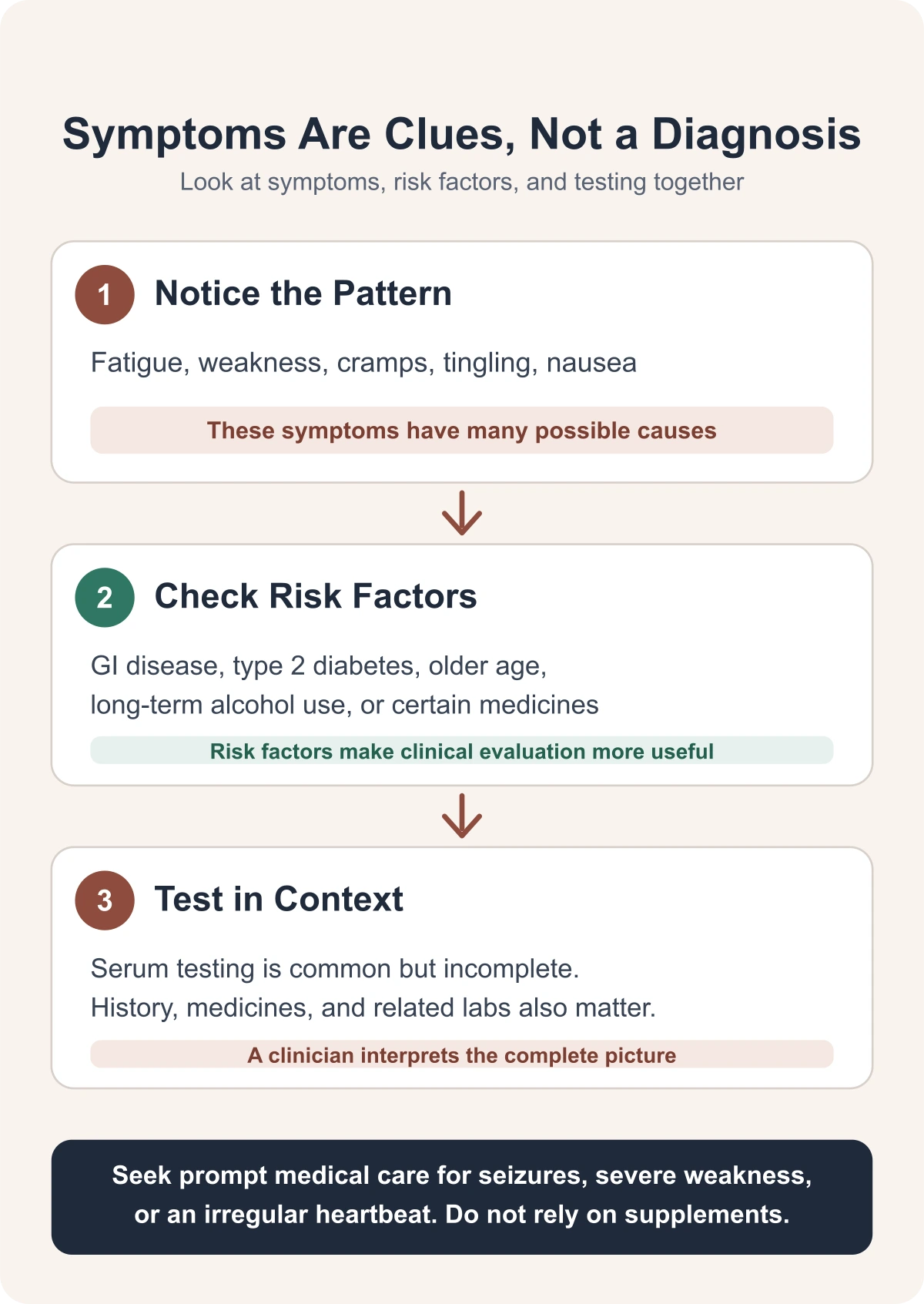
Symptoms alone cannot tell you whether your magnesium level is low. Mild or short-term low intake often causes no obvious symptoms, and complaints such as fatigue or muscle cramps have many possible causes. Risk factors, medication history, and clinical testing provide more useful context than a symptom checklist.
Do Not Self-Diagnose from Symptoms
Contact a clinician if symptoms are persistent, worsening, or accompanied by numbness, tingling, marked weakness, seizures, or an irregular heartbeat. These problems need medical evaluation rather than high-dose supplements.
 Support Non-AI Creator
What Are the Possible Signs of Magnesium Deficiency?
The NIH Office of Dietary Supplements lists loss of appetite, nausea, vomiting, fatigue, and weakness among possible early symptoms. More pronounced deficiency can cause numbness, tingling, muscle contractions or cramps, seizures, personality changes, and an abnormal heart rhythm.
Fatigue and Weakness
Fatigue and weakness can occur with magnesium deficiency, but they are highly nonspecific. Poor sleep, anemia, thyroid disorders, infection, medication effects, and many other conditions can produce similar symptoms. Persistent fatigue deserves a broader evaluation rather than an assumption that one nutrient is responsible.
Muscle Cramps, Spasms, or Tingling
Magnesium contributes to normal nerve signaling and muscle contraction. Clinically low levels can cause cramps, contractions, numbness, or tingling. An occasional eyelid twitch or calf cramp, however, does not establish a deficiency and may also relate to exertion, dehydration, caffeine, stress, or another electrolyte problem.
Severe Neurologic or Heart Symptoms
Seizures and abnormal heart rhythms can occur when magnesium becomes extremely low. These are not symptoms to manage with an over-the-counter supplement. Seek prompt medical care, particularly when an irregular heartbeat is accompanied by chest pain, fainting, shortness of breath, or severe weakness.
Who Is More Likely to Develop Low Magnesium?
Risk is more informative than vague symptoms alone. NIH guidance identifies several groups who are more likely to have low intake, impaired absorption, or increased magnesium loss:
- People with gastrointestinal disease: Crohn's disease, celiac disease, chronic diarrhea, bowel surgery, and other malabsorption problems can reduce absorption.
- People with type 2 diabetes: Poorly controlled diabetes can increase magnesium loss through urine.
- Older adults: Intake and intestinal absorption may decrease with age, while urinary losses and medication use may increase.
- People with long-term alcohol dependence: Low intake, digestive problems, and urinary losses can occur together.
- People taking certain medicines: Long-term proton-pump inhibitor use and some diuretics can affect magnesium status. Do not stop a prescribed medicine without professional guidance.
The updated MedlinePlus magnesium deficiency guide also lists chronic diarrhea, malnutrition, excessive urination, and several medicines among potential causes.
How Is Magnesium Deficiency Tested?
A serum magnesium blood test is the most common starting point, but it does not provide a complete measure of magnesium stored in bones and tissues. A normal result can sometimes occur even when body stores are low. That limitation does not make blood testing useless; it means the result should be interpreted alongside symptoms, medical history, medicines, and related laboratory findings.
Depending on the situation, a clinician may also review calcium and potassium levels or order urine or red-blood-cell magnesium testing. No single test answers every question about magnesium status. The MedlinePlus blood-test overview explains how clinicians use serum testing and when additional tests may be considered.
How to Increase Magnesium Through Food
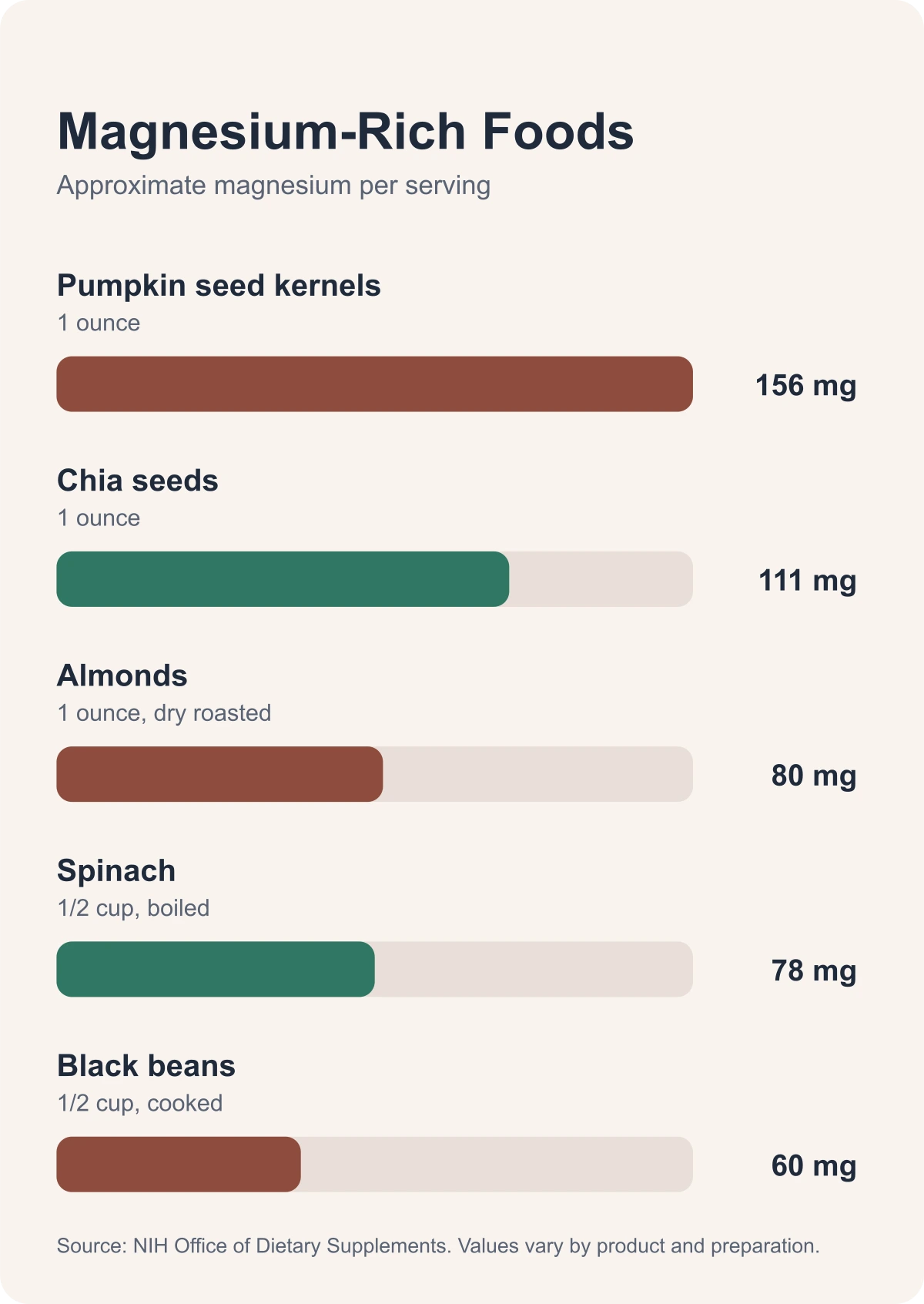
For most healthy adults who simply want to improve their intake, food is the safest starting point. Nuts, seeds, beans, whole grains, leafy greens, and fortified foods can all contribute magnesium along with other nutrients. Magnesium naturally present in food does not have an established upper intake limit for healthy people.
 Support Non-AI Creator
Build Intake Across the Day
Instead of treating one food as a cure, combine several sources: add seeds to breakfast, include beans or whole grains at lunch, and serve a leafy green with dinner. Consistent variety is more useful than chasing a single magnesium-rich ingredient.
Our summer snack collection includes practical chia, edamame, and seed-based ideas that can help diversify dietary sources.
What to Know Before Taking a Supplement
Supplements may be appropriate when a clinician identifies a deficiency or diet alone cannot meet a person's needs. NIH guidance notes that magnesium aspartate, citrate, lactate, and chloride are generally absorbed more completely than magnesium oxide and sulfate, although the best choice depends on the reason for use and individual tolerance.
For adults, the tolerable upper intake level is 350 mg per day from supplements and medications unless a healthcare professional recommends otherwise. This limit does not include magnesium naturally present in food. Excess supplemental magnesium commonly causes diarrhea, nausea, and abdominal cramping; extremely high intakes can be dangerous.
Magnesium can interfere with the absorption of certain antibiotics and bisphosphonates. Diuretics can either increase or decrease magnesium loss depending on the type, and long-term proton-pump inhibitor use can lower magnesium levels. People with impaired kidney function have a greater risk of magnesium toxicity and should not supplement without medical supervision. Review the NIH professional magnesium fact sheet and discuss your medicines with a clinician or pharmacist.
When Should You See a Doctor?
Arrange a clinical evaluation when symptoms persist, when you have a condition or medicine associated with magnesium loss, or when you are considering supplements to treat a suspected deficiency. Seek prompt care for seizures, an irregular heartbeat, severe weakness, or worsening numbness and tingling. A clinician can look for magnesium deficiency without overlooking other conditions that cause similar symptoms.
The Takeaway
Low magnesium intake is common, but clinically important deficiency cannot be diagnosed from poor sleep, anxiety, fatigue, or muscle twitches alone. Use food to support ordinary intake, pay attention to genuine risk factors, and involve a clinician when symptoms persist or supplements may interact with your health conditions or medicines.