
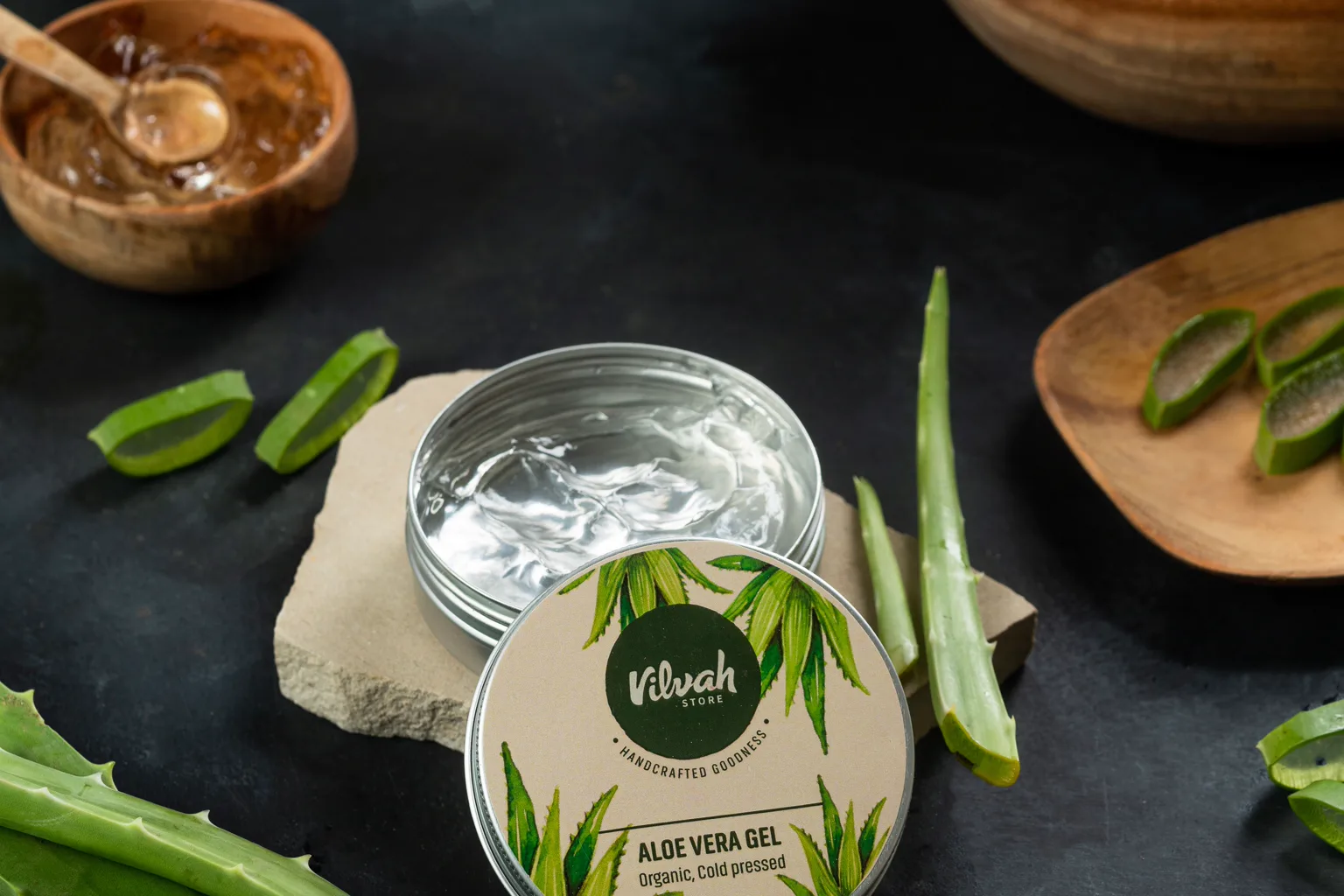
Aloe gel feels cool, spreads easily, and can leave skin feeling smooth as it dries. Those sensory effects help explain its reputation as a natural skin tightener. They do not show that topical aloe has lifted tissue or rebuilt the deeper collagen and elastin structures that influence laxity.
Can Aloe Vera Tighten Loose Skin?
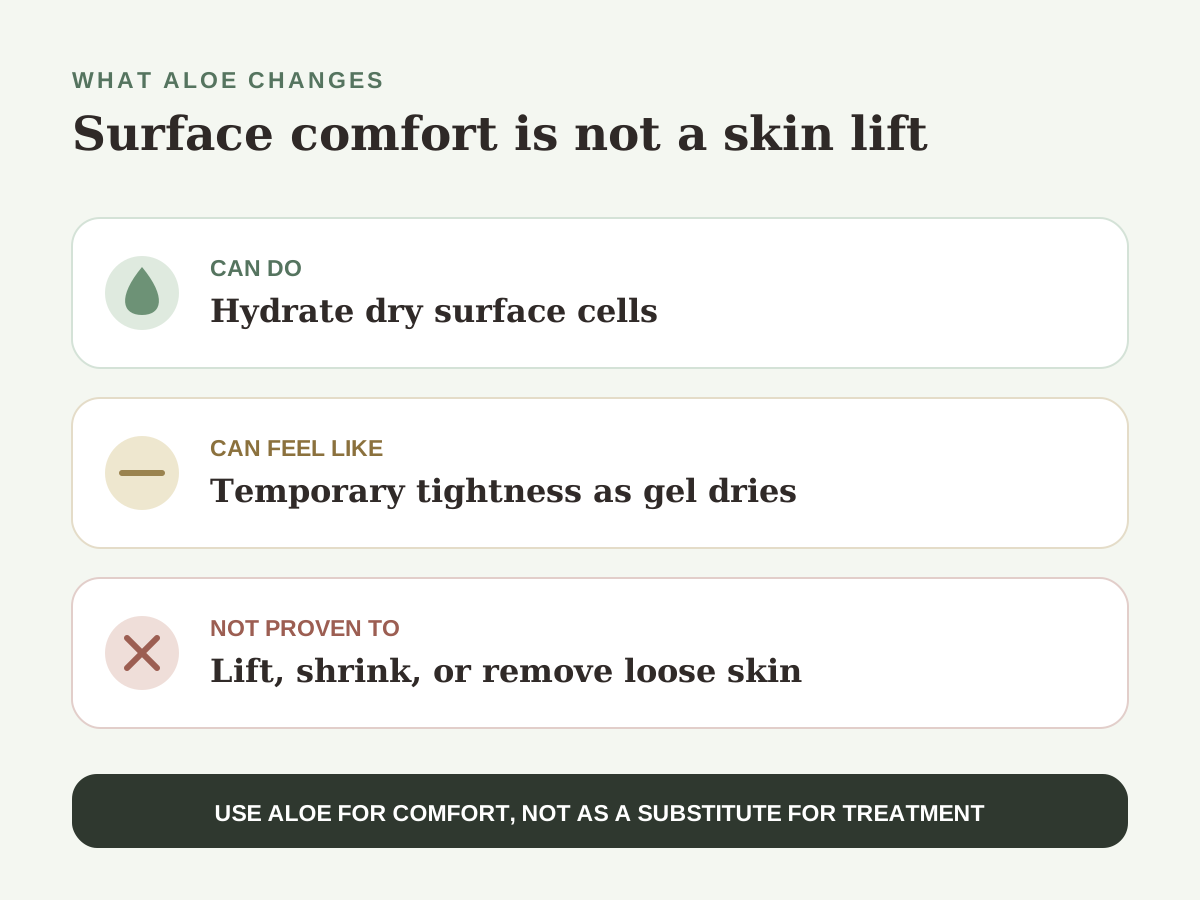
There is no reliable clinical evidence that applying aloe vera gel produces lasting skin tightening. Aloe may hydrate the outer layer and reduce the appearance of dry surface lines for a while. A tacky film can also create a temporary tight feeling as water evaporates. Neither effect removes excess skin.
 Support Non-AI Creator
The National Center for Complementary and Integrative Health describes topical aloe as generally well tolerated, while noting reports of burning, itching, rash, and eczema. It does not list skin tightening as an established benefit.
What Can Topical Aloe Realistically Do?
Add Temporary Hydration
The water-rich gel can make dehydrated surface cells look plumper. Fine dryness lines may be less obvious until the effect wears off. A well-formulated moisturizer that combines water-binding ingredients with emollients and an occlusive layer will often retain moisture longer than plain aloe gel.
Feel Cooling or Soothing
Refrigerated or fast-evaporating gel can feel cooling on warm, mildly irritated skin. That sensation does not prove inflammation has been treated or tissue has tightened. Do not apply aloe to a serious burn, infected wound, or extensive damaged skin instead of seeking care.
Leave a Film as It Dries
Some gels contain polymers or gums that form a light film. As it dries, the surface can feel taut. Wash-off masks, egg white, clay, and astringents can create similar sensations without producing a lasting lift.
 Support Non-AI Creator
Why Are Aloe Tightening Claims Confusing?
Oral Supplements Are Not Topical Gel
Small studies of orally consumed aloe sterols have reported changes in skin hydration or elasticity measurements. Those findings cannot be transferred to fresh leaf gel rubbed on the body. The route, dose, extract, population, and outcome are different, and oral aloe products have separate safety concerns.
Wound Healing Is Not Loose-Skin Tightening
Research on burns or wounds asks whether injured skin closes or heals. Loose, healthy skin after pregnancy, weight change, or aging is a different condition. An ingredient that helps one wound model has not automatically proven it can lift normal lax tissue.
Cell and Animal Studies Are Early Evidence
Laboratory findings about fibroblasts, collagen, or antioxidants may help researchers decide what to study next. They do not establish a visible, durable tightening result in people. Look for controlled human trials using the same topical product and measuring a meaningful outcome.
Before-and-After Photos Are Easy to Distort
Lighting, posture, lens distance, hydration, muscle tension, and the sticky film of a drying product can all change a photo. A valid comparison needs consistent conditions and enough follow-up to distinguish a temporary surface effect from remodeling.
How Can You Use Aloe Gel More Safely?
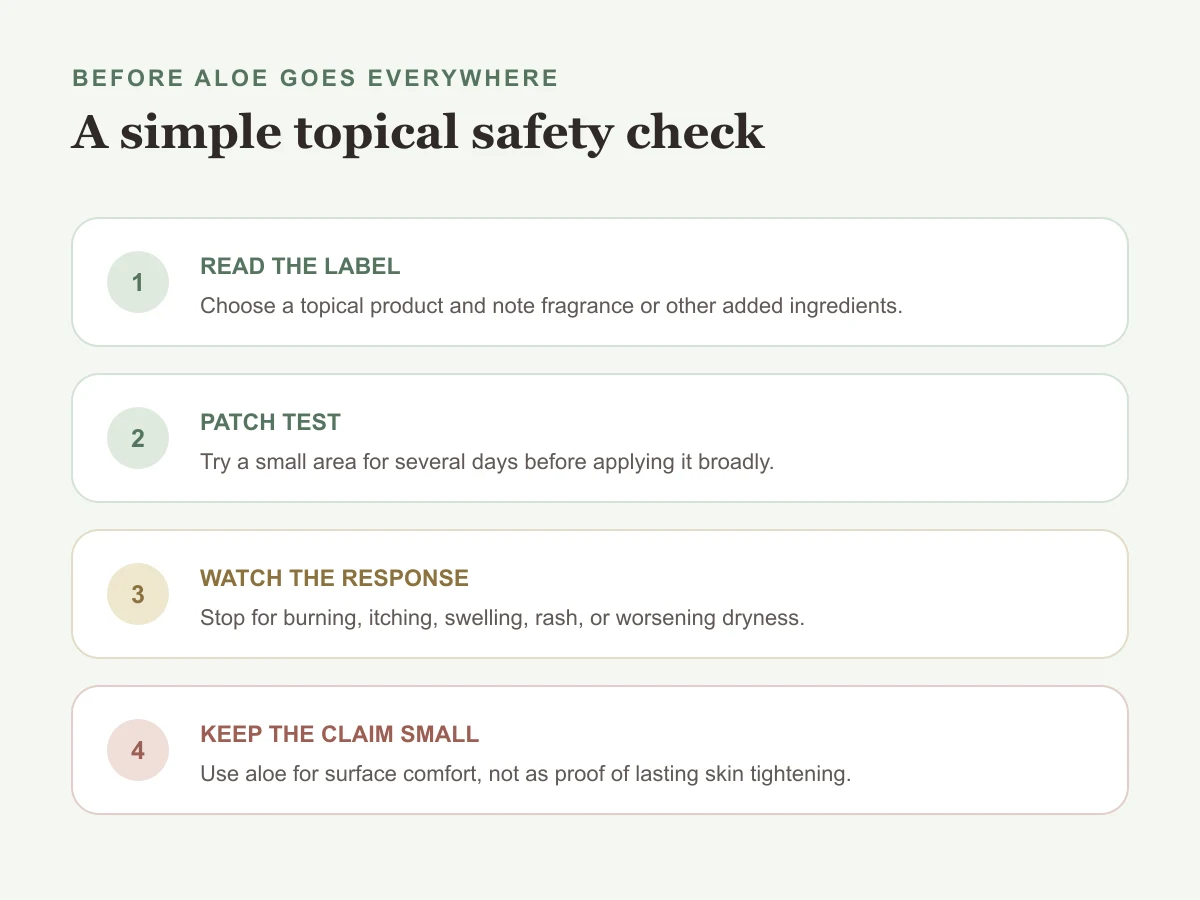
- Choose a clearly labeled topical product from a reputable manufacturer.
- Prefer fragrance-free formulas if your skin is sensitive or eczema-prone.
- Patch-test a small area for several days before wider use.
- Apply to intact skin and stop for burning, itching, swelling, or rash.
- Follow with a plain moisturizer if aloe alone leaves skin dry or tight.
- Do not ingest topical gel, and keep it away from children and pets.
Fresh leaf gel is less standardized and may contain irritating yellow latex near the rind. A commercial topical formula is easier to preserve and dose, though it can still cause a reaction. More botanical ingredients are not necessarily gentler.
 Support Non-AI Creator
Avoid Oral Aloe Latex for Cosmetic Goals
Oral aloe latex can cause cramping and diarrhea and has important safety concerns. Swallowing aloe is not a proven way to tighten skin and should not be treated as a beauty shortcut.
What Works Better for Skin Firmness?
Daily Sun Protection
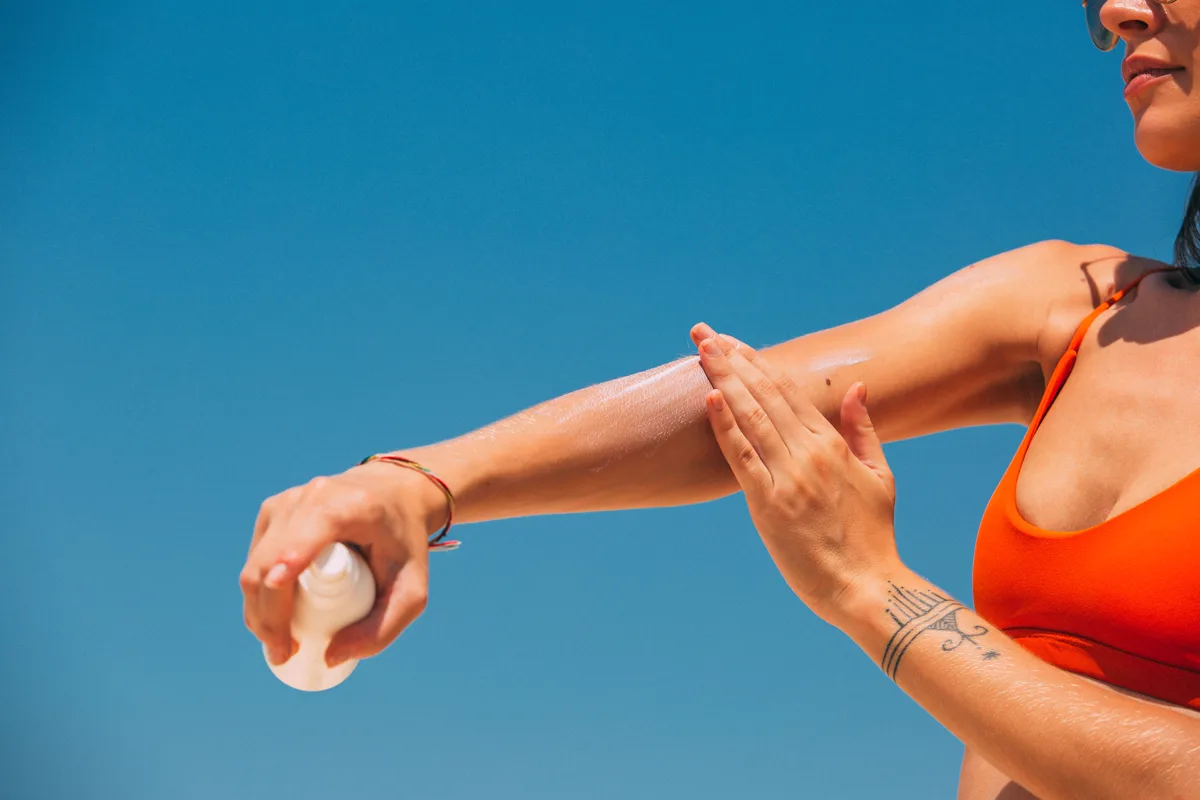
Broad-spectrum sunscreen, shade, and protective clothing reduce additional ultraviolet damage to collagen. Prevention is gradual and unglamorous, but it has a stronger rationale than expecting aloe to reverse laxity.
 Support Non-AI Creator
Retinoid-Based Care
Retinoids have evidence for improving fine wrinkles and photoaged texture through collagen-related changes. They can irritate and are not appropriate during pregnancy. Ask a dermatologist which strength and schedule fit your skin.
Moisturizer for Crepey Texture
A fragrance-free cream containing glycerin, ceramides, or petrolatum can make dry skin look smoother. As with aloe, this is surface improvement rather than removal of loose tissue.
Dermatology Procedures
Radiofrequency, focused ultrasound, and some lasers may provide modest tightening for selected people. Results, risks, and cost vary. Substantial excess skin is most predictably changed by surgery. For the abdomen specifically, see our guide to tightening loose stomach skin.
Essential oils are not a stronger natural substitute. Our review of essential oils and skin tightening explains why temporary smoothness and fragrance are often mistaken for structural change.
Frequently Asked Questions
Does aloe vera tighten loose skin?
Aloe gel can hydrate the outer skin layer and make dryness or fine surface lines look temporarily smoother. There is no reliable evidence that topical aloe lifts loose skin, removes excess tissue, or produces a lasting tightening effect.
How long does aloe vera take to tighten skin?
There is no proven timeline because lasting skin tightening has not been demonstrated. A cooling or slightly tacky gel may create an immediate sensation of tightness as it dries, but that is not structural remodeling.
Can I leave aloe vera on my skin overnight?
A formulated topical aloe product can be left on if the label allows it and a patch test causes no burning, itching, rash, or worsening dryness. Fresh leaf gel is less standardized, and aloe can still cause irritation or allergy in some people.
What works better than aloe for skin firmness?
Daily broad-spectrum sunscreen and evidence-based retinoid care can support photoaged skin, while dermatologist-performed ultrasound, radiofrequency, or laser treatments may provide modest tightening. Surgery is the most effective option for substantial excess skin.
The Bottom Line
Aloe vera can be a pleasant hydrating or soothing ingredient when your skin tolerates it. It is not a natural lift. Use it for surface comfort, patch-test first, and choose sun protection, evidence-based skin care, or a professional assessment when the goal is meaningful firmness.