
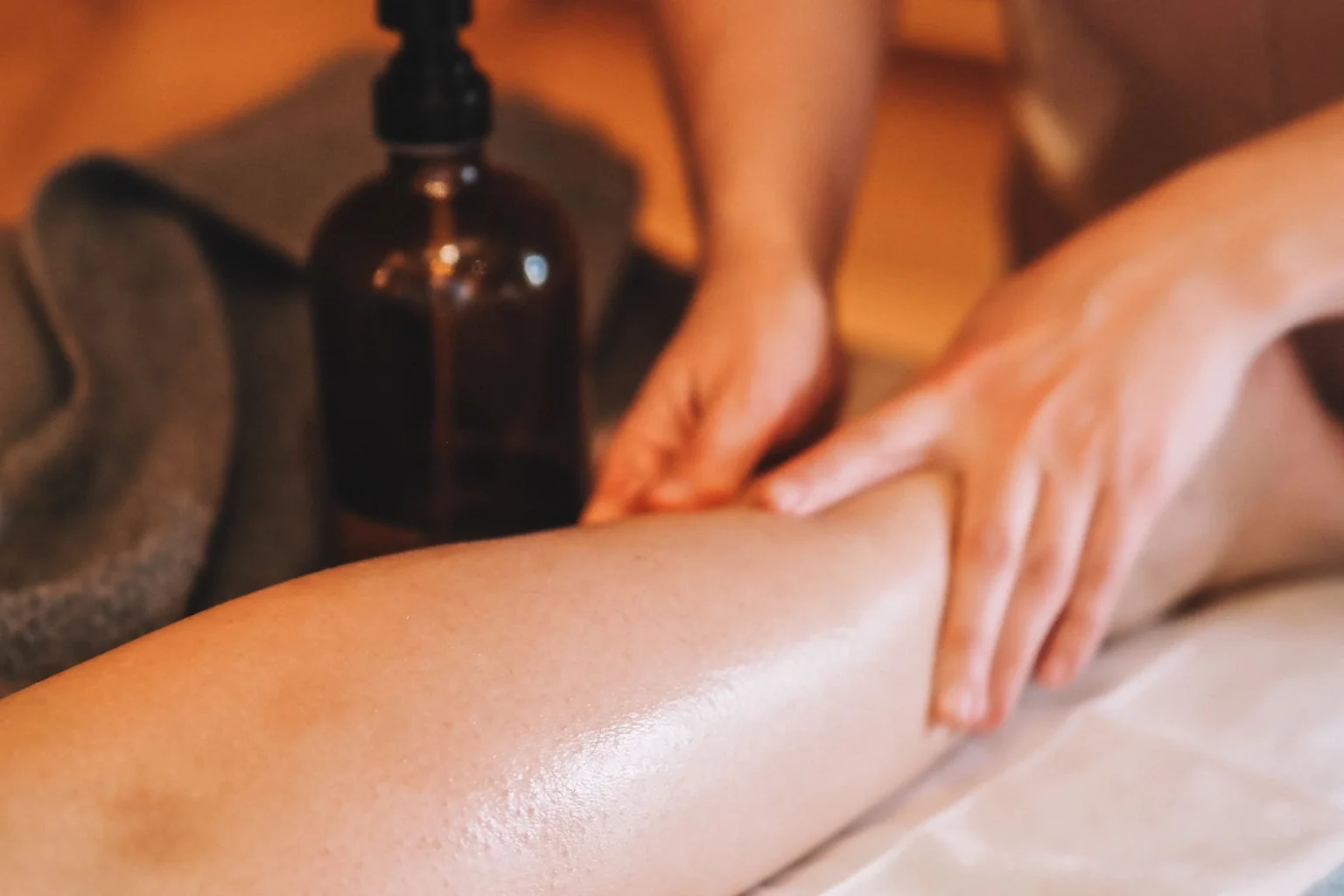
“Poor circulation” is often used for cold hands, heavy legs, ankle swelling, tingling, or cramps. Those symptoms do not all have the same cause. An essential-oil massage may feel warming, cooling, or relaxing, but that sensory change cannot tell you whether blood is moving normally through deeper arteries and veins.
That distinction matters because circulation problems can involve narrowed arteries, damaged veins, a blood clot, heart or kidney disease, medication effects, or simply sitting still for too long. Oils cannot safely stand in for a diagnosis or condition-specific treatment.
Do Essential Oils Improve Circulation?
There is no convincing clinical evidence that applying or inhaling an essential oil treats poor circulation throughout the body. Oils do not remove arterial plaque, dissolve a blood clot, repair faulty vein valves, or correct the medical causes of persistent swelling.
Massage and a warm foot bath can temporarily increase skin blood flow. A small study found increased blood flow after a warm foot bath, but adding lavender oil did not create a clear additional effect (Source: PubMed). This is a useful example of why the ritual, warmth, and touch should not automatically be credited to the oil.
A Sensation Is Not a Circulation Test
Tingling from peppermint, warmth from spicy oils, redness after rubbing, or relaxed muscles after massage can feel active. None confirms that deeper arterial or venous blood flow has improved.
 Support Non-AI Creator
What Do Your “Circulation” Symptoms Actually Suggest?
Cold Hands or Feet
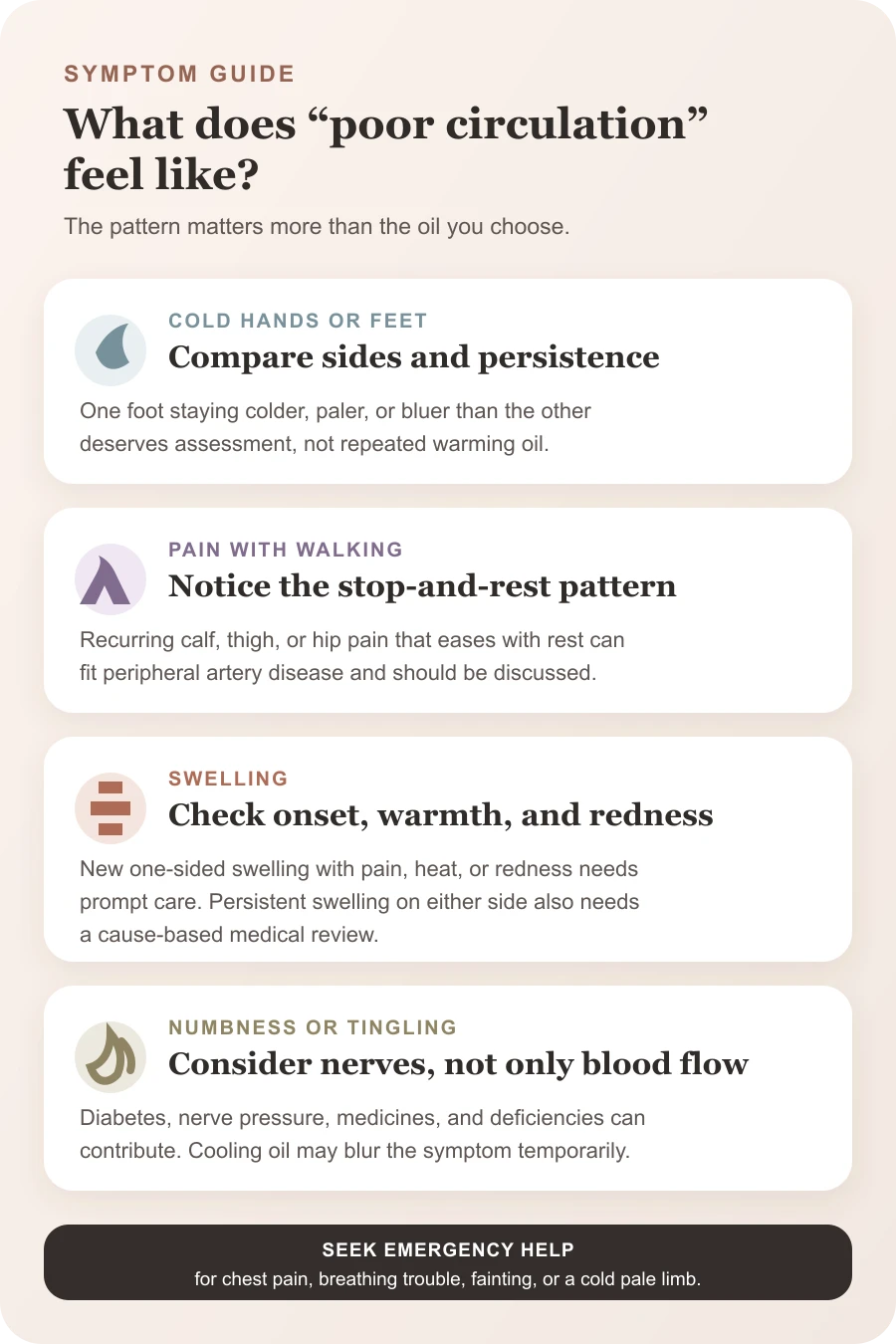
Temperature, stress, inactivity, nicotine, anemia, thyroid problems, nerve conditions, and blood-vessel disorders can all contribute. One foot that is consistently colder, paler, or bluer than the other deserves assessment rather than repeated warming oil.
Aching or Cramping When Walking
Leg or hip pain that appears with walking and settles after rest is a classic pattern of peripheral artery disease, although other conditions can mimic it. The American Heart Association advises discussing recurring exertional pain with a health professional.
Swollen Ankles or Legs
Swelling can follow prolonged sitting or standing, but it may also relate to varicose veins, medication, pregnancy, injury, infection, or heart, kidney, liver, or thyroid problems. The NHS oedema guide recommends medical advice when swelling is unexplained or accompanied by other symptoms.
Numbness, Tingling, or Burning
These sensations can come from nerves rather than reduced blood flow. Diabetes, nerve compression, vitamin deficiencies, medication effects, and other neurologic problems may be involved. A cooling essential oil can mask or confuse the sensation without addressing its cause.
What About Oils Marketed for Circulation?
Peppermint
Menthol activates cold-sensitive nerve receptors, which explains the immediate cooling or tingling feeling. It does not show that blood flow has increased. The National Center for Complementary and Integrative Health notes that topical peppermint oil can cause skin rash and irritation.
Rosemary
Rosemary is commonly placed in “stimulating” massage blends. Laboratory and small experimental studies of aromatic compounds do not establish rosemary essential oil as a treatment for peripheral artery disease, venous insufficiency, edema, or neuropathy. A strong smell or warming massage experience is not equivalent to a clinically meaningful vascular outcome.
Ginger and Black Pepper
These oils are marketed as warming. Their pungent compounds can activate sensory pathways and irritate skin, creating warmth or redness that may be mistaken for better circulation. They should not be used to provoke a reaction, especially on sensitive skin, neuropathic feet, or areas with poor healing.
Cypress
Cypress appears frequently in blends for varicose veins and fluid retention. There is not good human evidence that it repairs vein valves, reduces medically significant edema, or prevents clotting. Swelling needs a cause-based approach rather than a diuretic or “drainage” claim attached to fragrance.
Lavender
Lavender may make massage feel calmer and more pleasant. That sensory benefit is valid, but it should be described as relaxation rather than circulation treatment. NCCIH notes that topical lavender can cause allergic reactions in some people.
What Massage May Change Temporarily
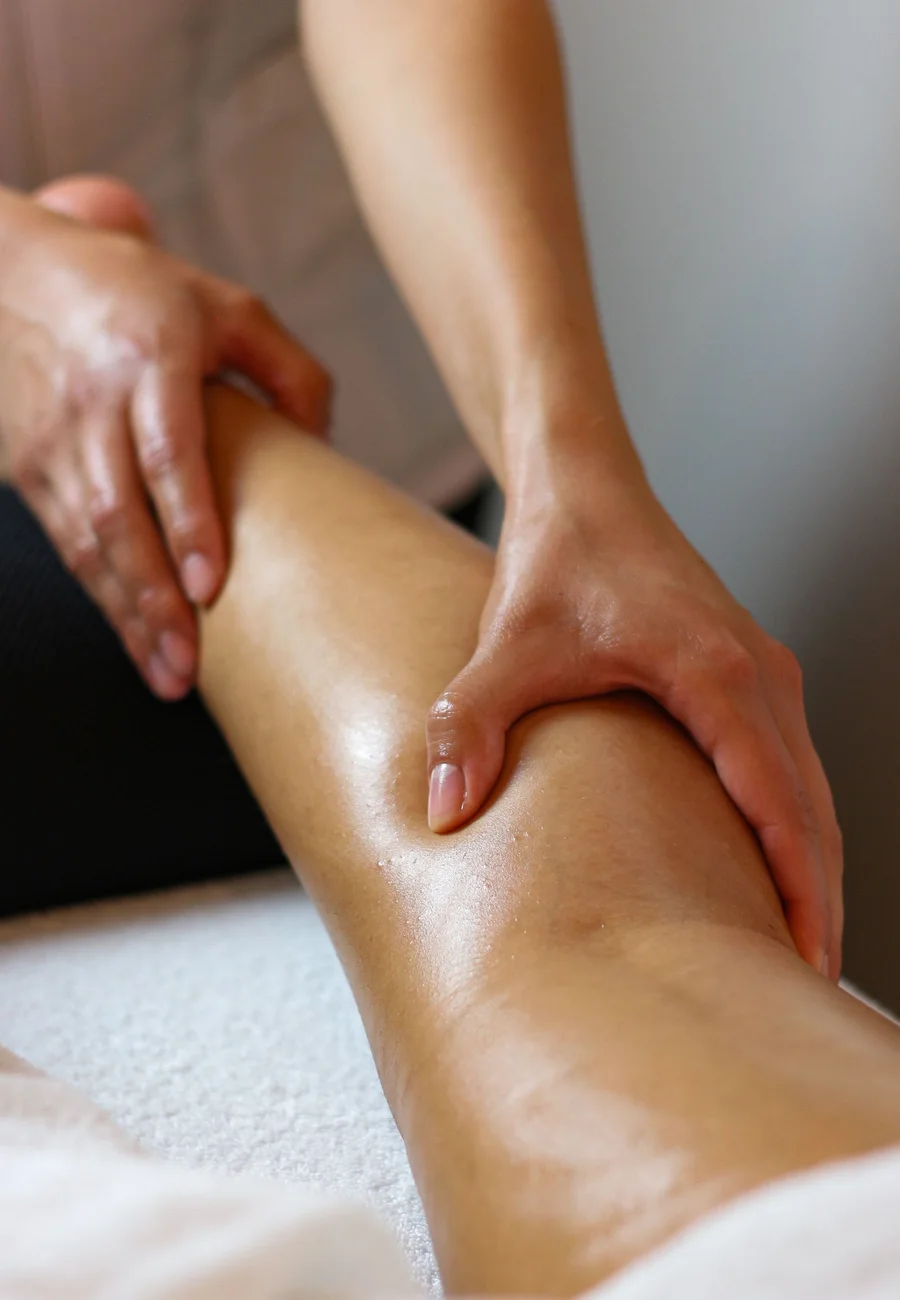
Gentle massage can warm superficial tissue, move fluid locally, reduce a feeling of muscle tension, and provide relaxation. The effects depend on the massage, pressure, warmth, body position, and underlying condition. A carrier oil mainly reduces friction; an essential oil mainly adds fragrance or a sensory compound.
Massage is not appropriate for every “circulation” concern. Avoid massaging a leg that is newly swollen, painful, red, or warm, because a clot or infection needs to be ruled out. Do not massage open wounds, ulcers, severe varicose-vein inflammation, or an area with reduced sensation unless an appropriate clinician has advised it.
 Support Non-AI Creator
How to Use an Essential-Oil Massage Product More Safely
If the goal is relaxation or ordinary muscle comfort, a finished massage product from a reputable manufacturer is easier to use consistently than a homemade mixture. The product should be labeled for topical use and applied only to intact skin.
- Never use essential oil undiluted. Higher concentration increases irritation and sensitization risk.
- Patch-test the finished product. Stop for burning, persistent redness, itching, swelling, or blistering.
- Keep it away from wounds and mucous membranes. This includes slow-healing sores, cracked skin, and ulcers.
- Do not use sensation as the dose. Stronger tingling or heat is not better treatment.
- Use extra caution with neuropathy. Reduced sensation can make it harder to notice irritation or injury.
- Do not swallow essential oils. Topical and aromatherapy products are not automatically safe to ingest.
For a fuller explanation of dilution, allergy, and citrus sun sensitivity, see our guide to using essential oils on skin more safely.
What Actually Supports Leg Circulation?
Move Regularly
Calf muscles help move venous blood upward when you walk. Break up long periods of sitting or standing with brief movement when you are able. A short walk, ankle pumps, or changing position can be more useful than adding fragrance to a massage oil.
 Support Non-AI Creator
Address Cardiovascular Risk
Smoking, diabetes, high blood pressure, and high cholesterol increase the risk of arterial disease. Managing these with evidence-based care protects the heart, brain, and limbs. Essential oils do not offset these risks.
Follow Condition-Specific Advice
Supervised walking programs can help people with peripheral artery disease. Leg elevation and compression can help some venous or swelling problems, but compression is not safe for every arterial condition and should not be improvised when the cause is unclear. Medication, wound care, or vascular procedures may be necessary depending on the diagnosis.
The American Heart Association's PAD guidance emphasizes early detection, risk-factor care, and appropriate physical activity rather than topical remedies.
When Circulation Symptoms Need Medical Care
Seek urgent medical help for sudden one-sided leg swelling or pain, especially with redness or warmth; chest pain; shortness of breath; coughing blood; fainting; or a foot or leg that suddenly becomes cold, pale, blue, numb, or weak.
Arrange a routine assessment for recurring calf, thigh, or buttock pain with walking; one foot that remains colder than the other; color changes; slow-growing nails; numbness; persistent swelling; or a sore on the foot or leg that heals slowly. The AHA lists slow-healing wounds, temperature differences, and skin-color changes among possible signs of peripheral artery disease.
People with diabetes, known vascular disease, neuropathy, or a history of ulcers should get foot and leg changes checked early. Masking symptoms with cooling or warming oil can delay the care that protects tissue and mobility.
Frequently Asked Questions
Which essential oil is best for blood circulation?
No essential oil is proven to treat poor circulation or improve blood flow throughout the body. Peppermint, rosemary, ginger, lavender, and cypress are commonly marketed for circulation, but cooling, warmth, fragrance, or massage sensations are not evidence that an artery or vein problem has improved.
Can I massage essential oils into swollen legs?
Do not massage a newly swollen, painful, red, or warm leg until a blood clot or infection has been ruled out. For ordinary muscle tension, use only a properly diluted product on intact skin. Persistent or unexplained swelling needs medical advice.
Does peppermint oil increase circulation?
Peppermint oil activates cold-sensing nerves and can make skin feel cool or tingly. That sensation does not prove improved circulation. Topical peppermint can also cause rash or irritation and should not be used undiluted.
What helps circulation in the legs?
Regular movement, walking when medically appropriate, avoiding long periods in one position, managing smoking, blood pressure, cholesterol, and diabetes, and following condition-specific medical care have stronger roles. Compression is useful for some venous problems but is not appropriate for everyone, especially without assessment when arterial disease is possible.
The Bottom Line
Essential oils may make massage smell pleasant or feel cooling or warming, but they do not treat poor circulation. Use them only for an optional sensory preference on intact skin. For recurring pain, swelling, temperature or color changes, numbness, or slow-healing wounds, identify the cause and follow evidence-based vascular, medical, or movement guidance.