
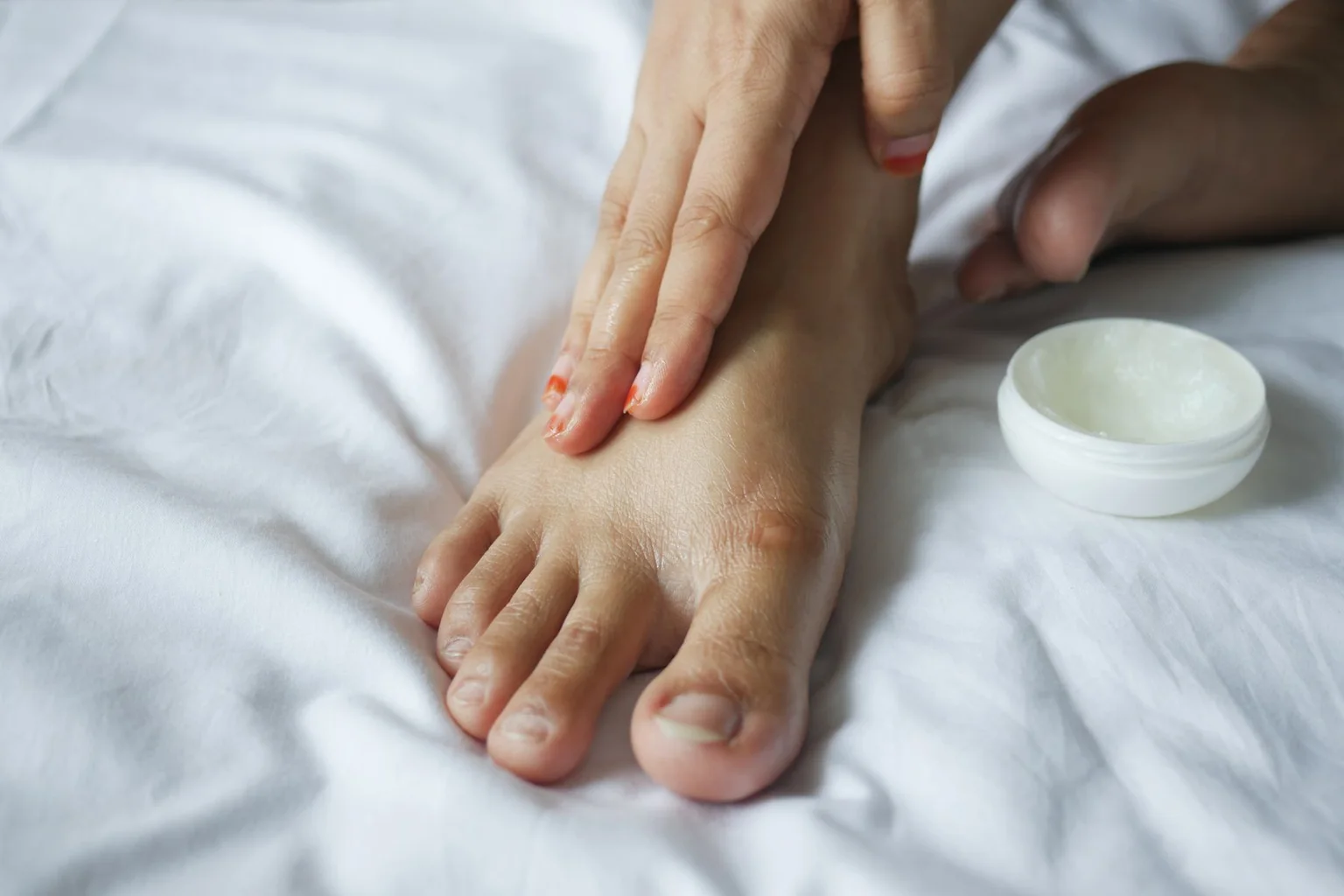
If your heels feel rough or split, an aromatic oil can sound like a simple natural fix. The important distinction is that essential oils are concentrated fragrance ingredients. They do not replace the moisture, gentle scale removal, pressure reduction, and wound care that help heel fissures close.
The safest starting point is usually fragrance-free. This matters even more when a crack is open, bleeding, tender, or surrounded by inflamed skin, because damaged skin is easier to irritate.
Do Essential Oils Heal Cracked Heels?
There is no good clinical evidence that lavender, tea tree, peppermint, eucalyptus, or another essential oil heals heel fissures. Some have laboratory antimicrobial activity, but laboratory findings do not show that a homemade blend safely closes cracks in people. Essential oils may instead cause burning, irritation, or allergic contact dermatitis.
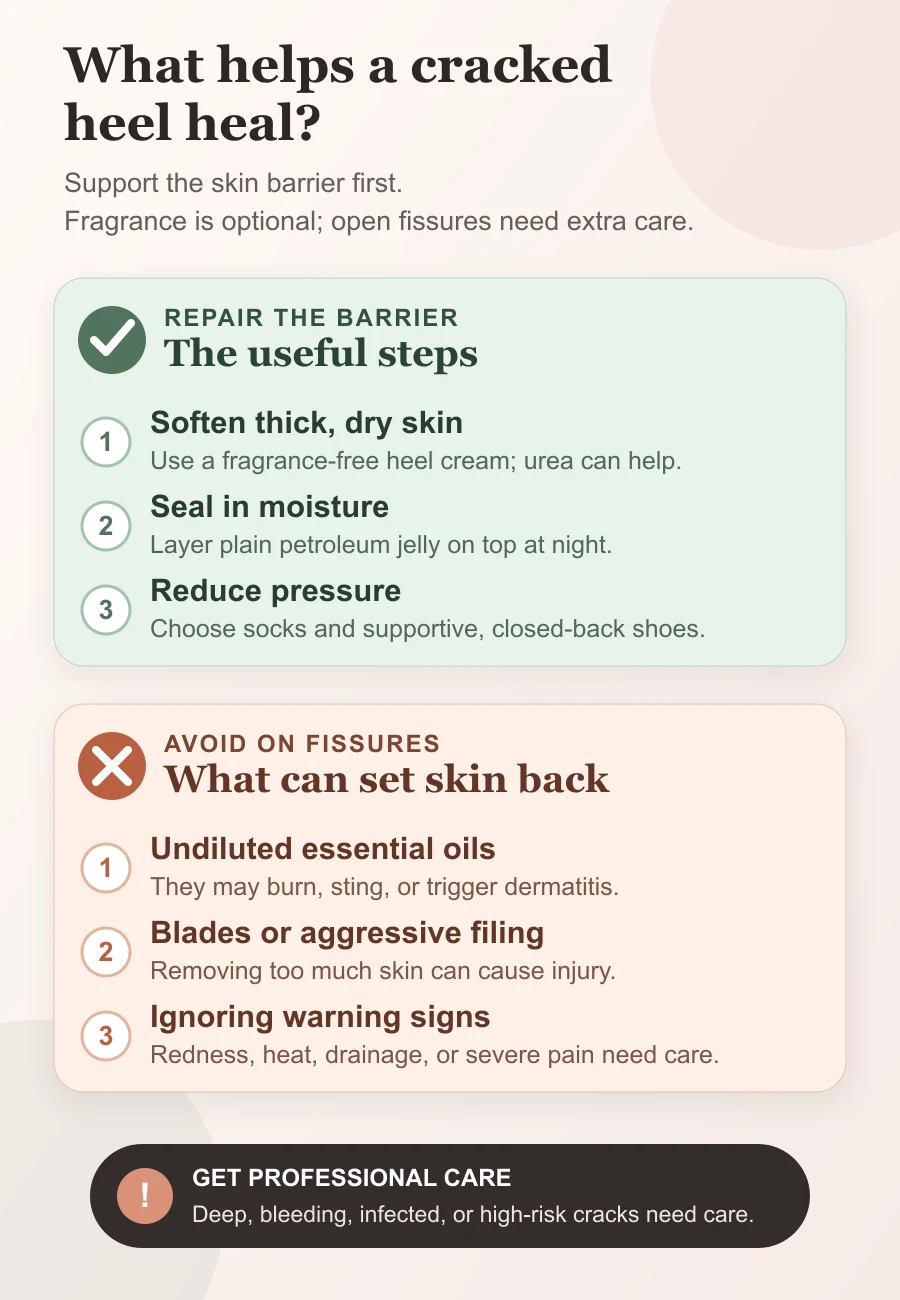
The treatment with the clearest practical role is a thick moisturizer. The American Academy of Dermatology recommends applying a cream containing 10% to 25% urea, alpha hydroxy acid, or salicylic acid after bathing, then using plain petroleum jelly before bed.
Skip Fragrance on Open Cracks
Do not drip an essential oil into a fissure or apply it undiluted. If the heel is bleeding, oozing, hot, swollen, or very painful, treat it as damaged skin and seek appropriate care rather than experimenting with fragrance oils.
 Support Non-AI Creator
Why Heels Become Dry and Cracked
Heel skin carries weight and stretches each time you stand or walk. When the outer layer becomes very dry and thick, pressure can push the heel pad outward and split the less-flexible skin at its edge. Open-backed shoes, prolonged standing, dry weather, friction, and a heavy rim of callus can make the pattern worse.
Not every cracked heel is simple dryness. Athlete's foot can create scaling or itching, while eczema, psoriasis, thyroid disease, circulation problems, and diabetes can change the skin or its ability to heal. A one-sided painful bulge, wound, or sudden change deserves a closer look instead of being assumed to be cosmetic dryness.
If you also have itch or peeling between the toes, an antifungal treatment may be more relevant than extra oil. The NHS athlete's-foot guide explains the common pattern and when pharmacy or medical advice is useful.
What Popular Essential Oils Can and Cannot Do
Tea Tree Oil
Tea tree oil is often recommended because of its antimicrobial reputation. That does not make it a general treatment for cracked heels. A fissure caused by dryness needs barrier repair, while a fungal infection needs an antifungal product at an effective concentration. Tea tree oil can also cause contact dermatitis, especially when concentrated or oxidized.
Lavender Oil
Lavender may make a foot-care routine smell relaxing, but fragrance is not healing action. The National Center for Complementary and Integrative Health notes that topical lavender products can cause allergic skin reactions in some people.
Peppermint Oil
Peppermint creates a cooling sensation that can feel soothing briefly. It does not add water to dry heel skin or seal a fissure. NCCIH lists skin rash and irritation among possible effects of topical peppermint oil.
Coconut, Jojoba, and Other Carrier Oils
These are fixed plant oils rather than essential oils. They can soften surface skin and reduce some water loss, so they are more relevant to dryness than aromatic oils. Even so, an ointment such as petroleum jelly is more occlusive, and a urea-containing cream can both hydrate and soften thick scale.
For a broader explanation of fragrance risk and the difference between essential and carrier oils, see our guide to essential oils in body care.
A Simple Routine to Repair Dry, Cracked Heels
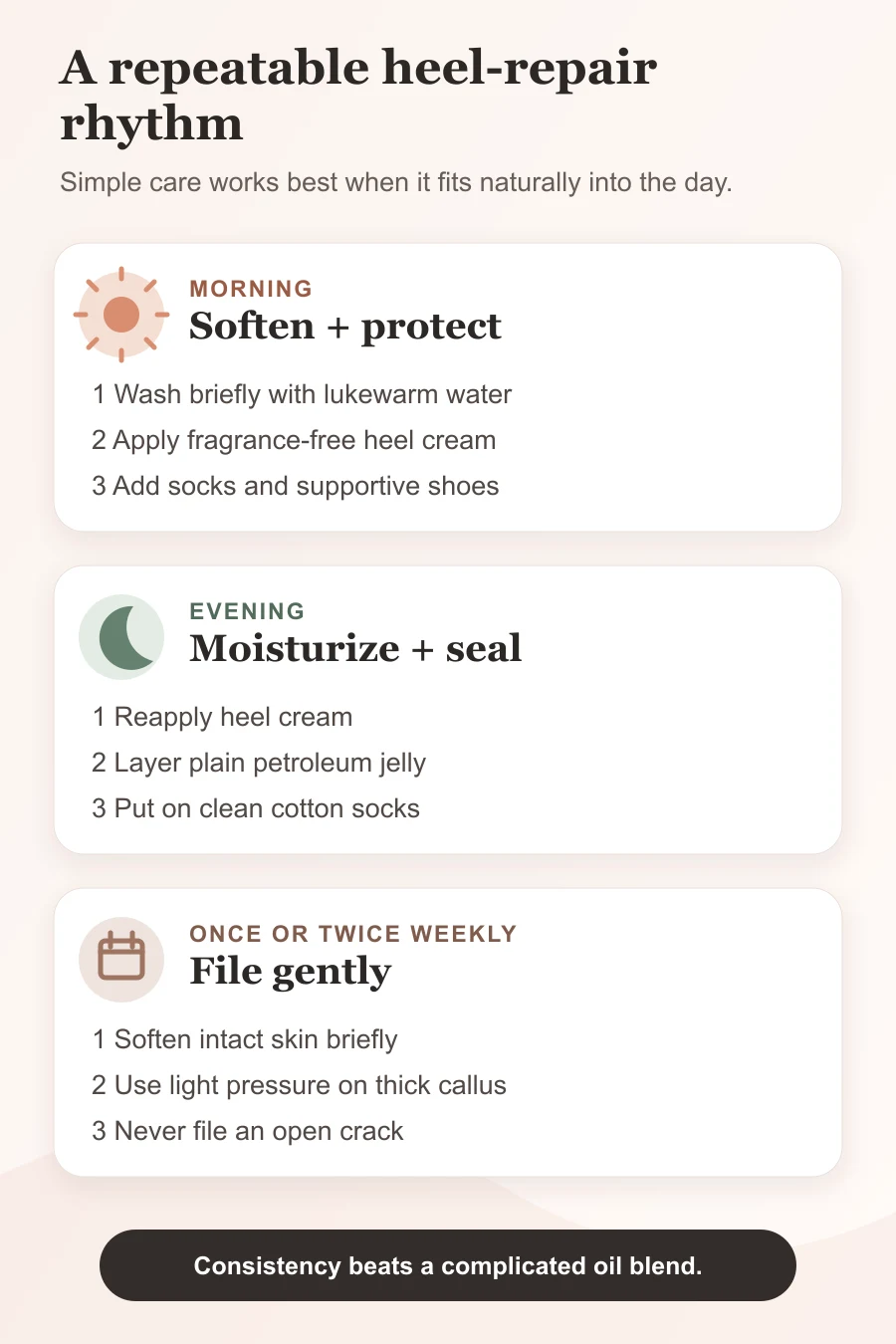
Morning: Soften and Protect
- Wash briefly with lukewarm water and a gentle cleanser. Long hot soaks can leave skin drier afterward.
- Pat the feet dry, including between the toes.
- While the heel is slightly damp, apply a fragrance-free heel cream. Look for urea if the skin is thick and rough.
- Wear socks and closed-back, well-fitting shoes when practical. They reduce spreading pressure and keep the moisturizer in place.
Evening: Seal In Moisture
- Reapply the heel cream after washing.
- Add a thin layer of plain petroleum jelly over the heel.
- Put on clean cotton socks for the night.
- Repeat daily until the skin is comfortable, then continue moisturizer often enough to prevent recurrence.
Once or Twice a Week: Reduce Thick Callus Gently
After a brief bath or shower, use a foot file or pumice stone with light pressure on intact thick skin. Stop well before the skin feels tender. Do not cut callus with a blade, peel it, or file an open crack. The AAD's callus guidance warns that removing too much skin can cause bleeding and infection.
Make the Routine Easy to Repeat
Keep the heel cream beside your shower and petroleum jelly with your socks. Consistency matters more than a complicated blend, and a simple fragrance-free routine makes it easier to notice whether the skin is actually improving.
 Support Non-AI Creator
How to Choose a Heel Product
| If the heel looks or feels like this | Look for | Use caution with |
|---|---|---|
| Dry and mildly rough | Thick fragrance-free cream or ointment | Light lotions that disappear quickly |
| Thick, hard callus | Urea, lactic acid, or salicylic acid in a heel product | Acids on open, raw, or bleeding skin |
| A shallow clean fissure | Moisturizer, petroleum jelly, and a protective liquid bandage if appropriate | Fragrance, aggressive filing, and barefoot walking |
| Itchy scaling between toes | Pharmacy or clinician advice about antifungal treatment | Assuming every crack is only dryness |
Choose “fragrance free” rather than “unscented.” Unscented products can contain masking fragrance. If a product stings, causes redness, or increases itching, wash it off and stop using it.
People with diabetes, reduced sensation, poor circulation, immune suppression, or a history of foot ulcers should not self-treat aggressively. Avoid acids, blades, and forceful filing unless a clinician who knows your foot health says they are appropriate.
When a Cracked Heel Needs Professional Care
Arrange medical or podiatry care if a fissure is deep, repeatedly bleeding, very painful, or not improving with consistent basic care. Seek prompt help for spreading redness, warmth, swelling, pus, a bad smell, fever, or red streaking, which may indicate infection.
Get advice early if you have diabetes, numbness, poor circulation, kidney disease, or immune suppression. The AAD's diabetes skin-care guidance emphasizes daily foot checks and careful treatment of dry, cracked heels because unnoticed injuries can become serious.
Frequently Asked Questions
Which essential oil is best for cracked heels?
No essential oil is proven to heal heel fissures. Fragrance can also sting or trigger dermatitis on damaged skin. A fragrance-free cream containing urea, lactic acid, or salicylic acid, followed by petroleum jelly at night, has a clearer role in softening thick dry skin.
Can I put tea tree oil on a cracked heel?
Do not put undiluted tea tree oil on a crack. It can irritate skin, and a deep, painful, bleeding, or infected fissure needs appropriate wound or medical care rather than a home essential-oil blend.
Is coconut oil good for cracked heels?
Coconut oil is a fixed carrier oil, not an essential oil. It may reduce water loss and soften dry skin, but plain petroleum jelly or a thick fragrance-free heel cream is usually more predictable. Do not rely on oil alone for deep or infected cracks.
How long do cracked heels take to improve?
Mild surface dryness may feel better within several days of consistent moisturizing, while thicker callus and deeper fissures can take longer. Seek care sooner if the crack is bleeding, increasingly painful, red, warm, swollen, draining, or not improving.
The Bottom Line
Essential oils are not the active repair step for cracked heels, and fragrance may make damaged skin more uncomfortable. Start with a fragrance-free heel cream, petroleum jelly at night, gentle callus care, and supportive footwear. Treat deep, painful, infected, or high-risk foot cracks as a health concern rather than a cosmetic DIY project.