
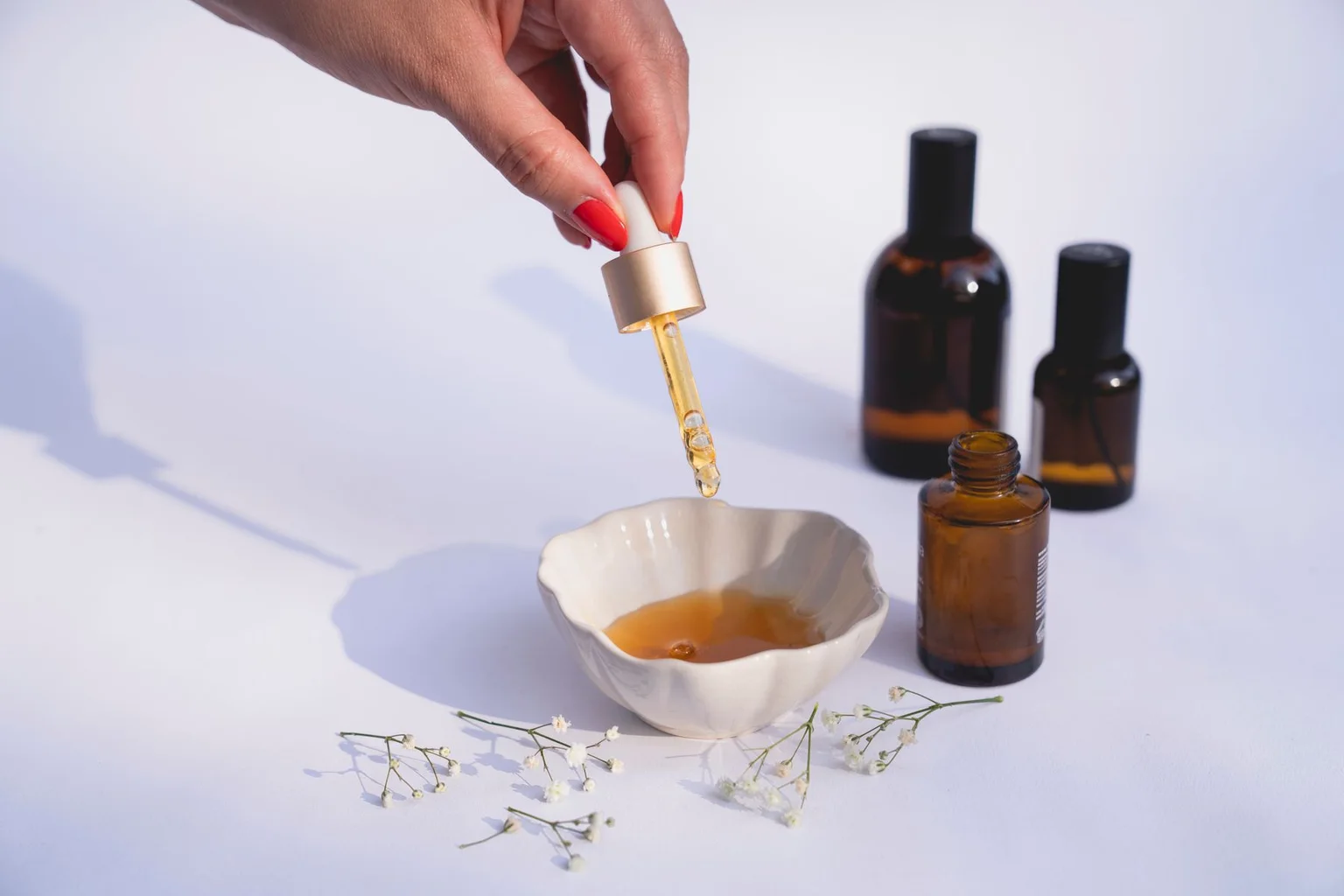
Frankincense and castor oil are often paired in DIY skin routines for wrinkles, dark spots, scars, and loose skin. Those claims mix up two very different effects: making a dry surface feel softer and changing the deeper structure of skin. A heavy oil can do the first. This blend has not been shown to do the second.
Castor oil is a fixed plant oil that acts mainly as an emollient and oily seal. Frankincense essential oil is a concentrated aromatic extract. Adding it may change the scent and sensory experience, but it does not make castor oil a proven anti-aging treatment.
Is Frankincense and Castor Oil Good for Skin?
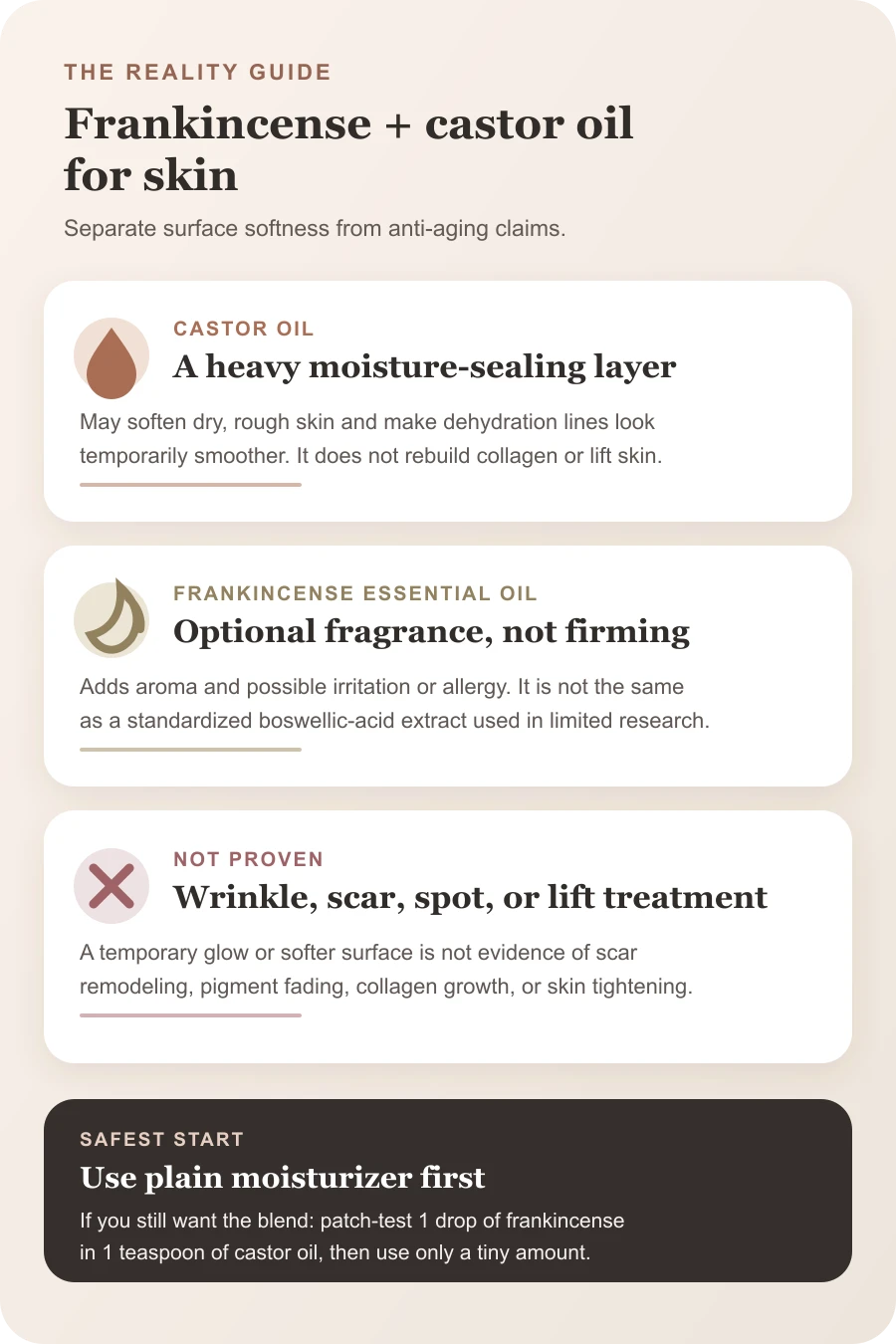
The combination may suit a small area of dry, intact skin when it is diluted and tolerated. Castor oil can reduce moisture loss and soften rough texture. Frankincense essential oil has much weaker support for ordinary facial benefits and can cause allergic contact dermatitis. Neither ingredient is proven to tighten loose skin, erase wrinkles, fade scars, or remove dark spots.
If you enjoy the scent and do not have sensitive skin, use frankincense as an optional, very diluted addition. If your actual goal is reliable hydration, a fragrance-free moisturizer is simpler and more predictable.
The Essential Oil Is Optional
Castor oil supplies the oily, moisture-sealing part of the blend. Frankincense supplies fragrance and potential irritation. Leaving out the essential oil does not remove the blend's most realistic skin benefit.
 Support Non-AI Creator
What Each Oil Contributes
Castor Oil: A Thick Emollient Layer
Castor oil contains triglycerides rich in ricinoleic acid. On skin, its most defensible role is reducing friction and leaving an oily film that slows water loss. This can make dry, flaky skin feel more flexible and can temporarily soften the appearance of tiny dehydration lines.
That does not mean castor oil stimulates collagen or contracts tissue. A review of topical plant oils and the skin barrier emphasizes that plant oils differ in composition and barrier effects. Castor oil's dense, sticky texture can also feel uncomfortable on the whole face, particularly for oily or acne-prone skin.
Castor oil is not allergy-proof. Contact dermatitis has been reported, and a study of allergic reactions to lip-care products identified castor oil among the common relevant allergens in that group.
Frankincense: Fragrance, Not Proven Firming
Frankincense essential oil is distilled from aromatic Boswellia resin. It is chemically different from whole resin extracts and standardized boswellic-acid preparations. This matters because boswellic acids are not the volatile compounds that dominate the essential oil.
A small split-face study of a cream containing boswellic acids is sometimes used to market frankincense oil for wrinkles. The study tested a finished extract cream, not a homemade essential-oil blend (Source: PubMed). It cannot establish that adding frankincense essential oil to castor oil produces the same effect.
The National Center for Complementary and Integrative Health says frankincense may be safe topically, but evidence for many promoted uses is limited. A published case report documents allergic contact dermatitis from frankincense oil, so natural origin should not be confused with guaranteed skin tolerance.
Popular Claims: What the Evidence Actually Supports
Wrinkles and Loose Skin
An oil film can make dry lines reflect light more evenly and look less obvious for several hours. It cannot recreate lost collagen, tighten deeper connective tissue, or lift sagging areas. For a broader comparison of these claims, see our guide to essential oils and loose-looking skin.
Dark Spots
There is no strong human evidence that this DIY blend reliably fades hyperpigmentation. Essential-oil irritation can actually leave some skin tones with lingering post-inflammatory discoloration. Daily broad-spectrum sunscreen and established pigment ingredients are more defensible approaches.
Scars and Stretch Marks
Keeping a healed area moisturized can improve comfort, but the blend is not proven to remodel scars or remove stretch marks. Do not apply fragranced oil to a new wound, surgical incision, open acne lesion, or actively inflamed scar unless the treating clinician approves it.
Acne
Castor oil is not a proven acne treatment, and frankincense essential oil does not replace benzoyl peroxide, salicylic acid, retinoids, or clinician-directed care. Heavy oils may feel occlusive, while fragrance can add irritation. Test cautiously or skip the blend if breakouts are your main concern.
How to Use Frankincense and Castor Oil More Safely
The lowest-risk option is a professionally formulated product with a complete ingredient list. If you still want a simple DIY blend, keep the essential oil concentration low and make only a small amount.
Conservative Starter Blend
- 1 teaspoon castor oil
- 1 drop frankincense essential oil
Mix in a clean, dry glass container. This is roughly a 1% dilution, although drop size varies. Do not add extra drops to make it feel more active. A stronger smell does not mean a stronger skin benefit.
Patch-Test Before Facial Use
Apply a tiny amount to a small area on the inner arm twice daily for seven to ten days. The American Academy of Dermatology's product-testing guidance recommends repeated testing because allergic reactions may not appear after the first application.
If the test area stays comfortable, press one or two drops of the diluted blend over moisturizer on a small dry area. Avoid the eyelids, lash line, lips, nostrils, broken skin, and active rashes. Wash your hands afterward and store the bottle away from heat and direct light.
 Support Non-AI Creator
Do Not Add Water or Aloe to the Bottle
Oil-only blends do not contain water, but adding aloe gel, hydrosol, tea, or water creates a mixture that can support microbial growth and separate unpredictably without a proper preservative and emulsifier. Layer a separate moisturizer first instead of improvising a water-and-oil serum.
Is This Blend Right for Your Skin Type?
| Skin situation | Practical choice | Why |
|---|---|---|
| Very dry, tolerant skin | Try a tiny diluted amount over moisturizer | The oil film may reduce moisture loss |
| Oily or acne-prone skin | Use a lighter fragrance-free moisturizer | Castor oil may feel sticky or overly heavy |
| Sensitive, eczema-prone, or rosacea-prone skin | Skip frankincense; favor fragrance-free care | Essential oils and fragrance can trigger irritation or allergy |
| Broken, recently treated, or inflamed skin | Do not use the blend | A damaged barrier is easier to irritate |
The AAD advises caution with essential oils and fragrance because they may cause irritation or allergic rash. If your skin already reacts easily, plain petroleum jelly, squalane, or a fragrance-free ceramide cream is usually a more predictable moisture-sealing choice.
When to Stop Using the Blend
Wash the oil off and stop using it if you develop burning, persistent stinging, itching, swelling, hives, blisters, or a spreading rash. Contact dermatitis can appear after repeated use even when the first applications seemed fine.
Seek medical advice for facial swelling, eye involvement, severe blistering, breathing difficulty, or a rash that continues after stopping the product. Do not keep applying the blend to “purge” the skin; worsening irritation is not evidence that it is working.
Frequently Asked Questions
Can I mix frankincense oil with castor oil for my face?
Yes, if your skin tolerates both, but frankincense essential oil must be diluted. A conservative starting blend is one drop of frankincense essential oil in one teaspoon of castor oil. Patch-test first, keep it away from the eyes and lips, and stop if it stings, burns, or causes a rash.
Do frankincense and castor oil remove wrinkles?
No. Castor oil can make dry surface lines look temporarily softer by reducing moisture loss, but neither oil is proven to rebuild collagen or remove wrinkles. Frankincense essential oil is not equivalent to a standardized boswellic-acid cream used in limited research.
Can frankincense and castor oil tighten loose skin?
There is no good clinical evidence that this blend tightens loose skin. Its oily film may make dry skin look smoother or shinier for a short time, but that is different from lifting tissue or reversing loss of elasticity.
Can I leave frankincense and castor oil on overnight?
You can leave a small, properly diluted amount on overnight if a patch test caused no reaction and the blend does not feel irritating or overly heavy. Acne-prone, eczema-prone, or fragrance-sensitive skin may do better with a plain fragrance-free moisturizer instead.
The Bottom Line
Castor oil may soften very dry skin by leaving a heavy moisture-sealing film. Frankincense essential oil is an optional fragrance ingredient, not the active anti-aging part of the blend. If you use them together, dilute conservatively, patch-test repeatedly, apply only a tiny amount to intact skin, and keep expectations focused on temporary surface softness rather than tightening, scar removal, or wrinkle reversal.