
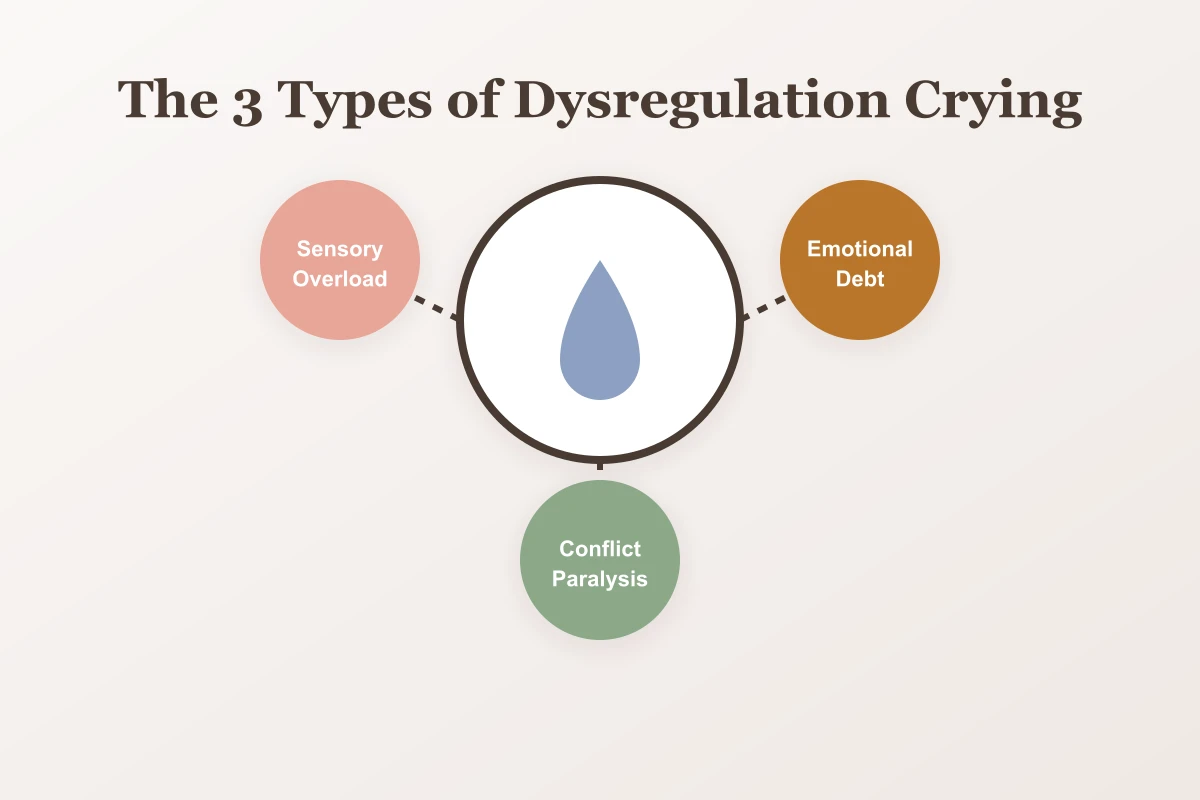
We've all experienced it: You drop a spoon in the kitchen, or someone asks you a slightly stressful question, and suddenly, you are entirely in tears. You feel silly because you know you shouldn't be crying over something so minor, but the tears won't stop.
When you feel like you are crying "over everything," it is rarely about the trigger itself. It is a biological signal that your nervous system has exceeded its capacity. To stop crying, you must identify exactly what is overloading your system.
The Golden Rule of Crying
Tears are not a sign of weakness; they are a physiological pressure valve. Fighting them usually increases the pressure. The goal isn't to never cry, but to understand what your nervous system is trying to release so you can regulate it effectively.
The Biology of Tears
When you are stressed, your body can feel flooded with physical signals: tight throat, faster breathing, a hot face, shaky hands, or tears. When you cry "easily," it often means your baseline stress level is already high enough that even a small trigger overflows the cup.
To regain control, we can categorize this dysregulation into three types: Sensory Overload, Emotional Debt, and Conflict Paralysis. The American Psychological Association explains that stress affects multiple body systems, which is why crying can feel physical before it feels logical.
| If the tears feel like... | Most likely pattern | First thing to try |
|---|---|---|
| Everything is too loud, bright, fast, or crowded | Sensory overload | Reduce input first: cold water, quiet room, closed eyes, fewer voices. |
| A tiny thing made you cry after days of holding it together | Emotional debt | Ask what happened in the last 48 hours that you did not let yourself feel. |
| You cry when you need to speak up or argue | Conflict paralysis | Pause the conversation, write your points, and return after your body settles. |
Type 1: Sensory Overload Crying
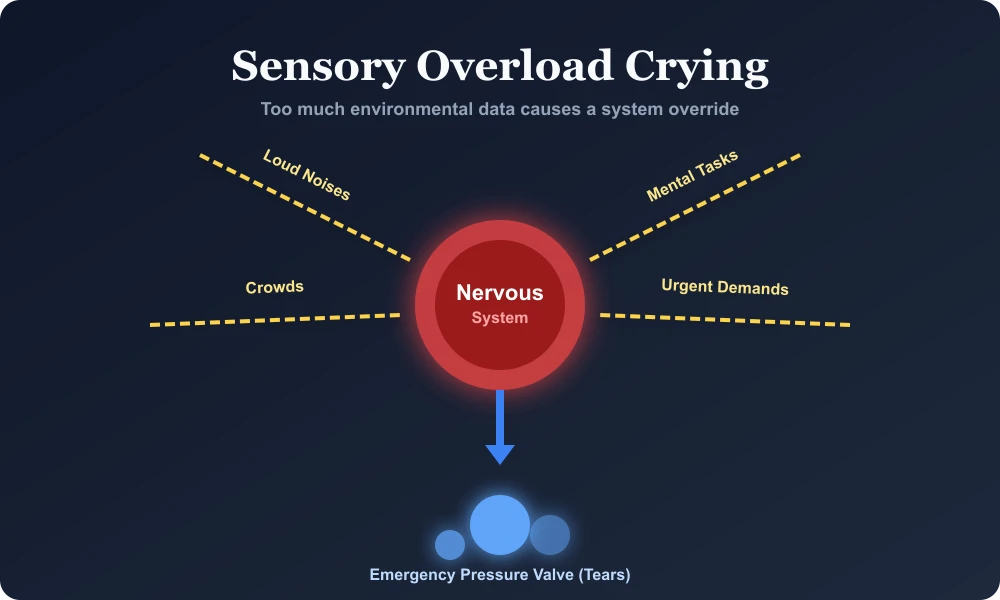
Sensory Overload crying happens when the environment demands too much from your brain. This is common for Highly Sensitive Persons (HSPs) or individuals experiencing burnout. Too much noise, bright lights, multiple people talking at once, or a massive to-do list suddenly causes a total system crash, resulting in tears.
The Fix: Physical Grounding and the Dive Reflex
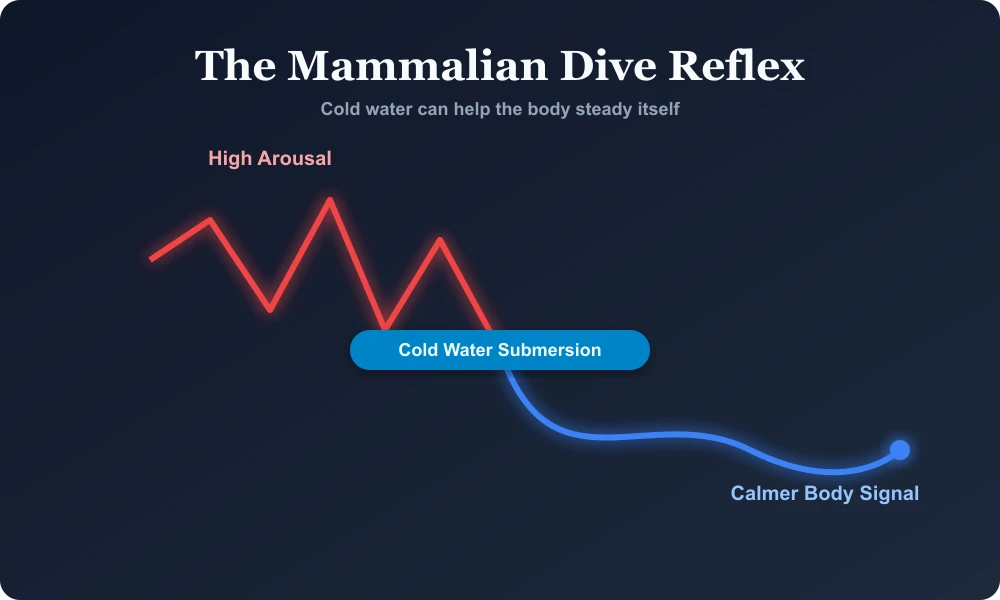
1. Trigger the Mammalian Dive Reflex
If you need to steady yourself quickly, splash cold water on your face, particularly around your eyes and cheekbones. Cold water can help shift your body out of panic mode long enough to breathe and reorient.
2. The 'Tongue-to-Roof' Trick
If you are in public and feel the tears coming, press your tongue firmly against the roof of your mouth. This physical action often distracts the nervous system enough to interrupt the crying reflex and helps relieve the "lump in the throat" feeling.
3. Aggressive Sensory Reduction
You cannot "think" your way out of sensory overload. You must physically remove the stimuli. Walk into a quiet bathroom, close your eyes, put in noise-canceling headphones, and breathe for exactly 5 minutes.
If sensory overload is a pattern for you, pair this with a broader reset routine from our guide to self-care ideas for women, especially the baseline maintenance section.
Type 2: Emotional Debt Crying
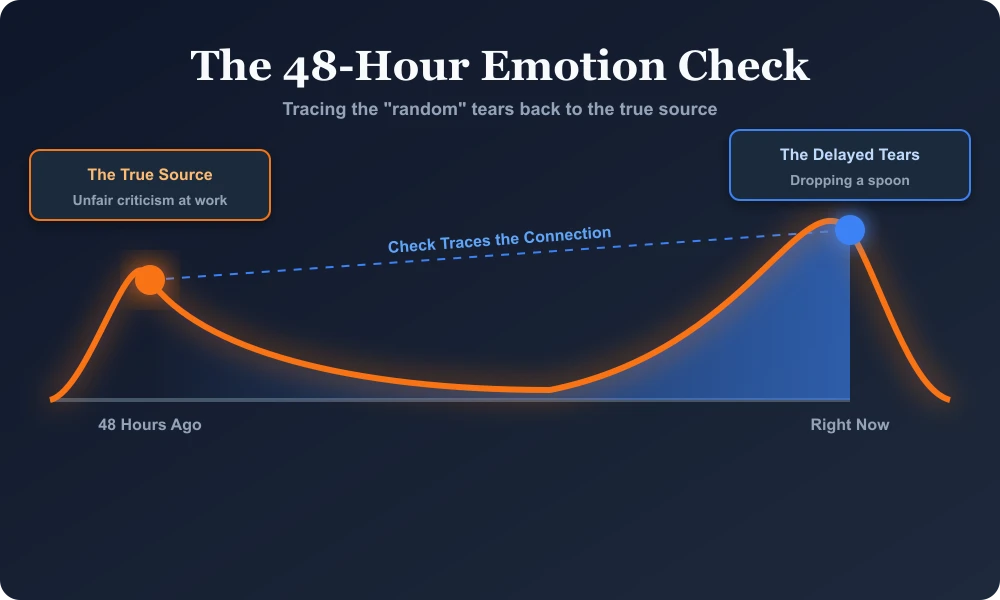
Emotional debt occurs when you suppress a primary emotion. For example, if your boss treats you unfairly on Tuesday and you swallow your anger to remain "professional," your nervous system remembers that unexpressed energy. On Friday, you drop a spoon, and you burst into tears. You aren't crying over the spoon; you are paying the emotional debt from Tuesday.
The Fix: The 48-Hour Emotion Check
4. Do a 48-Hour Emotion Check
When you start crying over something trivial, stop and ask yourself: "What happened in the last 48 hours that I didn't let myself feel?" Identifying the actual source of the pain immediately reduces the confusion and shame of the current tears.
5. Process the Primary Emotion
If the primary emotion was anger, crying won't fully resolve it. You need an active release. Go for a run, punch a pillow, or write an aggressive "burn letter" (and tear it up). Match the physical output to the actual emotion you suppressed.
6. Stop the 'Shame Spiral'
We often cry, and then get mad at ourselves for crying, which causes more stress and more tears. Say out loud: "My body needs to release stress right now, and that is biologically okay."
This type of crying often overlaps with rumination. If your mind keeps replaying the same event after the tears stop, use the circuit breakers in how to stop overthinking.
Type 3: Conflict Paralysis Crying
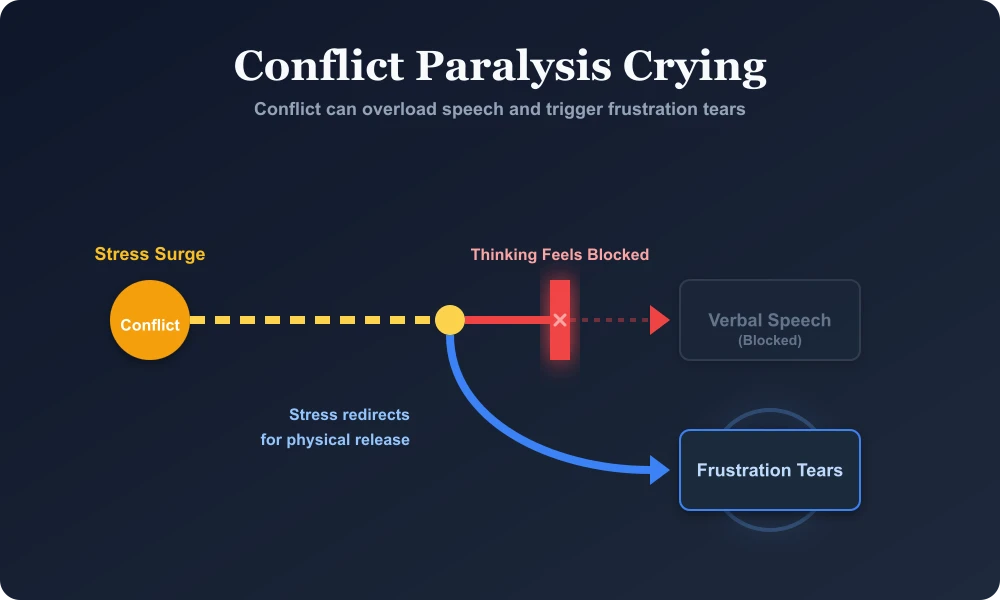
This happens when you get into an argument or have to confront someone, and instead of articulating your points, you start crying out of sheer frustration. Your brain can perceive the conflict as a threat, flooding your system with stress signals. That surge can make clear speech and organized thinking feel harder, so your body may release the pressure through tears.
The Fix: The Pause Protocol
7. Implement the 'Pause Protocol'
When you feel the throat-tightening frustration tears coming during an argument, you must stop the conversation. Say: "I am feeling overwhelmed and my body is reacting. I need 15 minutes to regulate before we continue." Continuing to argue while crying usually leads to poor communication.
8. Write It Down
Because speech can feel harder when you are overwhelmed, switch to written communication. When you step away for your 15-minute break, write down your points on your phone or a piece of paper. You can even hand the paper to the person if speaking out loud is too triggering.
9. Regulate Your Breathing
Before returning to the conversation, focus on lengthening your exhales. Breathe in for 4 seconds, hold for 2, and exhale for 6 seconds. Longer exhales manually signal to your brain that the "threat" has passed, allowing your logic center to turn back on.
When to Get Extra Support
Crying easily is common during stress, grief, burnout, and major life changes. But if crying feels uncontrollable, happens most days, comes with panic, hopelessness, thoughts of self-harm, or makes it hard to function, it is worth talking to a mental health professional. NIMH's overview of anxiety disorders is a helpful starting point for understanding when stress responses may need more support.
Frequently Asked Questions
Why do I cry so easily all of a sudden?
Crying easily all of a sudden is usually a symptom of 'Emotional Debt' or nervous system burnout. When you continuously suppress primary emotions like stress or anger, your brain lowers its threshold for emotional release, causing you to cry over seemingly minor, unrelated triggers. It can also be influenced by hormonal changes or lack of sleep.
How can I physically stop myself from crying in public?
To physically stop tears in the moment, you can try grounding techniques that interrupt the nervous system. Pressing your tongue firmly against the roof of your mouth, swallowing hard, or consciously relaxing your jaw and facial muscles can temporarily halt the physical crying reflex.
Why do I cry when I get angry?
Crying when angry, known as 'Conflict Paralysis Crying,' happens because the brain perceives conflict as a threat. The amygdala triggers a fight-or-flight response, which can overwhelm the prefrontal cortex, leading to frustration tears when you feel unable to articulate your feelings.