
When you search for "self-care ideas for women," you are usually hit with the same tired list: take a bubble bath, drink some tea, read a book, and do a face mask. While those activities are lovely, they fundamentally misunderstand what self-care actually is.
Self-care is not just pampering. It is the biological and psychological maintenance of your nervous system.
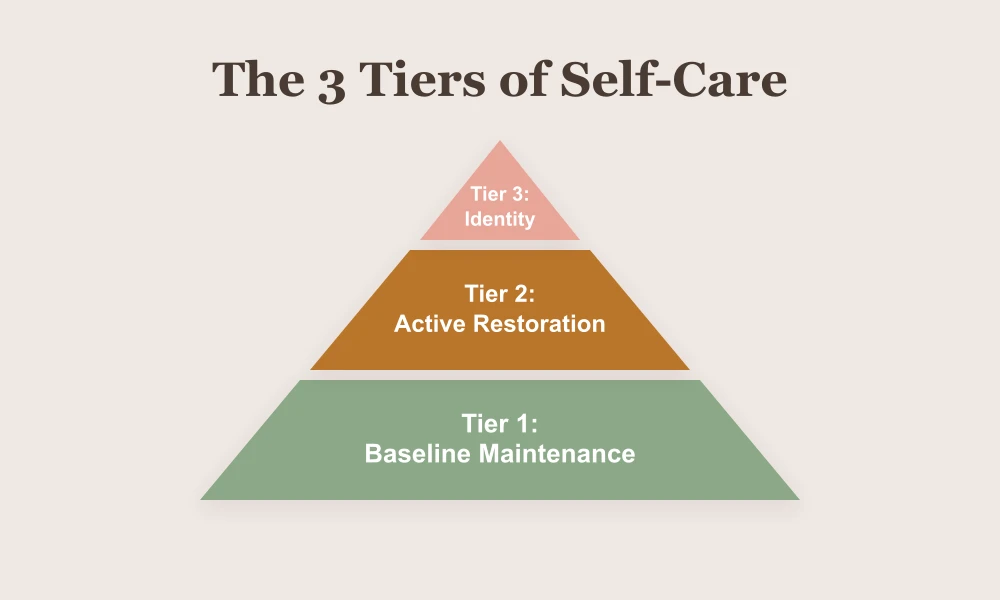
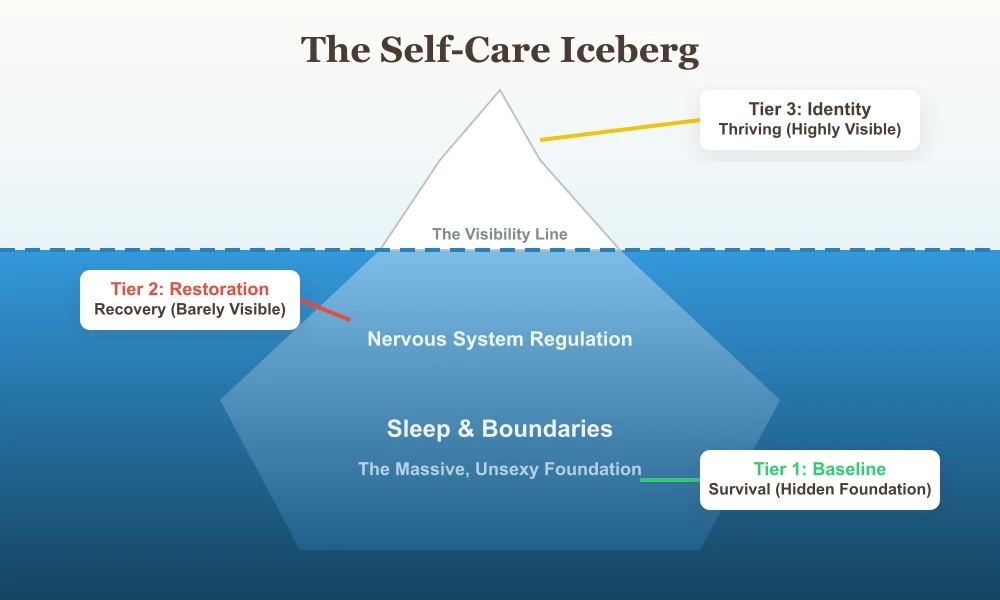
If you are experiencing burnout, a bubble bath will not cure it. To actually recover your energy, you must understand the 3 Tiers of Self-Care. By categorizing your needs, you can choose the type of care required to protect your baseline energy, restore your body, and reconnect with your identity.
Mayo Clinic notes that long-term stress activation can affect sleep, mood, digestion, memory, and focus. That is why the first layer of self-care is not a treat; it is reducing the load your body has to carry every day.
The Golden Rule of Self-Care
You cannot "out-pamper" a lifestyle that constantly drains you. True self-care requires setting strict boundaries before applying restorative practices. Think of it like a bucket: you have to plug the holes before you can refill the water.
| What feels depleted | Self-care tier | Best first move |
|---|---|---|
| You are exhausted, reactive, or stretched too thin | Baseline maintenance | Remove one drain before adding another ritual. |
| You are numb, wired, or overstimulated | Active restoration | Choose a calming activity that leaves you better after it ends. |
| You feel like everyone else's role, not yourself | Identity cultivation | Schedule one activity that is yours, not useful to someone else. |
Tier 1: Baseline Maintenance (The Unsexy Self-Care)
Tier 1 self-care is not glamorous. It is the fundamental, biological maintenance required to keep your body functioning. If you ignore Tier 1, no amount of Tier 2 or Tier 3 self-care will ever make you feel rested.
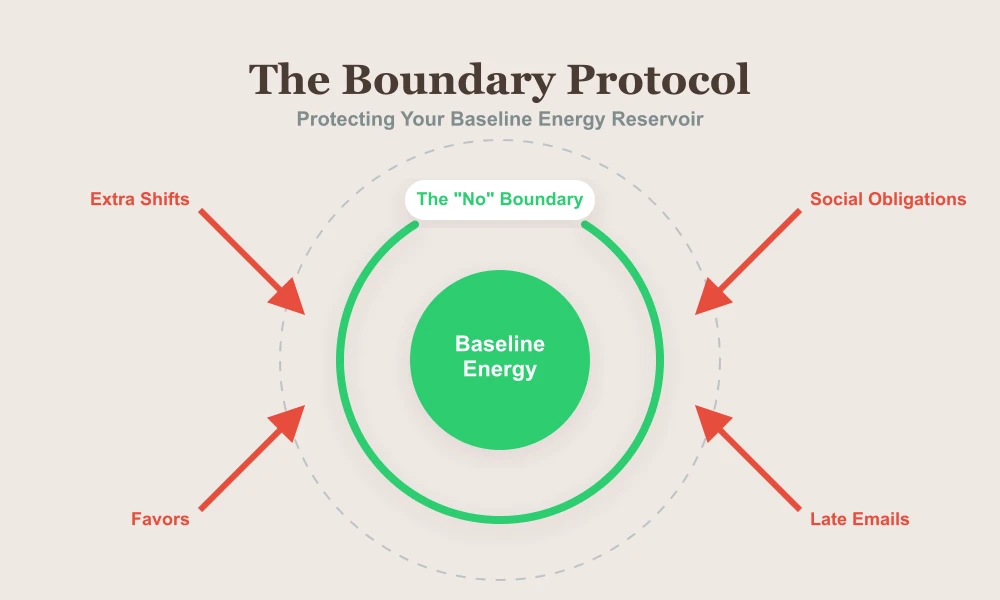
The Strategy: The Boundary Protocol
1. Saying 'No' as a Health Metric
Every time you agree to do something you don't have the capacity for, you are spending energy you do not have. Saying "no" without over-explaining or apologizing is the ultimate form of self-care. It protects your baseline energy reservoir.
2. The 'Sleep Boundary'
Treat your sleep schedule like a critical medical appointment. Setting a hard boundary on when you stop looking at screens, when you stop answering emails, and when you go to bed is non-negotiable for cortisol regulation.
The CDC's sleep guidance connects insufficient sleep with mental health and attention problems, so a sleep boundary is not just productivity advice. It is one of the most practical ways to protect emotional regulation.
3. Aggressive Hydration
Dehydration can make fatigue, brain fog, and physical stress feel worse. Keep water visible, drink consistently through the day, and use simple habits like morning lemon water if they help you remember.
Tier 2: Active Restoration (Mood and Energy)
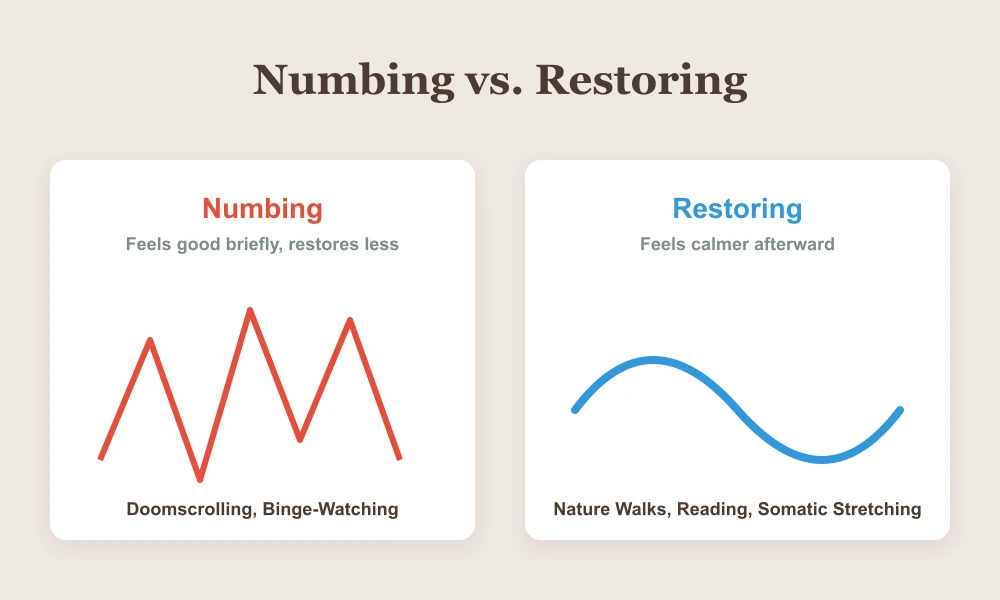
Once your boundaries are set and your baseline is protected, you can move to Tier 2: Active Restoration. This is what most people think of when they hear "self-care," but there is a crucial distinction. We often confuse "numbing" with "restoring."
The Strategy: Numbing vs Restoring
4. Avoid 'Numbing' Loops
Doomscrolling, binge-watching, or drinking as your only coping tool might feel like a break, but they often leave you less restored than you expected. Notice whether an activity helps you feel calmer afterward or just distracts you while you are doing it.
5. Prioritize Restoring Activities
True restoration usually feels calmer after you finish, not more wired. Try nature walks without your phone, somatic stretching on the floor, or a warm Epsom salt bath when your body needs a low-stimulation reset.
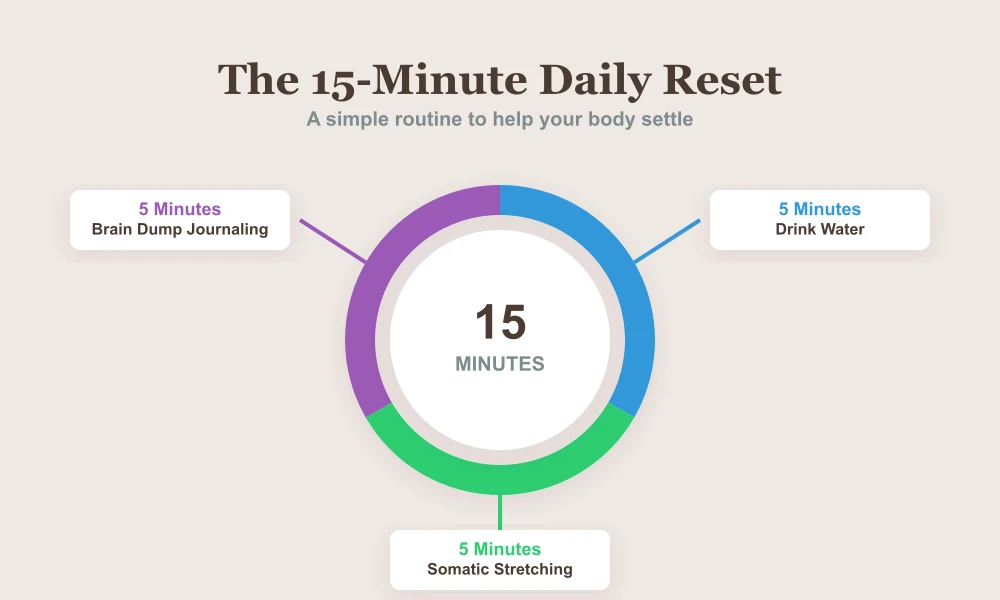
6. The 15-Minute Reset Protocol
You don't need a 3-hour spa day to support your nervous system. A structured 15-minute reset can help your body settle when you feel overloaded.
Tier 3: Identity Cultivation
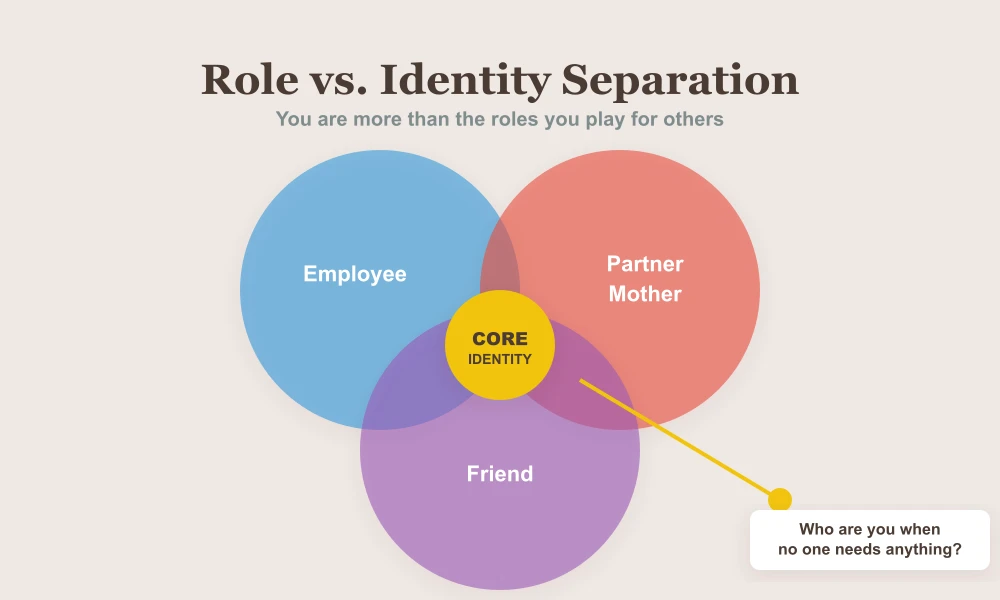
This is the most neglected tier of self-care for women. As we get older, we often become entirely consumed by our roles: employee, boss, partner, mother, daughter. We spend so much time serving those roles that we forget who we are as individuals, which can severely impact our self-confidence.
The Strategy: Role vs. Identity Separation
7. The 'Solo Date'
Schedule a block of time (even if it's just two hours on a Sunday) where you do something entirely by yourself, for yourself. Go to a museum, sit in a coffee shop with a book, or take a pottery class. The goal is to exist without being "needed" by anyone else.
8. Reclaim a Passion
Think back to what you loved doing when you were 12 years old, before the world told you what you "should" care about. Did you love painting, writing, or riding a bike? Reclaiming an old hobby is a powerful way to nourish your core identity.
9. Identity Journaling
Take 10 minutes a week to write down your thoughts, fears, and dreams that have absolutely nothing to do with your job or your family. Validating your internal world is the highest form of self-care.
When to Get Extra Support
Self-care is maintenance, not a cure-all. If you feel persistently numb, hopeless, panicky, unable to sleep, or unable to keep up with daily life, support from a therapist, doctor, or trusted professional can be part of the care plan. If stress is showing up as repeated crying, start with how to stop crying over everything; if it is showing up as mental loops, use how to stop overthinking.
Frequently Asked Questions
Why does self-care sometimes make me feel guilty?
Guilt around self-care usually stems from societal conditioning that teaches women their value is tied to how much they sacrifice for others. To overcome this, you must reframe self-care: it is not a selfish indulgence; it is the necessary biological maintenance required for you to show up effectively in your life.
How do I practice self-care when I have no time?
If you have zero free time, focus entirely on Tier 1 (Baseline Maintenance). You cannot add a 2-hour spa day to a schedule that is already breaking you. Your self-care must become the act of saying "no," enforcing strict sleep boundaries, and drinking water. Protect the baseline first.
What is the difference between self-soothing and self-care?
Self-soothing involves activities that provide immediate, temporary relief from stress, like eating junk food or scrolling social media to avoid overthinking. Self-care involves activities that support longer-term regulation, like getting enough sleep or setting a difficult boundary. Both have a place, but you cannot rely on self-soothing to fix burnout.