

Skin that looks shiny but feels tight can seem contradictory. It is not. Sebum is oil produced by sebaceous glands, while surface dryness involves water loss, disrupted barrier lipids, scaling, or irritation. Both can occur on the same face and even in the same area.
The useful question is not whether your skin is secretly dry or oily. It is where each symptom appears, when it started, and what changed in your routine. That pattern helps separate ordinary combination skin from over-cleansing, acne-treatment dryness, and conditions that need a dermatologist.
Why Does My Skin Feel Dry but Look Oily?
Skin may feel dry but look oily when the face still produces sebum while its outer surface is irritated or losing water. Common triggers include harsh cleansers, hot water, frequent exfoliation, retinoids, benzoyl peroxide, salicylic acid, dry weather, or naturally different oil levels across the face. Red, itchy, or greasy scaling can point to dermatitis instead.
“Dehydrated Skin” Is a Description, Not a Diagnosis
In skincare, dehydrated usually describes skin that feels tight or lacks water while still producing oil. It does not identify the cause. Drinking more water will not correct irritation from a harsh routine, and adding a heavy oil will not treat dermatitis.
What Does Your Dry-and-Oily Pattern Suggest?
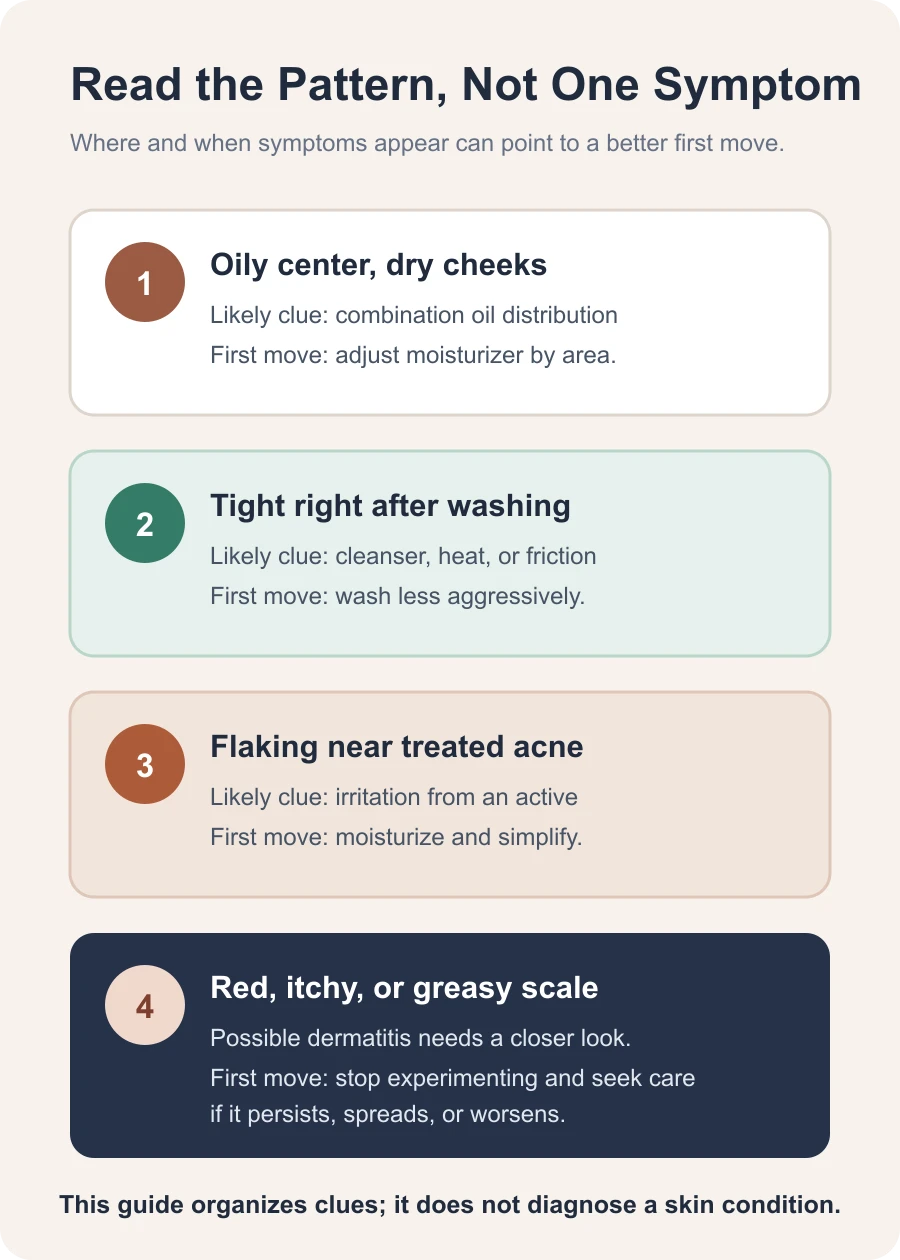
Use the pattern as a starting clue, not a self-diagnosis.
| What You Notice | Possible Explanation | First Move |
|---|---|---|
| Shiny forehead and nose, drier cheeks | Combination oil distribution | Use one gentle base routine; apply richer moisturizer only where needed |
| Tightness immediately after washing | Cleanser, hot water, or over-washing irritation | Shorten cleansing and switch to lukewarm water and a mild cleanser |
| Flaking around pimples or treated areas | Dryness from an acne active | Moisturize and follow the treatment directions instead of adding more actives |
| Stinging after several serums, acids, or scrubs | Irritant contact dermatitis or barrier disruption | Pause optional irritants and simplify the routine |
| Greasy scale around the nose, brows, ears, or scalp | Possible seborrheic dermatitis | Seek a diagnosis if persistent; moisturizer alone may not resolve it |
 Support Non-AI Creator
Combination Skin Can Be Oily and Dry in Different Places
The center of the face contains more sebaceous glands than many outer areas, so the forehead, nose, and chin may become shiny while the cheeks feel normal or dry. Treating every area with the same aggressive oil-control products can make the drier zones uncomfortable.
Use a gentle cleanser across the face, then adjust moisturizer by area. A light lotion may be enough on the T-zone, while the cheeks may benefit from a slightly richer layer. You do not need two completely separate routines.
Over-Cleansing Can Create Tightness Without Stopping Oil
Foaming intensity is not proof that a cleanser works better. Hot water, scrubbing, cleansing several times a day, and high-detergent products can remove surface lipids and increase irritation. Sebaceous glands still produce oil afterward, so the face may feel stripped after washing and look shiny again later.
The American Academy of Dermatology’s dry-skin guidance recommends gentle washing, warm rather than hot water, and moisturizer soon after cleansing.
Acne Products Can Dry the Surface While Acne Persists
Retinoids, benzoyl peroxide, salicylic acid, and other acne treatments can cause dryness or irritation, especially when several are started together. Flaking does not mean the treatment is “pulling impurities out,” and adding another exfoliant usually makes the routine harder to tolerate.
Follow the product or prescription directions. A non-comedogenic moisturizer can improve comfort without cancelling acne care. If a prescribed treatment is causing significant irritation, ask the prescriber how to adjust it rather than stopping or changing the schedule blindly.
Redness and Scale May Be Dermatitis, Not Dehydration
Irritant contact dermatitis can cause burning, tightness, redness, cracking, and scaling after repeated exposure to products or water. Seborrheic dermatitis more often creates persistent greasy or powdery scale around the scalp, eyebrows, sides of the nose, or ears.
DermNet’s seborrheic dermatitis overview explains that oily areas are commonly involved, which is why the condition can be mistaken for a simple dry-skin problem. Persistent dermatitis usually needs a more specific treatment plan than extra moisturizer.
Try This Seven-Day Routine Reset
This reset is appropriate for mild tightness, surface flaking, or product overload. It is not a treatment for a severe rash, infection, painful acne, or diagnosed skin condition.
Morning
- Rinse with lukewarm water or use a gentle fragrance-free cleanser if needed.
- Apply a lightweight fragrance-free moisturizer while skin is slightly damp.
- Finish with broad-spectrum sunscreen labeled non-comedogenic.
- Blot excess shine later in the day instead of repeatedly washing.
Evening
- Cleanse once to remove sunscreen, makeup, and surface oil.
- Pat rather than rub the skin dry.
- Apply moisturizer to the whole face, using a little more on tight areas.
- Pause optional scrubs, cleansing brushes, peels, fragranced oils, and newly added serums.
If you use a necessary acne treatment, keep the routine around it simple and follow its directions. The AAD’s acne skin-care advice recommends gentle cleansing, avoiding astringents and rubbing alcohol, and choosing non-comedogenic products.
At the end of the week, assess comfort rather than expecting a perfectly matte face. Less stinging, tightness, or flaking suggests that irritation was contributing. Persistent symptoms deserve a closer look.
What Moisturizer Works for Oily-Looking Skin?
Look for a fragrance-free lotion or gel-cream that is labeled non-comedogenic. Useful formulas often combine:
- Humectants, such as glycerin or hyaluronic acid, which help bind water.
- Emollients, which smooth spaces between dry surface cells.
- Barrier-supporting lipids, such as ceramides, which can improve tolerance when skin is irritated.
A watery toner or aloe gel may feel refreshing but may not prevent water loss by itself. Our rice water versus aloe vera guide explains why a light hydrating layer and a complete moisturizer do different jobs.
Heavy oils are not automatically better for tight skin. They can reduce water loss, but they do not supply every part of a balanced moisturizer and may feel uncomfortable on acne-prone areas. Apply the lightest product that leaves the skin comfortable.
What Usually Makes the Problem Worse?
- Washing whenever shine appears.
- Using very hot water or rubbing with a towel.
- Combining a scrub, acid, retinoid, and benzoyl peroxide without a plan.
- Applying alcohol-heavy astringents to create a temporary squeaky feeling.
- Skipping moisturizer because the forehead looks oily.
- Covering persistent redness or scale with fragranced oils.
- Adding several new “barrier repair” products at once, making reactions harder to trace.
Introduce one product at a time. If something stings repeatedly, causes swelling, or leaves a worsening rash, stop using it.
When Should You See a Dermatologist?
Arrange professional care when the pattern is persistent, worsening, or difficult to distinguish from a skin condition. Important clues include:
- intense itching, pain, swelling, blisters, or crusting;
- cracks, bleeding, or signs of infection;
- greasy scale around the eyebrows, nose, ears, or scalp that keeps returning;
- acne that is painful, scarring, or not improving with appropriate over-the-counter care;
- a rash that began after a new product and does not settle after stopping it;
- symptoms around the eyes or widespread facial swelling.
A dermatologist can distinguish acne, irritant or allergic contact dermatitis, seborrheic dermatitis, rosacea, and other causes that can all produce some combination of shine, tightness, redness, or flaking.
Frequently Asked Questions
Can skin be oily and dehydrated at the same time?
Yes. Oil describes sebum on the skin surface, while dehydration is an informal skincare term for low water content or increased water loss. A face can therefore look shiny yet feel tight. The cause may be combination skin, weather, over-cleansing, irritating products, or acne treatment.
Should I moisturize if my face looks oily?
Usually, yes. Choose a lightweight, fragrance-free moisturizer labeled non-comedogenic and apply it after cleansing while the skin is slightly damp. Moisturizer supports the surface barrier; it does not necessarily make naturally oily skin produce more sebum.
Why does my skin feel tight after washing but get oily later?
A cleanser, hot water, or long washing session may remove surface lipids and leave skin feeling tight. Oil can still become visible later because sebaceous glands continue producing sebum. Switch to a gentle cleanser, use lukewarm water, and avoid scrubbing.
How long should a gentle routine reset take?
Irritation-related tightness may begin to settle within several days, but persistent flaking, acne, or dermatitis can take longer and may need targeted treatment. If the skin is worsening, painful, very itchy, swollen, or not improving after a simple routine, seek professional advice.
The Bottom Line
Oily-looking and dry-feeling skin is usually a pattern to interpret, not a contradiction to fix with stronger products. Start by reducing irritation, cleansing gently, and using a lightweight moisturizer. If redness, greasy scale, pain, or persistent flaking remains, get the cause identified instead of continuing to experiment.