

Rice water and aloe vera are both promoted as simple ways to calm, brighten, and hydrate facial skin. They are not interchangeable, though. Aloe gel is a defined part of the aloe leaf with a familiar cooling texture. "Rice water" can refer to cloudy kitchen water, fermented liquid, or one of several processed rice-derived ingredients in a cosmetic formula.
That distinction changes the answer. A fragrance-free aloe gel is the more practical choice for lightweight soothing and hydration. A preserved rice toner may be a pleasant option for dull or oily-feeling skin, but its effect depends heavily on the exact rice ingredient and everything else in the bottle.
Is Rice Water or Aloe Vera Better for Skin?
Choose aloe vera when your priority is cooling hydration or comfort after mild dryness and environmental irritation. Choose a preserved rice-derived toner when you prefer a watery layer and want modest support for hydration or dullness. For eczema, burns, persistent redness, acne, or unexplained discoloration, neither DIY remedy should replace appropriate care.
The Formula Matters More Than the Trend
An aloe product may also contain alcohol or fragrance, while a rice toner may owe most of its hydration to glycerin or niacinamide. Read the complete ingredient list and judge the finished product, not only the ingredient named on the front.
Rice Water vs. Aloe Vera at a Glance
| Question | Rice-Derived Skincare | Aloe Vera Gel |
|---|---|---|
| Best fit | Light hydration and dull-looking skin | Cooling comfort and mild dryness |
| Typical texture | Watery or milky | Slippery gel |
| Evidence | Promising but ingredient-specific | More established for topical soothing use |
| Main limitation | DIY water is inconsistent and perishable | Gel alone may not prevent moisture loss |
| Main caution | Spoilage or irritation from the full formula | Burning, itching, allergy, or leaf latex |
What Rice Water May Do for Skin
Rice-derived skincare is more scientifically interesting than a viral rinse makes it sound. Rice starch, bran, proteins, oils, ferments, and isolated compounds are used differently in cosmetic and dermatologic products. They cannot all be treated as evidence for a bowl of water left after soaking rice.
A review of rice products in dermatology describes potential moisturizing, antioxidant, photoprotective, soothing, and pigment-related applications. The evidence varies by ingredient and formulation, and many findings are early or preclinical. The sensible conclusion is that rice-derived ingredients can be useful in skincare, not that homemade rice water is a proven brightening treatment.
A commercial rice toner may feel refreshing and add water-binding ingredients without the heaviness of an oil or cream. It is most useful as an optional first layer under moisturizer. If it improves skin, look at the full formula before crediting rice alone.
Homemade rice water has practical disadvantages. The concentration changes with rice type, water volume, rinsing, soaking time, and fermentation. It also lacks a validated preservative system. Odor, bubbling, color change, or an altered texture are reasons to discard it, not signs that it has become more potent.
What Aloe Vera May Do for Skin
Aloe gel is rich in water and polysaccharides, which helps explain its slippery, cooling feel. In a cosmetic formula, it can support lightweight hydration and temporarily reduce the uncomfortable tightness associated with dry surface skin. A small skin-bioengineering study of aloe formulations found hydration effects that varied with concentration and use.
This does not make aloe a complete moisturizer. Water-rich gel may evaporate without enough emollient or occlusive support, so dry skin often does better when aloe is followed by a fragrance-free cream. Clear or colorless facial formulas are usually preferable to bright green, heavily fragranced gels.
The National Center for Complementary and Integrative Health notes that topical aloe is generally well tolerated but can occasionally cause burning, itching, rash, and eczema. Fresh leaf use is less controlled because the clear inner gel can be contaminated with yellow latex from near the rind.
 Support Non-AI Creator
Which Should You Choose?
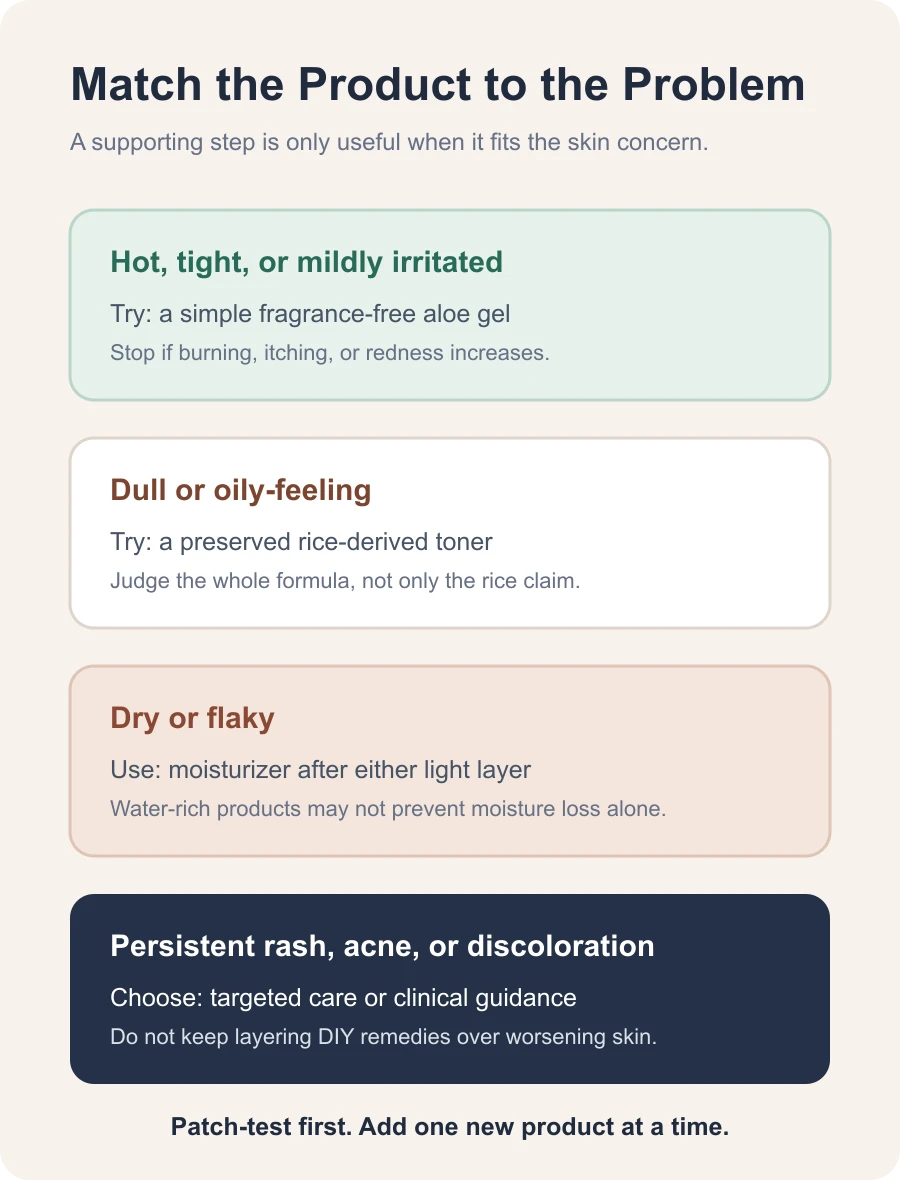
For Hot, Tight, or Mildly Irritated Skin
A simple fragrance-free aloe gel is the more intuitive choice because its cool gel texture can feel comfortable. Avoid using it to cover up a worsening rash, infection, or significant burn. If irritation persists, stop experimenting and seek appropriate care.
For Dry or Flaky Skin
Neither product is enough by itself for many people. Aloe adds water but little occlusion; rice toner is usually even lighter. Use a gentle moisturizer afterward. If you want an oil layer for very dry patches, our castor oil versus rice water comparison explains why surface softness is different from tightening.
For Oily or Combination Skin
A preserved rice toner may be the more comfortable texture, but it is not required for oil control. Aloe can also work if the formula is light and free from irritating fragrance. Introduce one product at a time so new congestion or redness has an identifiable cause.
For Dullness or Uneven Tone
Choose a rice-derived formula only if the complete product makes sense. Sunscreen and established tone-support ingredients matter more than a homemade rinse. Aloe may improve the look of dehydration, but it should not be marketed as a pigment treatment.
For Loose or "Tired" Skin
Neither rice water nor aloe creates a structural lift. Hydrated skin may look temporarily plumper, but that is not collagen rebuilding. For a realistic view of plant-based claims, see our guide to anti-aging herbs for skin.
How to Use Rice and Aloe Products Together
If your skin tolerates both, keep the routine simple:
- Cleanse gently and pat the skin mostly dry.
- Apply a thin layer of preserved rice toner with clean hands.
- Follow with a fragrance-free aloe gel if you want a cooling layer.
- Seal dry skin with moisturizer.
- Use broad-spectrum sunscreen in the morning.
Patch-test each product separately before layering them. Do not mix a large batch of aloe and homemade rice water for storage; combining two perishable materials does not create a preserved cosmetic.
Frequently Asked Questions
Which is better for the face, rice water or aloe vera?
Aloe vera is the more practical option for lightweight soothing and hydration, especially in a well-formulated fragrance-free gel. A preserved rice-derived toner may suit dull or oily-feeling skin. The better choice depends on the full formula and how your skin reacts.
Can I use rice water and aloe vera together?
Yes, if both products are preserved, designed for facial use, and tolerated separately. Apply the thinner rice toner first and aloe gel or moisturizer afterward. Using them together does not guarantee brighter, tighter, or acne-free skin.
Is homemade rice water safe for skin?
Homemade rice water has no standardized concentration, pH, preservation system, or validated shelf life. It can spoil, and fermentation does not automatically make it safer or more effective. A preserved cosmetic formula is easier to use consistently.
Can fresh aloe vera irritate the face?
Yes. Topical aloe is generally tolerated, but burning, itching, eczema, and allergic reactions can occur. Fresh leaf material may also contain yellow latex near the rind. Patch-test a finished facial product and stop if irritation develops.
The Bottom Line
Aloe vera is the better-defined choice for cooling hydration and mild surface discomfort. A preserved rice-derived toner may suit someone who wants a lighter layer for dull or oily-feeling skin. Neither is essential, neither tightens loose skin, and both should be judged as complete formulas rather than miracle ingredients.