
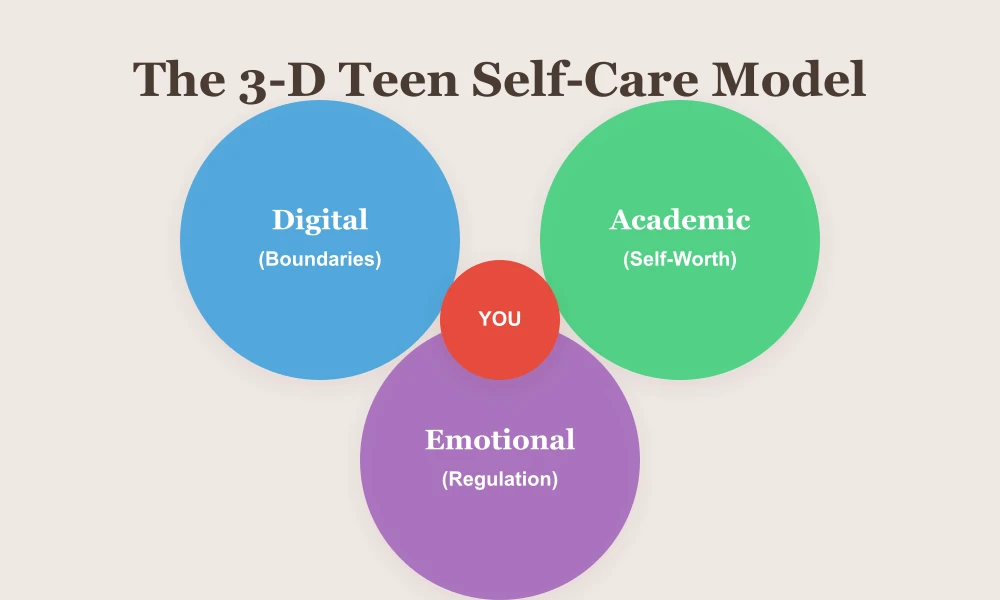
Being a teenager today is fundamentally different than it was a generation ago. You are dealing with an algorithmic culture of constant social comparison, unprecedented academic pressure, and permanent digital connection.
When you search for "teenage self care ideas," you usually find the same tired list: take a bubble bath, drink some tea, read a book, do a face mask. While those activities are fine for a temporary distraction, they fundamentally misunderstand the specific types of burnout teenagers face today.
To actually protect your mental health, you need a highly targeted, 3-Dimensional Strategy that addresses the specific pressures of modern teenage life.
The Goal of Self-Care
Self-care is not about "turning your brain off." It is about actively regulating your nervous system so you don't stay in a constant state of "fight-or-flight" anxiety. It requires setting boundaries around the things that drain your energy.
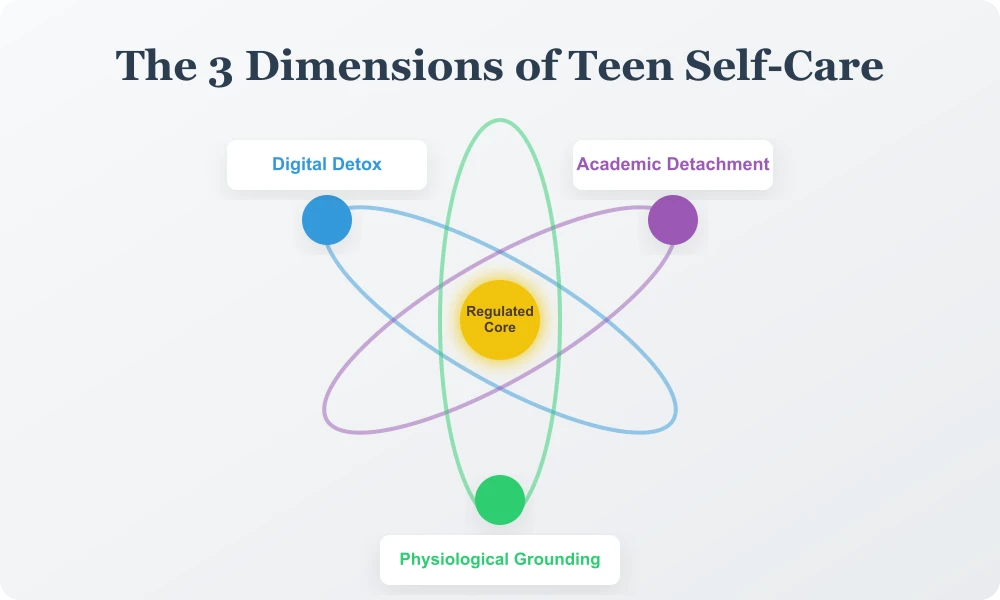
| If the pressure is mostly... | Focus here first | A realistic first step |
|---|---|---|
| Comparison, scrolling, or constant notifications | Digital self-care | Mute one account and turn off one non-essential notification category. |
| Grades, perfectionism, or school burnout | Academic self-care | Use one 25-minute study block, then take a real break away from your desk. |
| Anxiety, sleep loss, or emotional overload | Emotional and physical self-care | Try grounding first, then ask a trusted adult for support if it keeps happening. |
Dimension 1: Digital Self-Care
Digital platforms are designed to keep your attention, and that can make it harder to notice when scrolling has stopped helping. Digital self-care is about taking back control of your attention.
The Strategy: The Algorithmic Detox
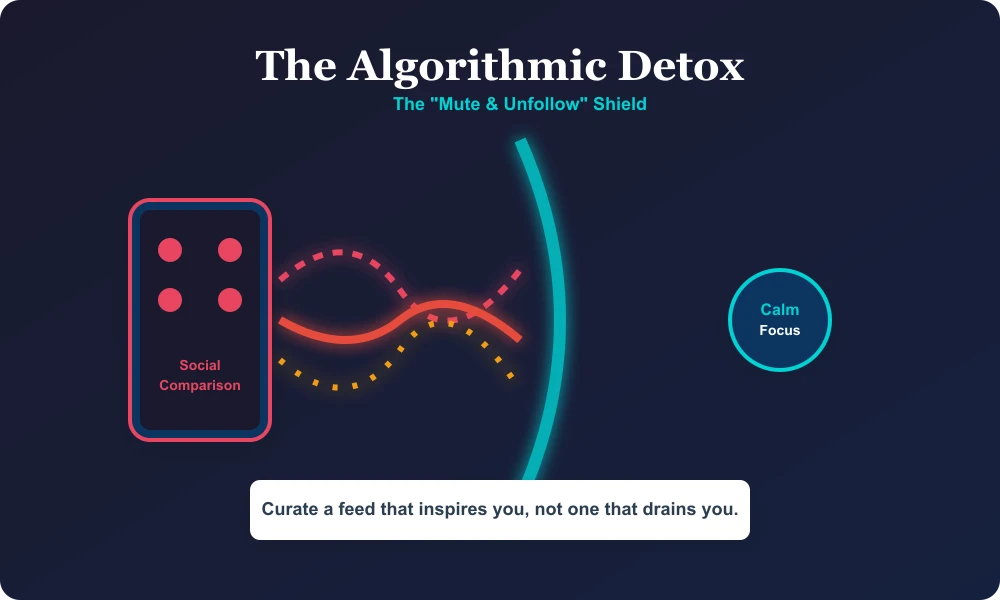
1. The 'Mute and Unfollow' Protocol
You are the CEO of your digital environment. If an influencer, a celebrity, or even a friend posts content that makes you feel bad about your body, your lifestyle, or your accomplishments, you must unfollow or mute them. You do not owe anyone your digital attention. Curate a feed that actually inspires you.
2. The 'One Hour Curfew'
Late-night screens, notifications, and emotionally charged content can make it harder to wind down. Establish a strict rule: no screens one hour before bed. Read a physical book, listen to a calm podcast, or journal instead.
3. Turn off Non-Essential Notifications
Every buzz asks your brain to switch tasks. Turn off all notifications except for direct texts and calls from your inner circle. Do not let apps interrupt your focus all day.
If your feed is making you compare, spiral, or feel less confident, use the environment reset in easy ways to improve self-confidence alongside this digital cleanup.
Dimension 2: Academic Self-Care
The modern education system often breeds a toxic form of perfectionism. It is incredibly easy to accidentally tie your entire self-worth to your GPA or college prospects.
The Strategy: Detaching Self-Worth from Grades
4. Practice 'Productive Failure'
A bad grade is not a permanent reflection of your intelligence; it is simply a piece of data. It tells you that a specific study method didn't work for a specific test. Reframe failure as the necessary biological friction required for learning.
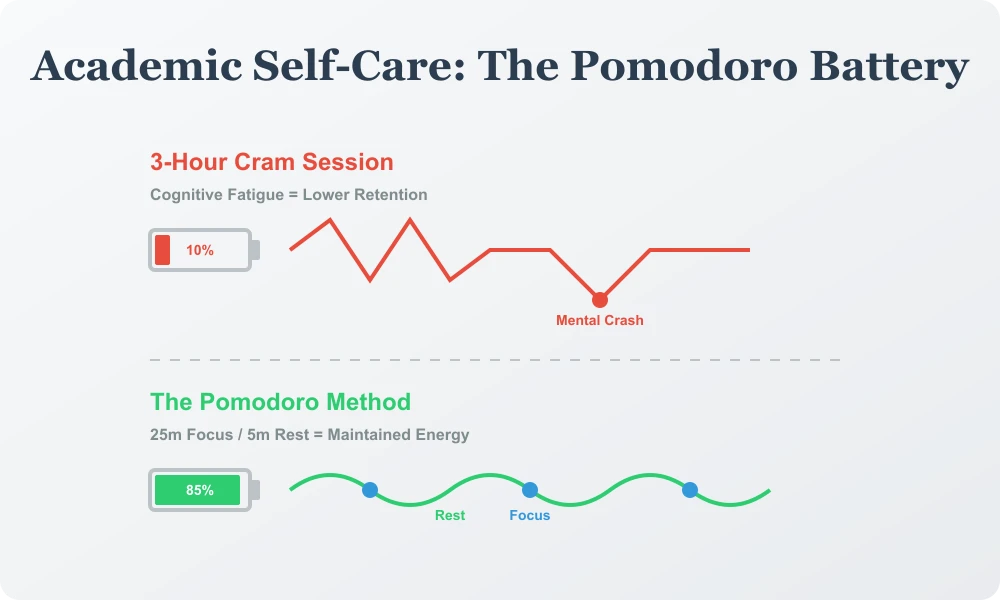
5. The Study-Rest Cycle (Pomodoro)
Your brain cannot effectively process information for 3 hours straight. If you try to study for hours without a break, you will hit cognitive fatigue. Use the Pomodoro method: study with extreme focus for 25 minutes, then take a 5-minute break away from your desk. This is academic self-care.
6. Protect Your Weekends
Just like adults need time off from work, you need time off from school. Dedicate at least one full day (e.g., Saturday) where you refuse to look at a textbook or think about assignments. Your brain requires downtime to consolidate memories.
Dimension 3: Emotional & Physical Self-Care
During your teenage years, your brain is still fine-tuning the systems involved in planning, prioritizing, and decision-making. NIMH explains that the prefrontal cortex is one of the last brain areas to mature. That does not mean teens are incapable; it means emotional regulation often needs more structure and support.
Sleep is one of the biggest levers here. The CDC notes that teenagers ages 13 to 18 generally need 8 to 10 hours of sleep per night, and insufficient sleep is linked with attention, behavior, and mental health problems.
The Strategy: Physiological Grounding
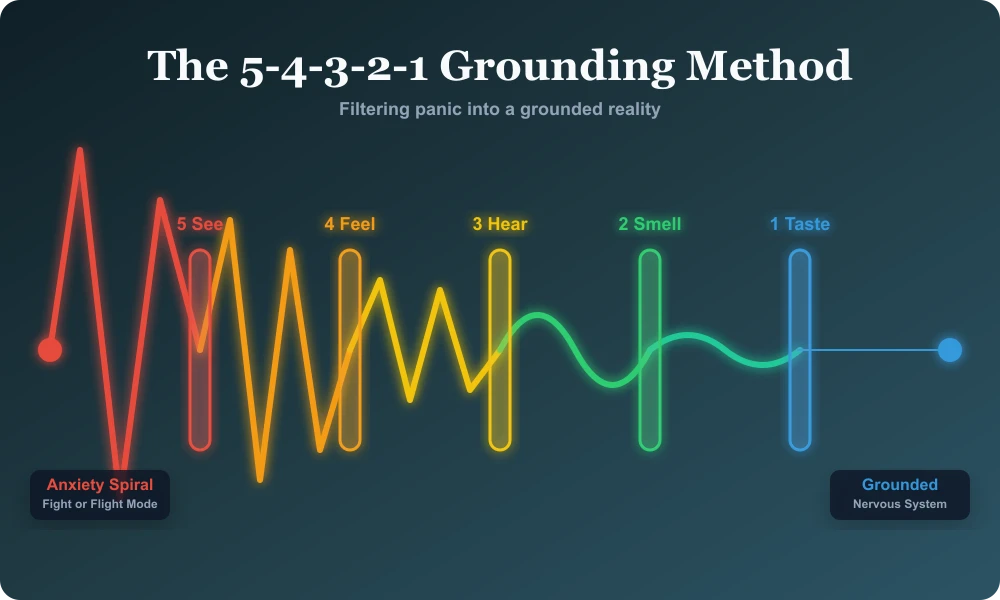
7. The 5-4-3-2-1 Grounding Method
When you feel an anxiety spiral starting, force your brain back into your physical body using your senses. Name 5 things you can see, 4 things you can physically feel, 3 things you can hear, 2 things you can smell, and 1 thing you can taste. This interrupts the panic cycle.
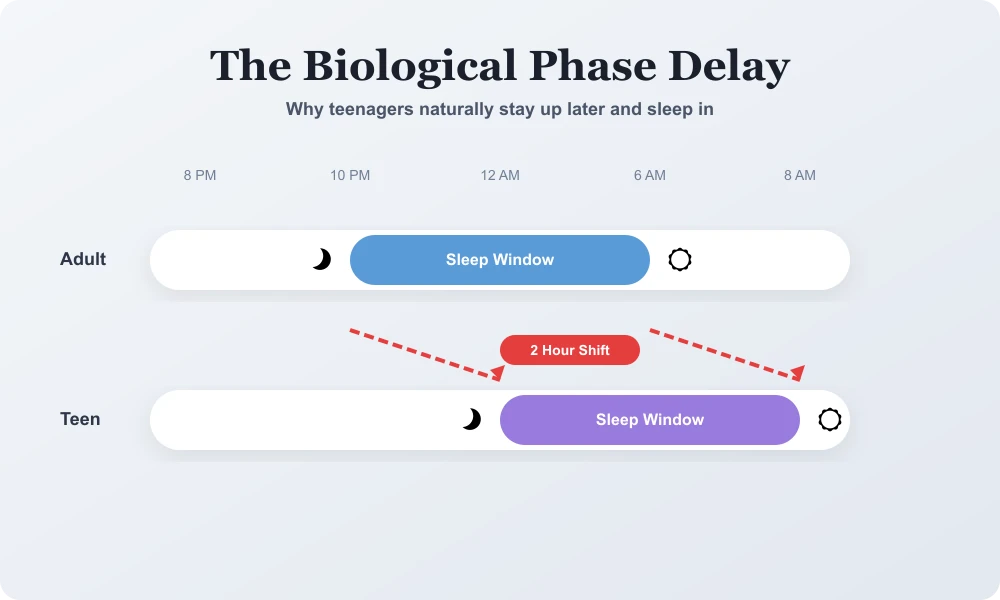
8. Understand Your Circadian Shift
Teenagers naturally experience a biological "phase delay" in their circadian rhythm, making them naturally want to stay up late and sleep in. This is not laziness; it's biology.
The National Sleep Foundation explains that teen circadian rhythms tend to shift later, which is why a realistic wind-down routine matters more than just telling yourself to sleep earlier.
9. Somatic Movement (Not Just 'Exercise')
You don't have to run a marathon to practice physical self-care. "Somatic movement" involves stretching or shaking out your body to literally release trapped muscle tension. A simple 10-minute yoga flow in your bedroom can signal to your nervous system that you are safe.
When to Get Extra Support
Self-care can support stress, but it should not be the only plan if you feel unsafe, hopeless, panicky, or unable to function at school or home. If you are worried about your mental health, talk to a trusted adult, school counselor, doctor, or crisis support service. You can also use the grounding tools in how to stop overthinking or the emotional pattern guide in how to stop crying as short-term support while you get help.
Frequently Asked Questions
Why do I feel so overwhelmed all the time as a teenager?
You may be experiencing sensory and informational overload. Between school, extracurriculars, and a constant stream of social media data, your brain rarely gets a moment of true silence. A one-hour screen curfew can reduce some of that pressure.
Is it normal to feel like I need a break from my friends?
Yes. Socializing, even with people you love, requires energy. Taking a low-social weekend where you do not make plans and do not reply to group chats immediately can be a healthy form of emotional self-care.
How do I start self-care if I'm already burnt out?
Start with the baseline: sleep, food, hydration, and one small boundary. Do not try to implement a complex 10-step routine. Drink some water, eat something steadying, and choose one realistic sleep improvement tonight.