
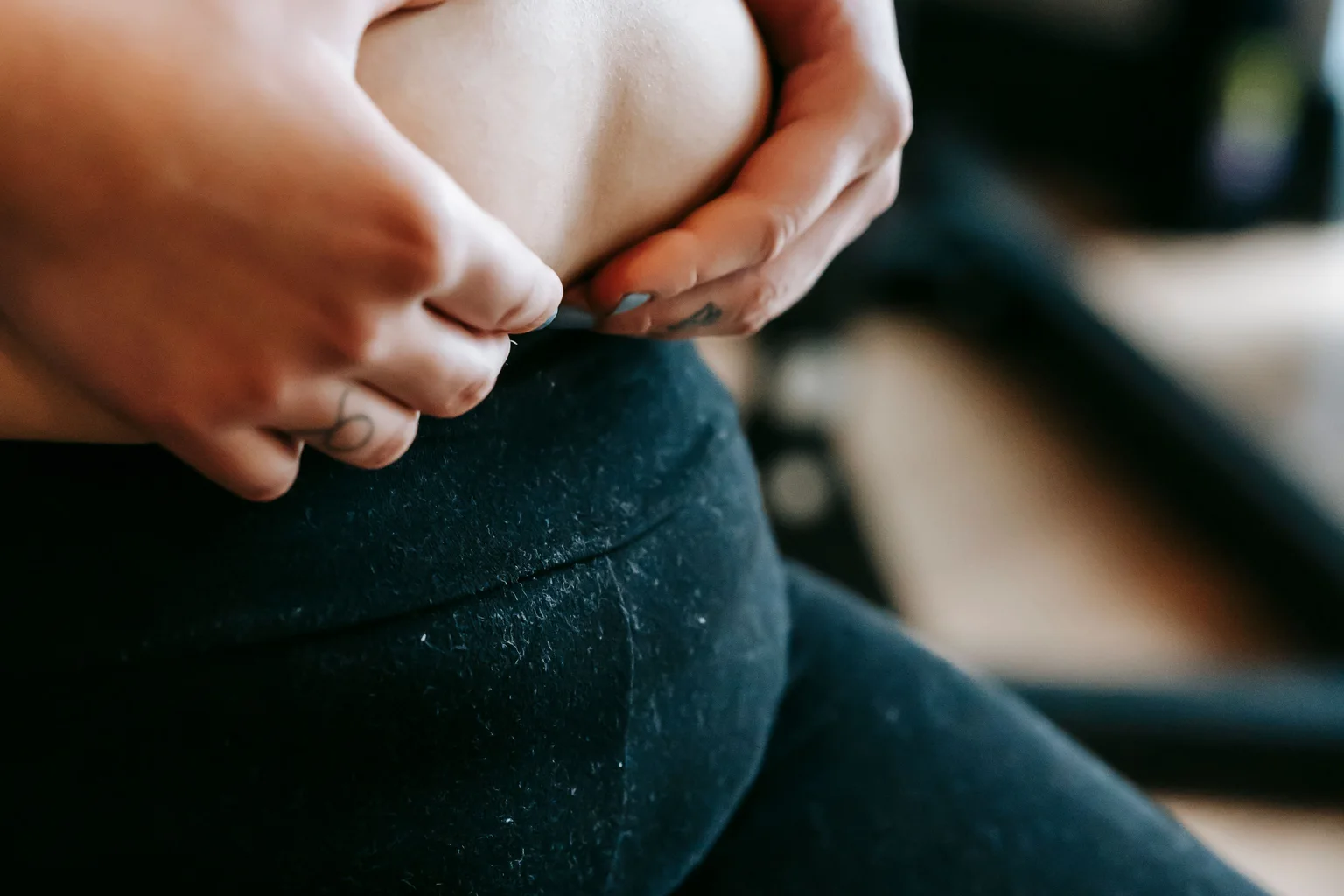
If your stomach looks softer after pregnancy, aging, or weight loss, the first step is not choosing a tightening cream. It is identifying which tissue is changing the contour. Loose skin, fat beneath the skin, abdominal muscle separation, and temporary bloating can overlap, but they respond to different approaches.
Can You Tighten Loose Stomach Skin?
Mild looseness may improve gradually with time, stable weight, good nutrition, and protection from further sun damage. Moisturizer can make dry, crepey skin look smoother, and strength training can improve the muscular shape underneath. Neither one removes substantial excess skin.
 Support Non-AI Creator
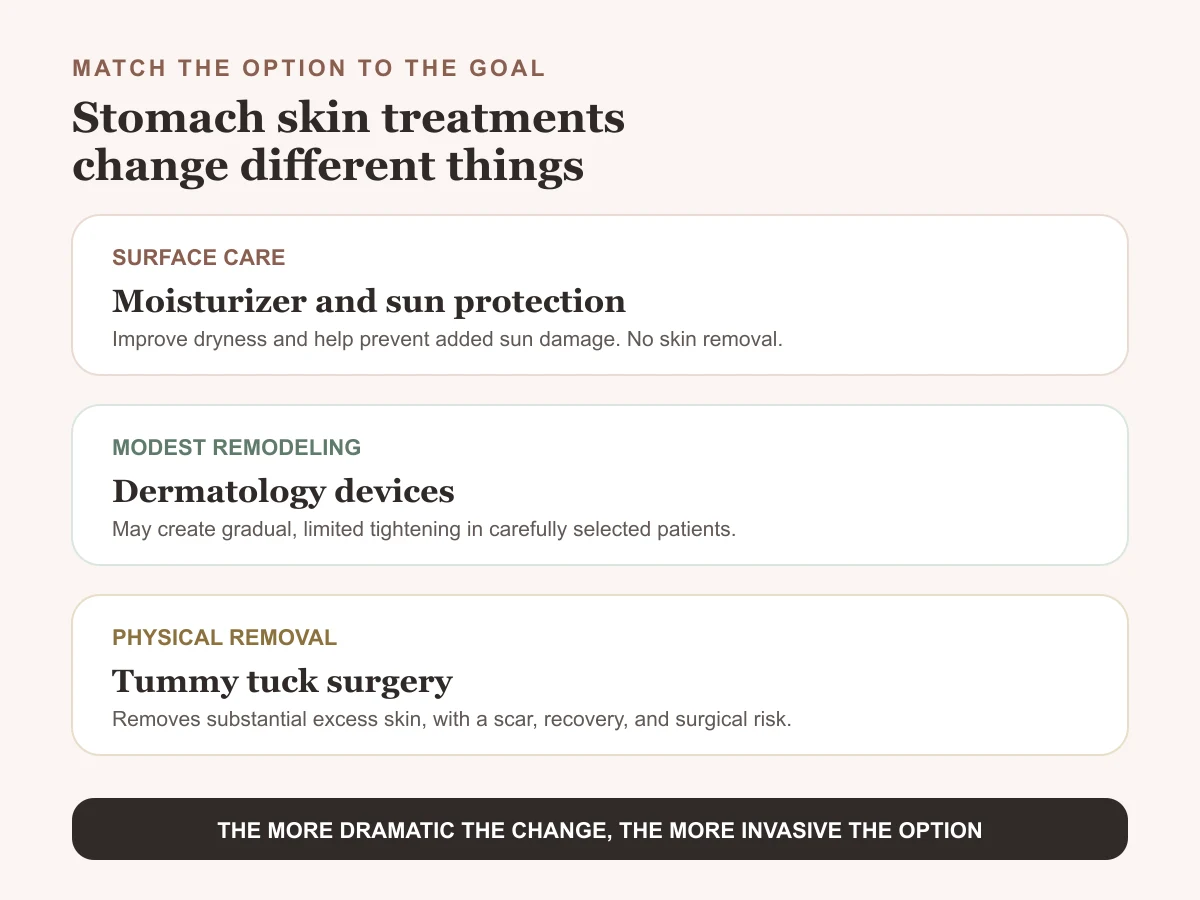
The American Academy of Dermatology notes that the results from firming creams are subtle at best. Noninvasive procedures can create modest tightening in selected people, while surgery produces the most dramatic change.
A Flat Stomach Is Not a Health Requirement
Skin naturally folds when you sit or bend. Pregnancy, weight changes, age, genetics, pelvic shape, organs, and a normal fat layer all affect contour. A realistic goal is comfort and an outcome that fits your body, not a permanently flat surface.
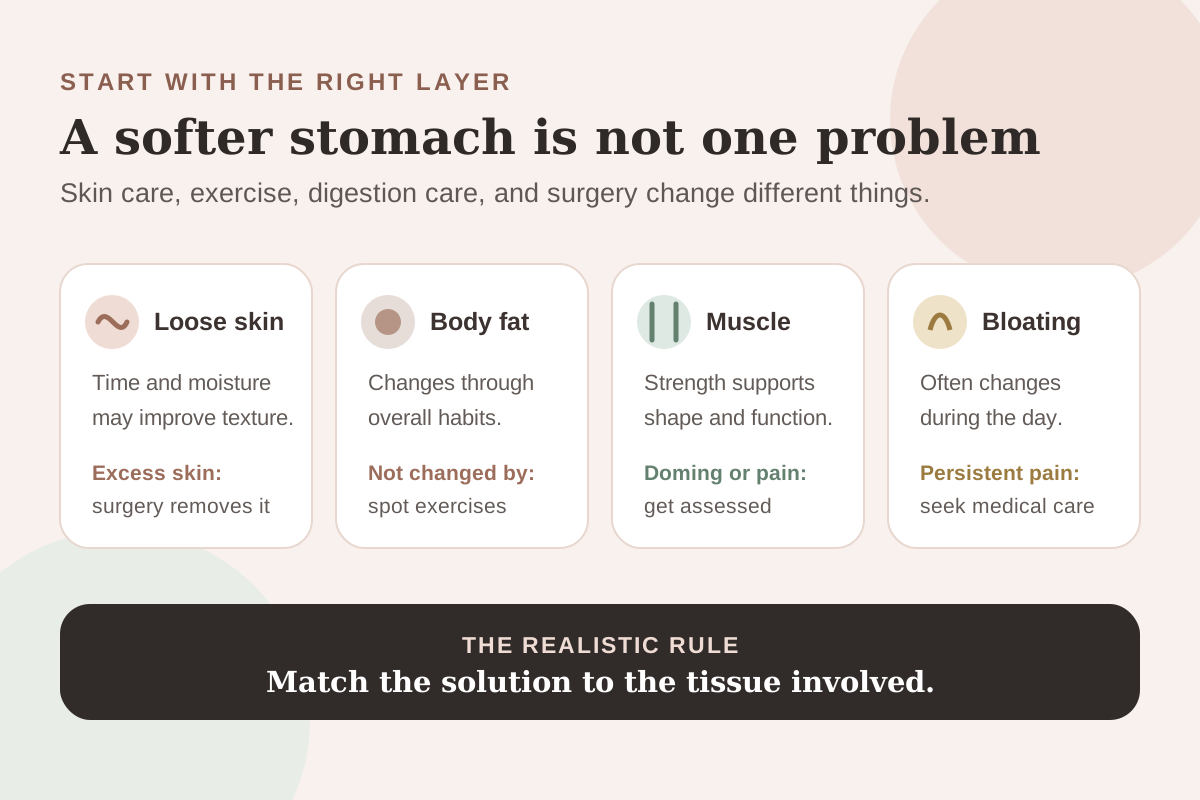
What Is Changing the Stomach Shape?
Loose or Crepey Skin
Skin may look finely wrinkled, drape over a fold, or feel thinner after major stretching. It can be more obvious after pregnancy or significant weight loss. Pinching the area may lift a thin layer with little fullness beneath it, but a clinician is better positioned to assess it accurately.
Fat Beneath the Skin
Subcutaneous fat feels thicker and contributes volume beneath the skin. Abdominal exercises cannot select this area for fat loss. Our guide to losing lower-belly fat and keeping it off explains why gradual overall habits matter more than spot-reduction workouts.
Abdominal Muscle Separation
Diastasis recti is a widening between the two sides of the rectus abdominis, often associated with pregnancy but possible in other situations. It may create doming or a central bulge with exertion. A pelvic-health physical therapist can assess breathing, pressure control, strength, and function. Skin products cannot repair this muscle-and-connective-tissue issue.
Bloating or a Medical Cause
A contour that changes markedly during the day may involve digestion, constipation, a menstrual cycle, or food intolerance rather than loose skin. A firm, painful, rapidly enlarging, or one-sided bulge should be medically assessed, particularly if it comes with vomiting, fever, bowel changes, or concern for a hernia.
What Can Help at Home?
Give Skin Time After a Major Change
Skin and connective tissue do not settle overnight. After birth or substantial weight loss, the appearance may continue changing for months. Keep weight reasonably stable rather than cycling through aggressive diets, which can make the skin repeatedly expand and contract.
Moisturize for Surface Smoothness
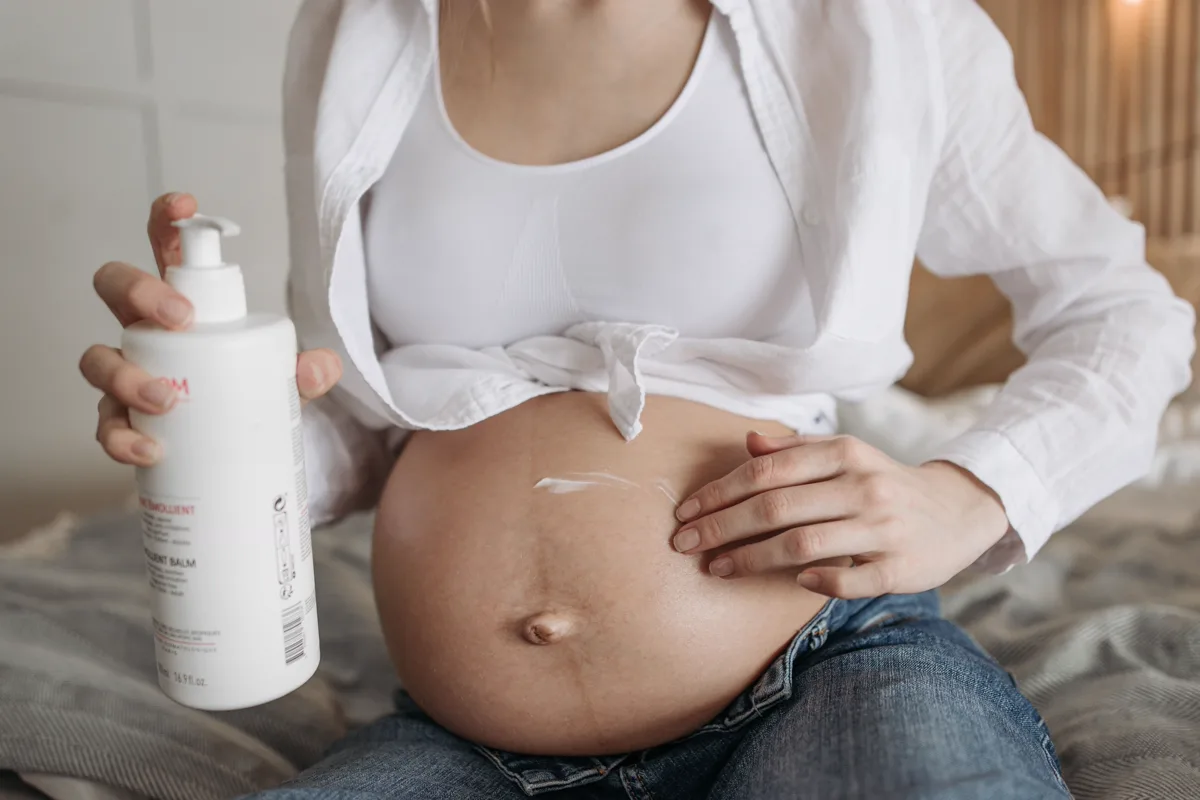
A fragrance-free cream or ointment can reduce water loss and make dry texture look less crepey. Apply after bathing while skin is slightly damp. This is a comfort and appearance benefit, not a lift. The AAD's dry-skin guidance favors creams and ointments over thin lotions when dryness is significant.
 Support Non-AI Creator
Build Muscle Without Expecting It to Shrink Skin
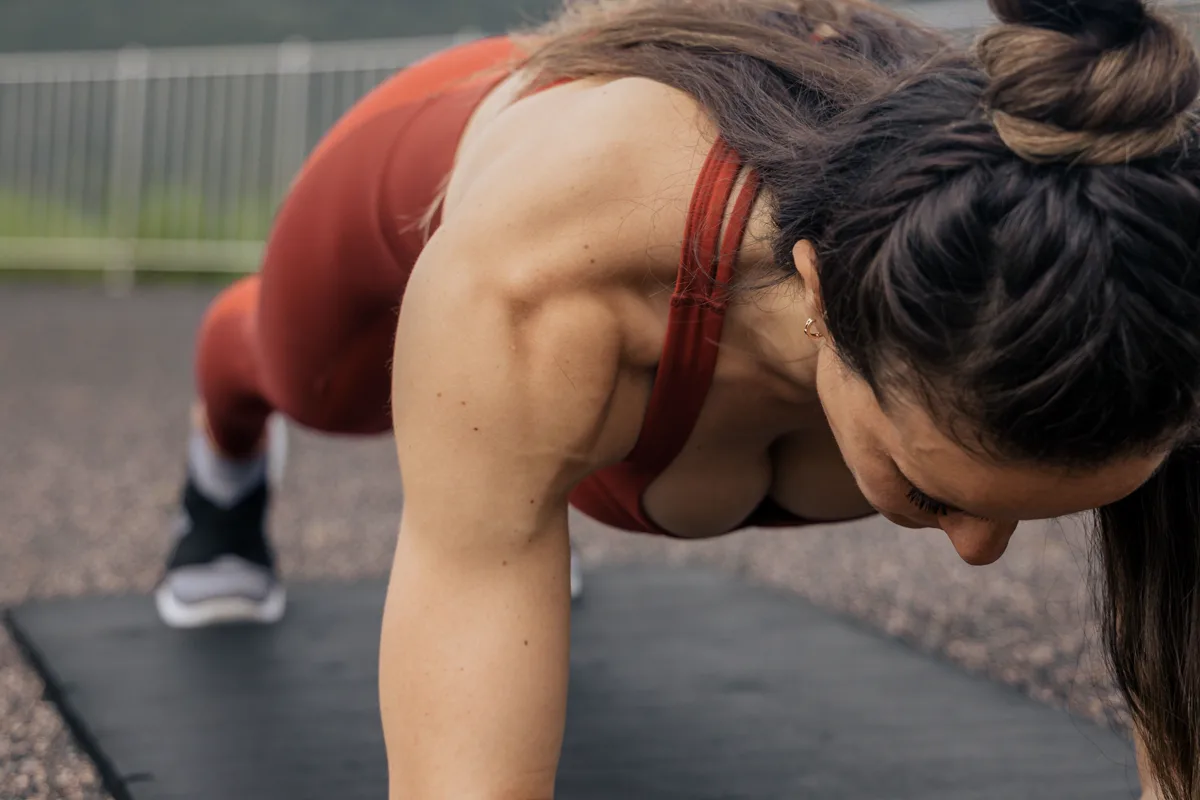
Progressive resistance training can improve posture, strength, and the shape beneath the skin. Train the whole body and progress gradually. If you notice abdominal doming, pelvic pressure, leaking, back pain, or a postpartum gap that concerns you, seek individualized guidance rather than forcing high-pressure core exercises.
 Support Non-AI Creator
Eat Enough Protein and Avoid Miracle Supplements
Adequate protein, fruits, vegetables, whole grains, and dietary fats support general health and tissue maintenance. Collagen powders and "skin tightening" drinks do not selectively remove abdominal skin. Supplements also vary in quality and can interact with medicines.
Protect Exposed Skin From UV Damage
Ultraviolet exposure breaks down collagen and elastin. Use shade, clothing, and broad-spectrum SPF 30 or higher when the abdomen is exposed. Sunscreen will not reverse existing excess skin, but it helps avoid adding preventable photoaging.
Be Skeptical of Oils and Wraps
Massage oils, aloe, essential oils, caffeine creams, and body wraps can change slip, shine, hydration, or temporary water distribution. They do not remove skin. See our evidence review of essential oils for tightening claims before spending money on a fragranced blend.
Which Professional Treatments Work?
Retinoid-Based Skin Care
Prescription retinoids can support collagen remodeling in photoaged skin, but they are not a tummy tuck in a tube and may irritate. Discuss suitability with a dermatologist. Retinoids should not be used during pregnancy, and breastfeeding decisions need clinician guidance.
Ultrasound, Radiofrequency, and Laser
Energy-based treatments aim to heat or remodel collagen. Results are generally gradual and modest, and multiple sessions may be needed. The best candidates usually have a small amount of laxity and a stable weight. Cost, discomfort, pigment-change risk, device quality, and clinician experience all matter.
Tummy Tuck
Abdominoplasty physically removes excess abdominal skin and may tighten separated abdominal muscles. The American Society of Plastic Surgeons describes it as major surgery, not a weight-loss substitute. It involves a scar, recovery, and risks that should be discussed with a board-certified plastic surgeon.
 Support Non-AI Creator
What About Loose Skin After Pregnancy?
Recovery is individual. Early postpartum weeks are for healing, feeding, sleep, and gradual return to activity, not judging a final abdominal result. The uterus shrinks, fluid shifts, and tissues adapt over time. Wait for medical clearance before progressing exercise, especially after cesarean birth or complications.
See an obstetric clinician or pelvic-health physical therapist if you have pain, a persistent bulge, significant doming, pelvic-floor symptoms, or difficulty returning to normal activity. Consider elective skin-removal surgery only when childbearing plans, weight stability, recovery support, and personal goals make the timing sensible.
Frequently Asked Questions
Can loose stomach skin tighten naturally?
Mild looseness may improve gradually as skin adapts after pregnancy or weight change, especially with stable weight and time. Moisturizer can improve surface dryness and strength training can improve the shape underneath, but substantial excess skin usually does not disappear through home care.
Does exercise tighten loose belly skin?
Exercise strengthens abdominal and whole-body muscle and may reduce body fat when combined with an appropriate energy balance. It does not directly shrink or remove excess skin, although more muscle underneath can improve overall contour.
What cream is best for tightening stomach skin?
No over-the-counter cream can lift substantial loose skin. A fragrance-free moisturizer can temporarily make dry, crepey skin look smoother. Retinoids may modestly support collagen in some situations but require medical guidance and should not be used during pregnancy.
What treatment removes loose stomach skin?
A tummy tuck is the treatment that physically removes substantial excess abdominal skin and can repair separated abdominal muscles when appropriate. Noninvasive ultrasound, radiofrequency, or laser treatments may produce more modest changes in selected patients.
The Bottom Line
Start by separating loose skin from abdominal fat, muscle separation, and bloating. Time, stable weight, moisturizer, sun protection, and strength training can improve comfort or overall contour, but they cannot remove substantial excess skin. A dermatologist can discuss modest noninvasive options; a tummy tuck is the procedure that physically removes a significant fold.