
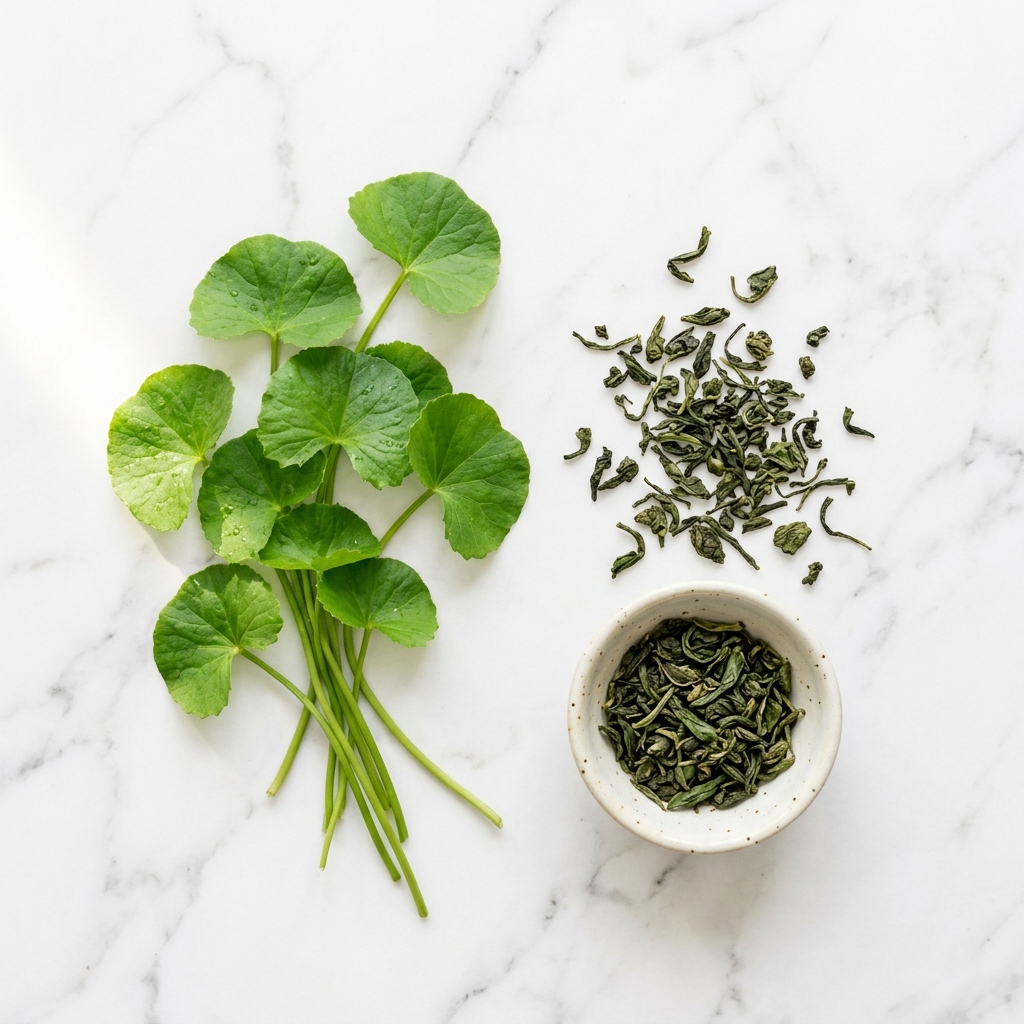
Herbal skincare sits between two unhelpful extremes: every plant is marketed as a wrinkle eraser, or every botanical is dismissed as decoration. The more useful view is ingredient-specific. Some extracts have plausible and clinically relevant roles in soothing, antioxidant defense, hydration, or uneven tone, while evidence for lifting and deep wrinkle reversal remains weak.
This ranking focuses on topical skincare, not traditional reputation alone. It also separates research on a standardized extract or finished formula from claims about homemade teas, powders, essential oils, and raw plant material.
Which Anti-Aging Herbs Are Most Useful for Skin?
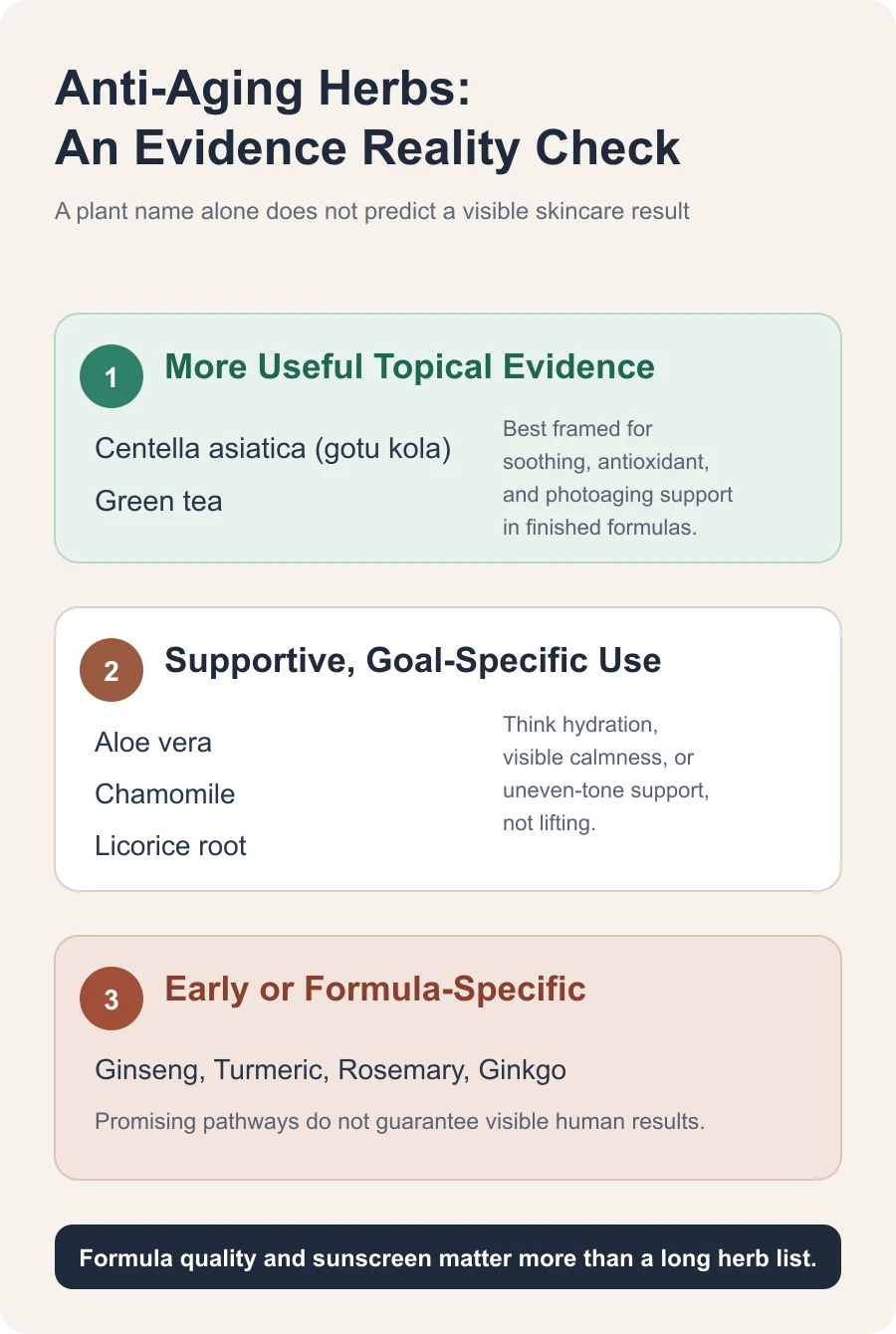
Centella asiatica and green tea have the clearest practical case as topical skin-support ingredients. Aloe vera, chamomile, and licorice root can be useful for hydration, visible calmness, or uneven tone. Ginseng, turmeric, rosemary, and ginkgo are interesting but rely more heavily on laboratory, early clinical, or formula-specific evidence. None replaces broad-spectrum sunscreen, and none can lift significant loose skin.
Anti-Aging Is an Outcome, Not an Ingredient Category
An herb can contain antioxidants without erasing wrinkles. Visible results depend on the extract, concentration, stability, delivery system, the rest of the formula, and daily sun protection. Raw leaves or kitchen powders are not interchangeable with a tested cosmetic product.
 Support Non-AI Creator
How We Compared the Evidence
The ranking uses four questions: Has the ingredient been studied on human skin? Was it tested as the same type of extract found in cosmetics? Does the research measure a visible or barrier-related outcome rather than only a laboratory pathway? And are the benefits meaningful beside proven basics such as sunscreen, moisturizer, and retinoids?
Laboratory findings still matter, but they answer a narrower question. A compound that changes collagenase activity in a dish may be worth studying; it does not show that a jar of homemade extract will penetrate skin or soften wrinkles in people.
| Herb | Most Realistic Role | Evidence Position | Best Format |
|---|---|---|---|
| Centella | Soothing and repair support | Useful topical evidence | Standardized serum or cream |
| Green tea | Antioxidant and photoaging support | Useful topical evidence | Stable topical extract |
| Aloe vera | Hydration and comfort | Supportive | Finished gel or moisturizer |
| Chamomile | Visible calmness | Supportive | Fragrance-aware cream |
| Licorice root | Uneven-tone support | Supportive | Standardized extract |
| Ginseng | Antioxidant pathways | Early and formula-specific | Finished topical product |
| Turmeric | Tone and inflammation pathways | Mixed, limited clinical evidence | Non-staining formula |
| Rosemary | Antioxidant support | Mostly preclinical | Formulated extract, not neat oil |
| Ginkgo | Antioxidant and barrier research | Mostly preclinical | Finished topical product |
9 Best Anti-Aging Herbs for Skin, Ranked Realistically
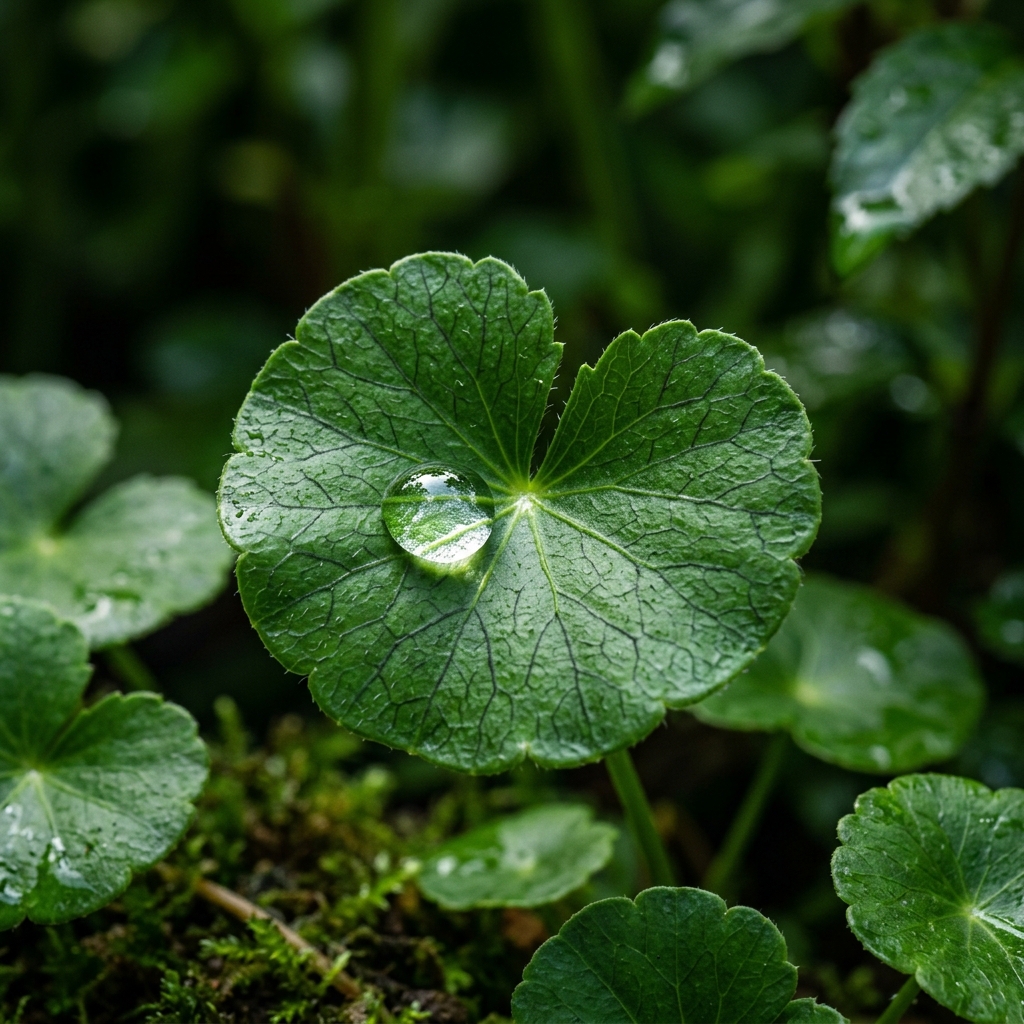
1. Centella Asiatica (Gotu Kola)
Best for: soothing, barrier-focused formulas, and collagen-related repair support.
Centella contains triterpenes such as asiaticoside and madecassoside. A systematic review of five randomized trials found improvements in some lip and eye-area wrinkle measures, but the studies included only 172 Asian women and used poorly standardized preparations. That makes a standardized centella serum more credible than a homemade leaf paste, while leaving real uncertainty about the best extract, dose, and long-term safety.
 Support Non-AI Creator
2. Green Tea (Camellia Sinensis)
Best for: antioxidant support and routines focused on visible photoaging.
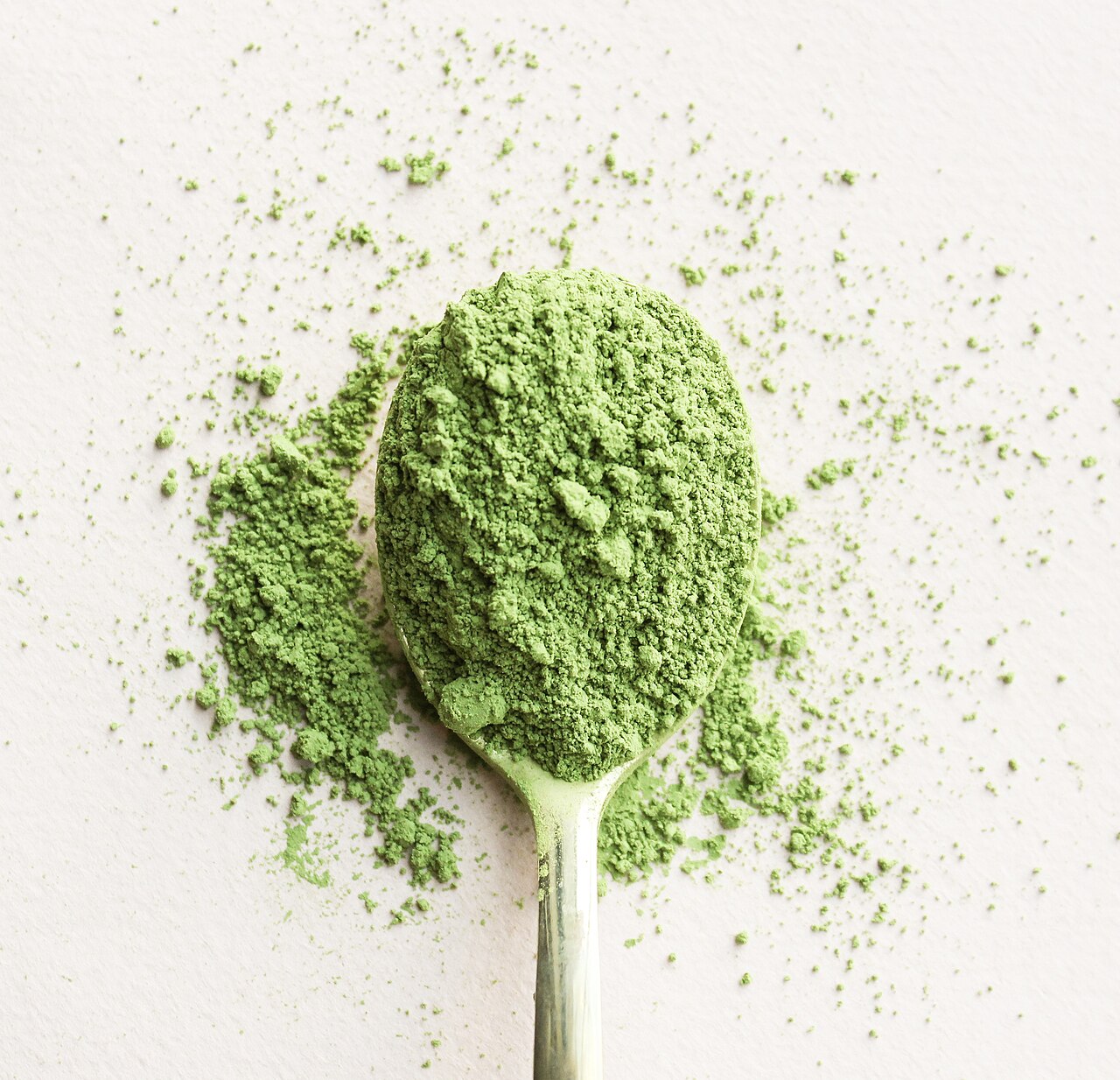
Green tea polyphenols, especially EGCG, are studied for ultraviolet-related oxidative stress and signaling pathways involved in inflammation and matrix breakdown. The research does not replace sunscreen, but green tea is a sensible supporting ingredient in a stable serum or moisturizer. A 2024 systematic review of topical cosmeceuticals for photoaging included green tea among the botanical ingredients with human evidence, while also showing why outcomes depend on the finished formulation rather than the plant name alone.
 Support Non-AI Creator
3. Aloe Vera
Best for: lightweight hydration and comfort after dryness or irritation.
Aloe is not a structural firming treatment. Its practical value is water-binding, soothing texture, and compatibility with simple gel or moisturizer formats. Whole-leaf latex and fragranced green gels are not the goal; choose a well-preserved cosmetic product and stop if it stings. Hydrated skin can look temporarily plumper, but that should not be described as rebuilding collagen. Our guide to aloe vera and skin-tightening claims explains that distinction in more detail.
4. Chamomile (Matricaria Recutita)
Best for: calming formulas when redness and barrier discomfort make texture look worse.
Chamomile compounds such as bisabolol and apigenin are studied for soothing and inflammation-related activity. Its anti-aging role is therefore indirect but useful: calmer, better-tolerated skin is easier to moisturize and protect consistently. Anyone with an allergy to ragweed-family plants should be cautious, and fragranced chamomile essential oil is not equivalent to a controlled extract in a cream.
5. Licorice Root (Glycyrrhiza Species)
Best for: uneven tone and the appearance of sun-related discoloration.
Licorice-derived compounds such as glabridin and liquiritin are used in brightening formulas because they interact with pigment-related pathways. That makes licorice more relevant to age spots and uneven tone than to sagging. It works best as one part of a sunscreen-centered pigmentation routine, not as a bleaching remedy or raw powder mask. The National Center for Complementary and Integrative Health notes that short-term topical use may be safe but can irritate some skin.
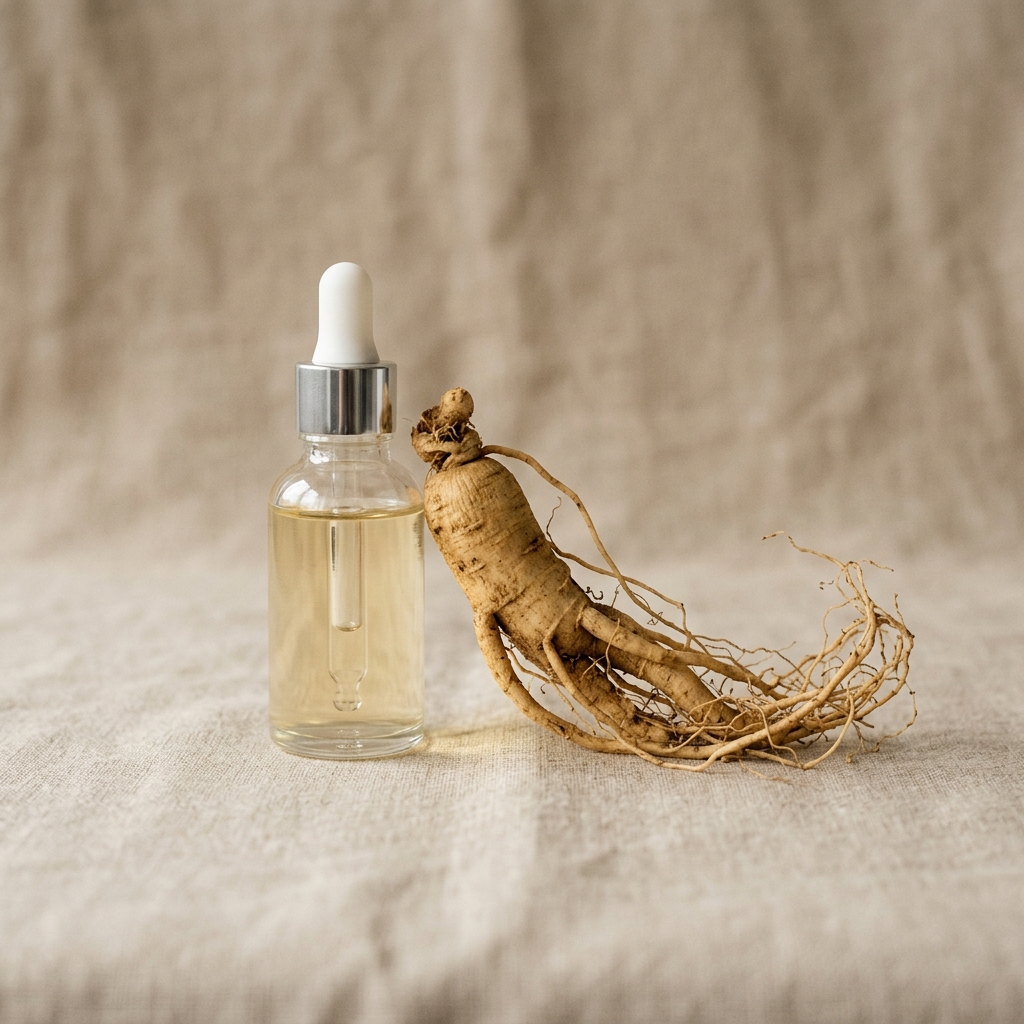
6. Panax Ginseng
Best for: a formula-led antioxidant approach when the product identifies the extract.
Ginsenosides have interesting laboratory and early formulation research around oxidative stress, pigmentation, and matrix-related signaling. Human evidence for a visible anti-wrinkle effect is less mature than the marketing suggests, and different processing methods create different ginsenoside profiles. Treat ginseng as a promising supporting extract, not a reason to expect rapid collagen rebuilding.
 Support Non-AI Creator
7. Turmeric (Curcuma Longa)
Best for: carefully formulated products targeting visible calmness or uneven tone.
Curcumin affects many laboratory pathways, but absorption, stability, staining, and irritation complicate direct use. A systematic review of turmeric and skin health found early clinical signals across several skin conditions while emphasizing the need for better studies. Kitchen turmeric masks are not a standardized anti-aging treatment and can stain skin and fabrics. NCCIH also reports that topical curcumin can cause hives or itching.
8. Rosemary
Best for: antioxidant support in a finished extract-based formula.
Rosmarinic and carnosic acids have antioxidant activity in laboratory research. Direct human evidence for rosemary visibly reducing wrinkles or tightening skin is limited. Rosemary essential oil also adds fragrance-allergy risk, so a serum containing a controlled rosemary extract is a different proposition from applying concentrated essential oil to the face.
9. Ginkgo Biloba
Best for: experimental antioxidant or barrier-support formulas with modest expectations.
Ginkgo flavonoids appear in preclinical research around oxidative stress and skin-barrier pathways, but there is not enough strong human evidence to rank it beside centella or green tea. It may be a reasonable supporting ingredient in a well-tolerated product; it is not a proven way to restore elasticity or erase crepey texture.
How to Choose a Botanical Formula That Makes Sense
- Match the herb to one goal. Centella for soothing, green tea for antioxidant support, licorice for uneven tone, or aloe for hydration is more useful than a vague “nine-herb anti-aging complex.”
- Prefer a finished cosmetic. Preservation, pH, stability, packaging, and penetration affect whether a plant compound reaches skin in a useful form.
- Look for the extract, not only the plant story. Madecassoside, green-tea polyphenols, bisabolol, or licorice-derived brightening compounds give more information than a leaf illustration on the box.
- Add one new product at a time. This makes irritation easier to identify and prevents an elaborate routine from hiding which product actually helps.
- Keep the proven baseline. The American Academy of Dermatology's guidance on premature skin aging prioritizes sun protection and gentle care. Botanicals belong beside those basics, not above them.
What Herbs Cannot Do, and When to Be Careful
No herb can remove significant loose skin, replicate a procedural lift, or reliably erase deep static wrinkles. The American Academy of Dermatology places daily sun protection, gentle cleansing, moisturizer, and avoiding irritating products at the foundation of preventing premature skin aging. For fine lines and photoaging, sunscreen and retinoid-based care have a much stronger evidence base than herbal DIYs. Our guide to essential oils and skin-tightening claims explains why fragrance and surface softness are often mistaken for structural change.
Botanical products can still cause irritant or allergic contact dermatitis. Avoid homemade mixtures near the eyes, do not apply essential oils undiluted, and introduce products slowly if you have eczema, rosacea, or a history of fragrance reactions. Stop using a product if burning, itching, swelling, blisters, or a persistent rash develops.
Drinking an herbal tea and applying a standardized cosmetic extract are not interchangeable. Oral ginseng, turmeric, licorice, green-tea extracts, and other supplements can have medication interactions or systemic risks that a topical skincare discussion does not address. Do not swallow concentrated extracts for a cosmetic goal without checking with a qualified clinician or pharmacist.
If laxity rather than texture is the concern, see our evidence-aware guide to red light therapy benefits and limitations before assuming a botanical can create a physical lift.
Frequently Asked Questions
Can herbs really reverse wrinkles?
No herb will magically erase deep, static wrinkles. Some antioxidant-rich and triterpene-rich herbs may support skin elasticity, oxidative stress defense, hydration, or the appearance of fine lines over time, especially in well-formulated topical products.
Is it better to drink the herbs or apply them topically?
For a skin-specific goal, a well-formulated topical product gives the ingredient direct contact with the skin and a known concentration. Drinking tea can be part of a healthy diet, but it should not be treated as a predictable way to deliver a wrinkle-reducing dose to facial skin.
How long does herbal skincare take to work?
Most skincare studies assess results over several weeks or months, not days. If a botanical formula helps, changes are usually subtle and depend on concentration, stability, the rest of the formula, sunscreen use, and consistent application.
Are natural anti-aging herbs safe for sensitive skin?
Natural does not always mean gentle. Botanical extracts and fragrance compounds can irritate skin or cause contact allergy. Introduce one finished product at a time, follow its directions, and stop if persistent burning, itching, swelling, or a rash develops.
The Bottom Line
Centella and green tea are the strongest starting points when you want a botanical ingredient with a practical topical rationale. Aloe, chamomile, and licorice can support hydration, comfort, or uneven tone, while ginseng, turmeric, rosemary, and ginkgo need more cautious expectations. Choose a formula for a specific goal, protect skin from UV, and never let an herb list replace the parts of a routine with stronger evidence.