
Building self-confidence isn't about standing in front of a mirror and reciting empty affirmations. True confidence, the kind that survives a bad day or a social rejection, is built through competence, behavioral momentum, and managing the natural friction of self-doubt.
What Is Real Confidence?
Real confidence is the neurological expectation of success based on verifiable past competence, not an artificially inflated mood. It is the ability to tolerate uncertainty and negative emotions while still executing the actions that align with your values.
The Truth About 'Faking It'
Confident body language can help you feel more prepared, but "faking it until you make it" only works if the "making it" part actually happens. Without building underlying competence, fake confidence quickly crumbles under pressure.
Understanding the Competence-Confidence Loop
The competence-confidence loop is the psychological reality that action must always precede belief. You cannot simply decide to feel confident; you must earn your own trust through verifiable wins.
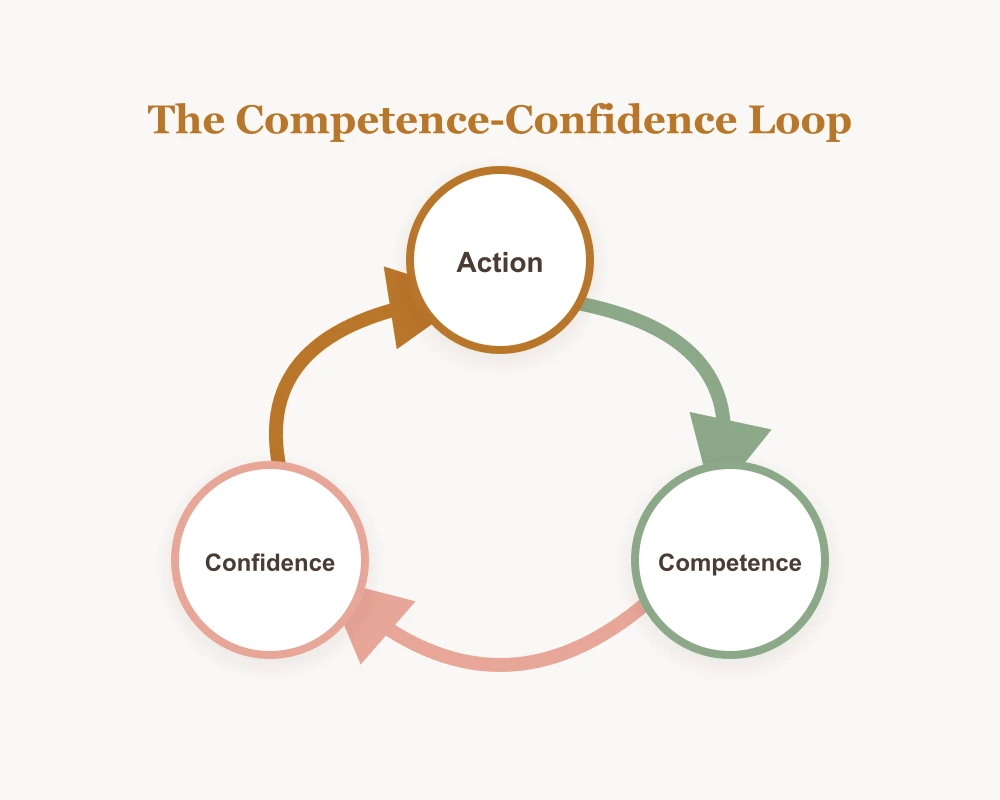
Action First
Action is the catalyst. You take a scary step even while experiencing intense self-doubt.
Competence Second
Through action, you gain data, feedback, and skill. You realize you survived the attempt.
Confidence Third
Your brain registers the survived action and the acquired skill, making the next attempt feel a little more familiar.
| Confidence problem | What to build first | Smallest useful action |
|---|---|---|
| You freeze before starting | Behavioral momentum | Take one visible step before you feel ready. |
| You spiral after criticism | Cognitive distance | Label the thought as data, not identity. |
| You compare yourself constantly | Environmental protection | Mute one account or input that reliably lowers your baseline. |
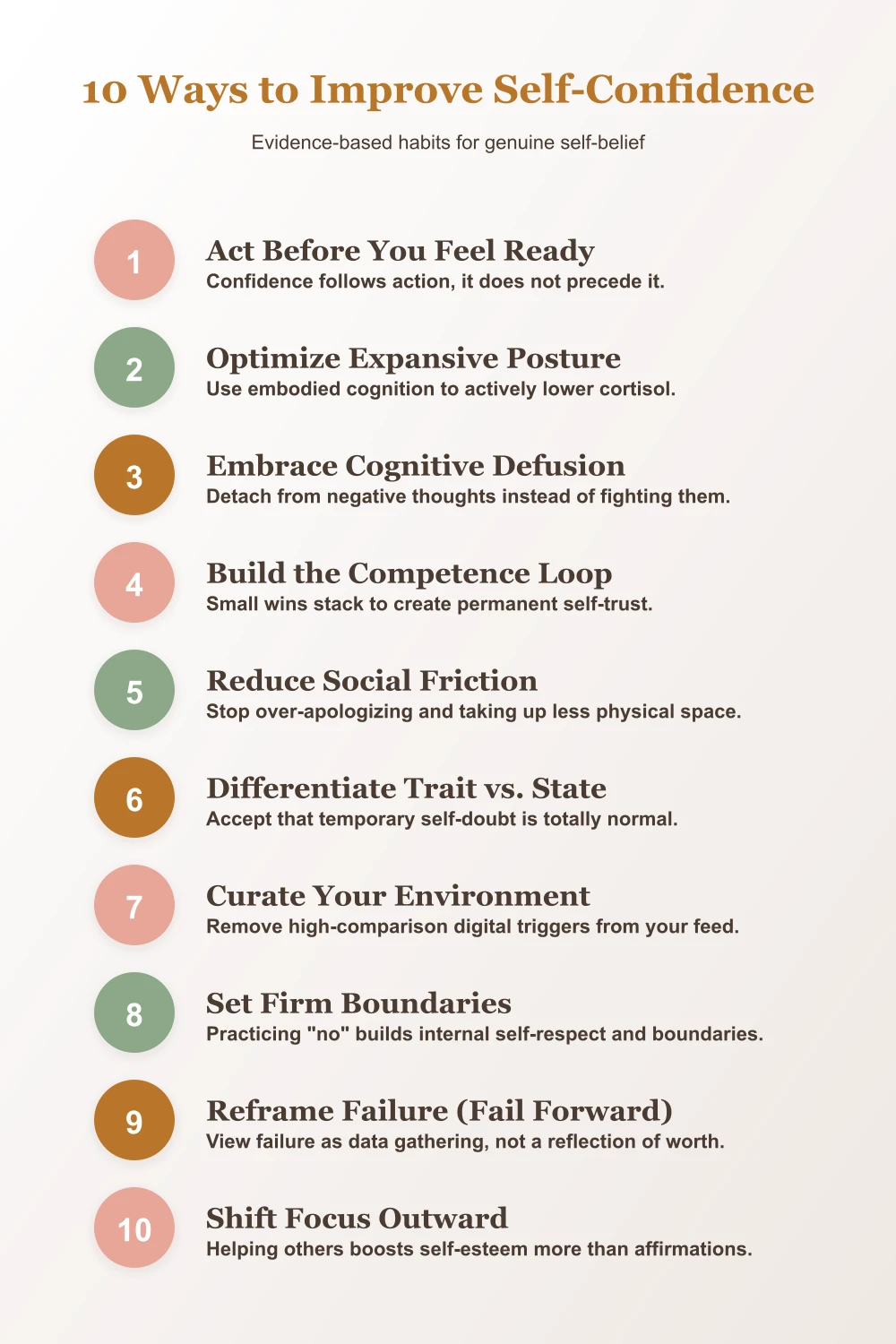
10 Evidence-Based Ways to Improve Confidence
Here is how you build trait confidence using evidence-aware psychological frameworks and practical behavior change.
1. Act Before You Feel Ready
Confidence follows action, it does not precede it. If you wait until you feel completely ready to start a project, set a boundary, or speak up, you will be waiting forever. The brain requires behavioral proof of safety before it lowers the anxiety alarm.
2. Optimize Expansive Posture
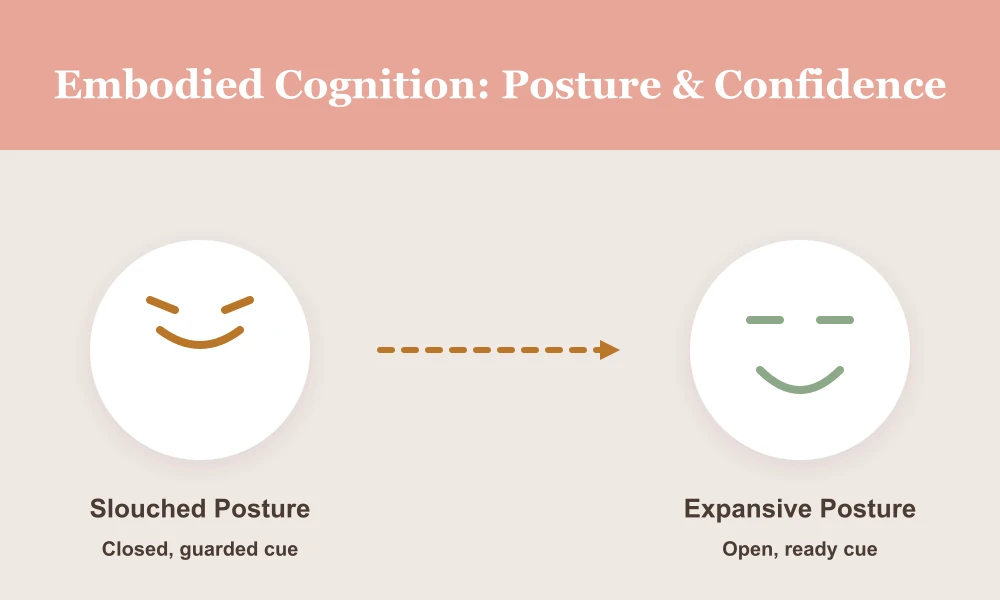
Embodied cognition suggests that posture can influence how you feel and behave under stress. Sitting in an expansive, upright posture can be a small behavioral cue that helps you feel more prepared before a high-stakes interaction.
How to apply it: Keep your shoulders back, occupy the physical space you are given, and avoid the protective "hunched over a phone" posture before high-stakes interactions.
A study indexed on PubMed found that upright seated posture during stress was associated with better mood and self-esteem outcomes than slumped posture. Treat posture as a small state shift, not a substitute for skill-building.
3. Embrace Cognitive Defusion
Cognitive defusion is a core principle of ACT (Acceptance and Commitment Therapy) that involves creating psychological distance from negative thoughts. Instead of fighting self-doubt, you simply notice it as a passing neurological event.
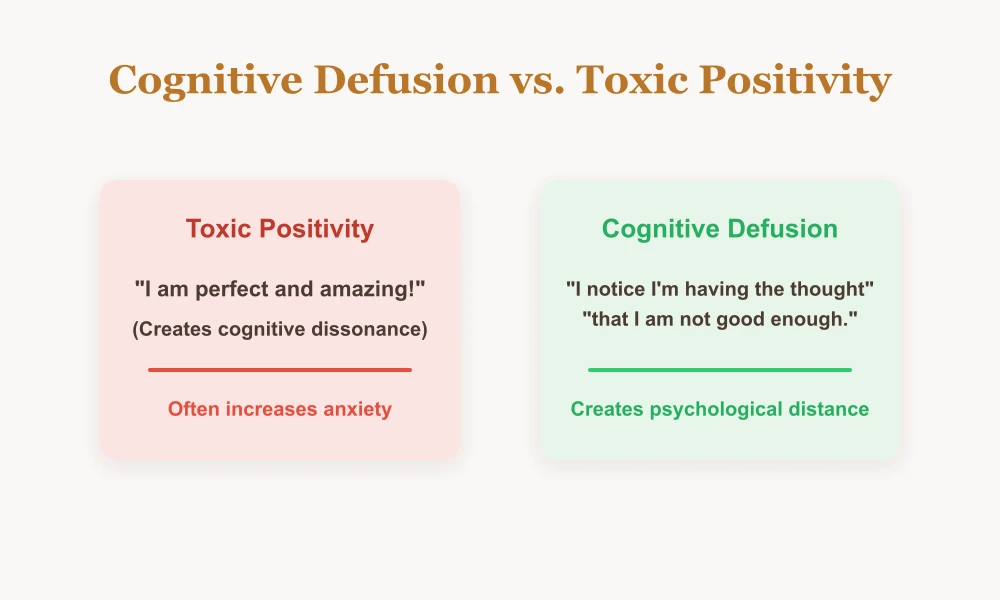
How to apply it: Instead of thinking "I am going to fail," reframe it to "I notice I am having the thought that I am going to fail." This simple linguistic shift removes the emotional teeth from the doubt.
Acceptance and Commitment Therapy commonly uses acceptance, values, committed action, and cognitive defusion to help people relate differently to difficult thoughts.
4. Build the Competence Loop
Small wins stack to create permanent self-trust. When you promise yourself you will do something small, like making your bed, finishing a task, or speaking up in a meeting, and you actually do it, your brain registers you as someone who follows through.
How to apply it: Lower the bar for success. Set micro-goals that are impossible to fail, and accomplish them relentlessly.
5. Reduce Social Friction
Social friction occurs when you unconsciously apologize for existing. This includes using qualifiers ("I just think," "This might be a stupid idea, but"), taking up less physical space, and over-apologizing for things outside your control.
How to apply it: Replace "I'm sorry for being late" with "Thank you for your patience." Speak in declarative sentences.
6. Differentiate Trait vs. State
Accept that temporary self-doubt is totally normal. "State" confidence fluctuates daily based on sleep, hormones, and recent feedback. "Trait" confidence is the deep underlying belief that you will ultimately figure things out, even on a bad day.
How to apply it: Stop panicking when you have an unconfident day. A bad day does not erase your trait competence.
7. Curate Your Environment
Your brain is a comparison machine. If your digital or physical environment constantly exposes you to impossible standards or hyper-curated highlight reels, your confidence will perpetually reset to zero.
How to apply it: Aggressively mute, unfollow, and block digital triggers that initiate the comparison trap. Your environment dictates your baseline.
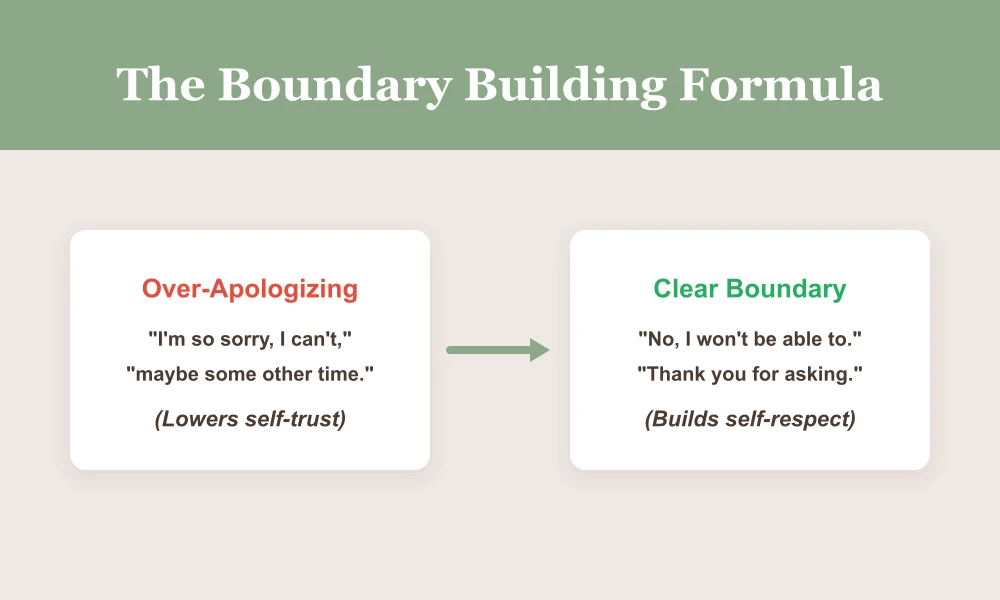
8. Set Firm Boundaries (The "No" Muscle)
Setting boundaries is a fast track to self-respect. When you say "yes" to things you don't want to do, you are unconsciously signaling to your brain that your own time and values are secondary to others' comfort.
How to apply it: Practice the pause. When asked for a favor, say, "Let me check my calendar and get back to you." This removes the pressure to immediately say yes, allowing you to set a firm boundary if needed.
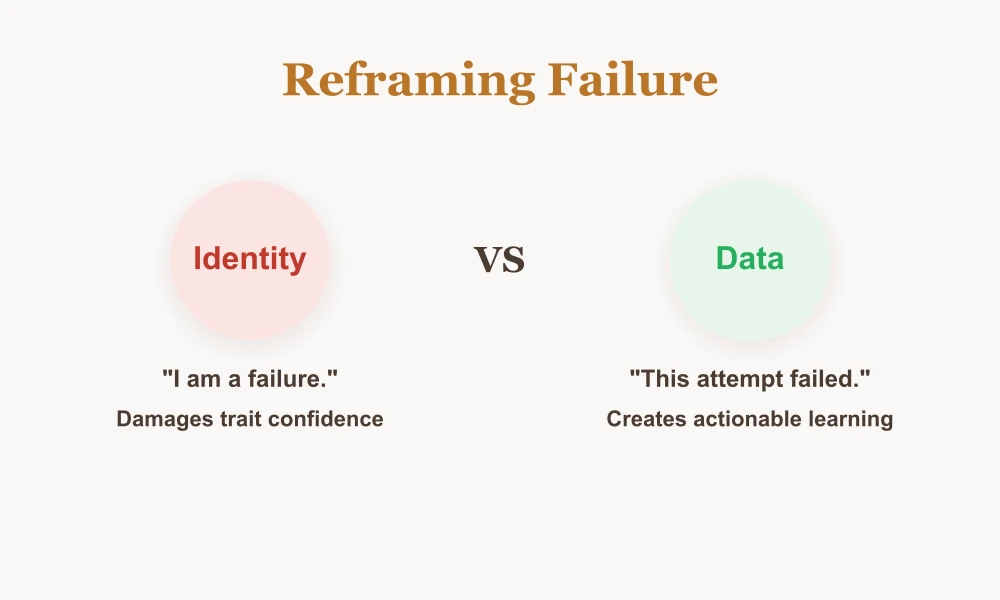
9. Reframe Failure (Fail Forward)
Confident people don't avoid failure; they change their relationship to it. Low self-esteem equates failure with identity ("I am a failure"). True self-confidence equates failure with data ("This attempt failed").
How to apply it: After a setback, write down three objective, emotionally neutral facts about what went wrong. This shifts your brain from emotional rumination into clinical data-gathering mode.
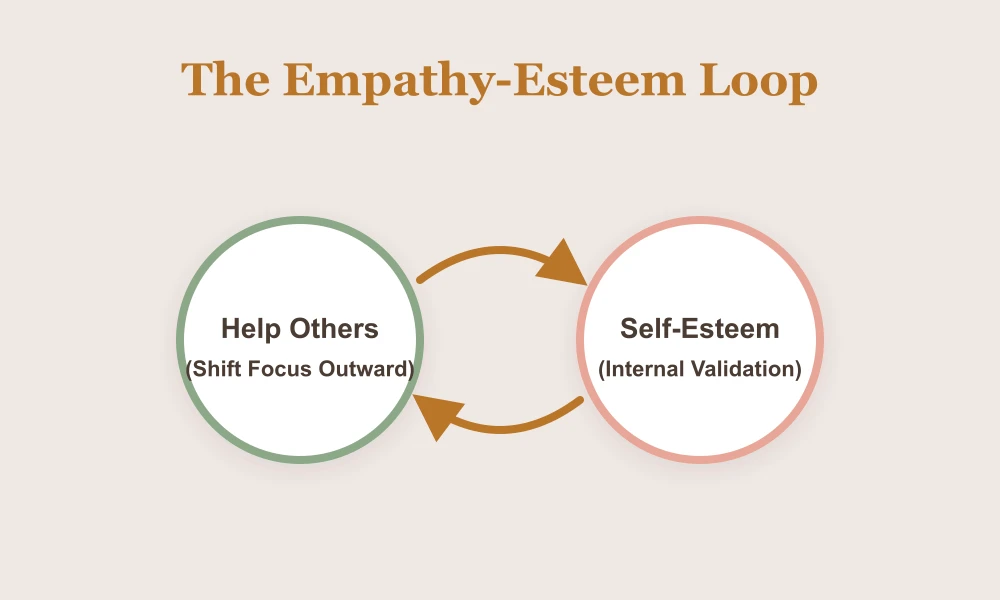
10. Shift Focus Outward
Helping others can build self-worth because it shifts your focus from self-monitoring to useful action. Volunteering or assisting a peer gives you real-world evidence that your presence and effort can matter.
How to apply it: The next time you are spiraling in self-doubt, find one small way to be useful to someone else. Shift the spotlight off yourself and onto an external problem you can solve.
This is also why confidence work pairs well with self-care that protects your baseline and overthinking tools that stop one bad moment from becoming an identity story.
When to Get Extra Support
Low confidence is common after rejection, burnout, bullying, major life changes, or repeated criticism. But if low self-worth keeps you isolated, stops you from going to school or work, or comes with persistent hopelessness, a therapist or trusted mental health professional can help you rebuild safely. If confidence drops because your nervous system feels overloaded, start with the reset tools in how to stop crying over everything.
Frequently Asked Questions
How fast can I improve my self-confidence?
Body language and small action steps can create a quick state shift, but deeper self-confidence usually takes weeks or months of repeated evidence. The goal is to build a track record your brain can trust.
Do positive affirmations actually work for confidence?
Positive affirmations can help some people, but they can also feel fake when your self-esteem is low. Neutral, values-based self-talk is often easier to believe because it does not require pretending you feel amazing.
Why do I feel confident some days and not others?
State confidence changes with sleep, stress, hormones, recent feedback, and the situation you are in. Trait confidence is the deeper baseline you build through repeated action, recovery, and self-trust.
Is faking it until you make it good advice?
Only up to a point. Acting confident can help you start, but it has to be paired with real skill-building and follow-through. Otherwise, the confidence stays fragile.