
We’ve all been there: lying in bed at 2 AM, analyzing a conversation from three years ago, or spiraling about a presentation that hasn't happened yet. Overthinking is exhausting, but it's not a character flaw—it’s a biological glitch.
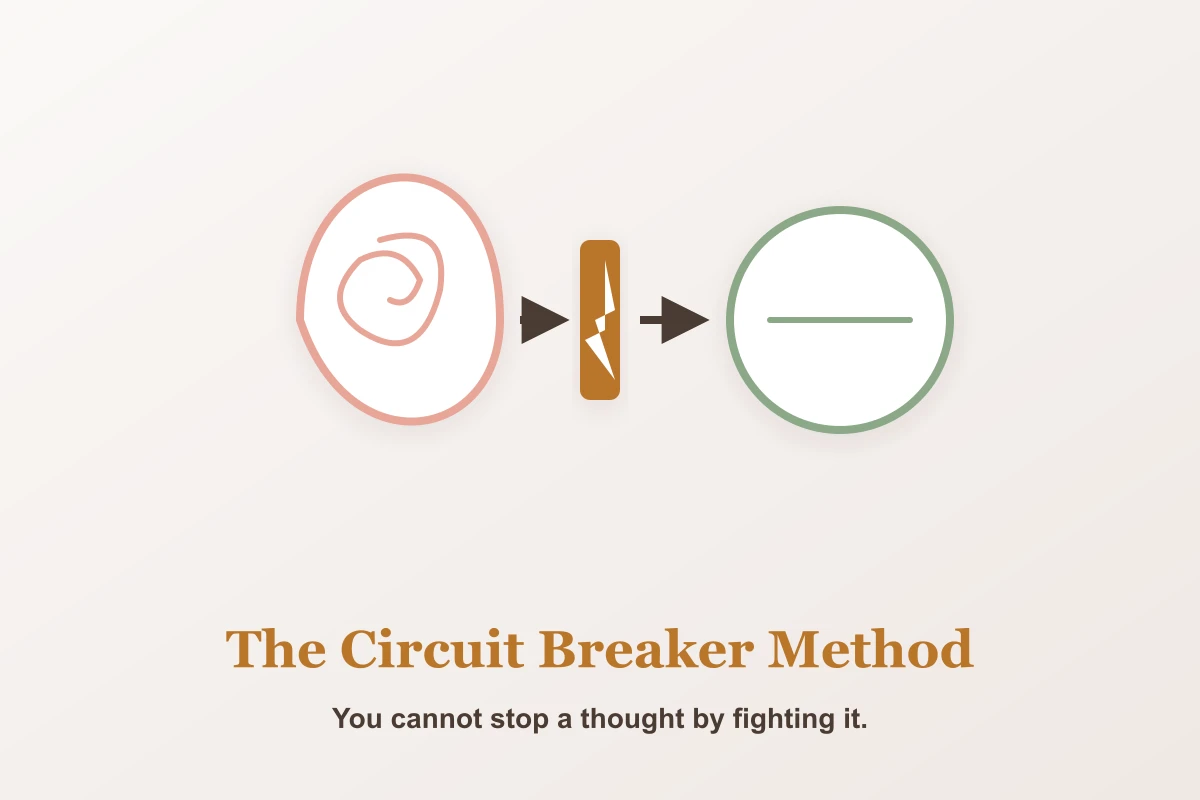
Your brain uses overthinking as a flawed coping mechanism. It believes that if it analyzes a situation from every possible angle, it can protect you from uncertainty. To stop overthinking, you have to realize that you cannot stop a thought by fighting it. You must physically and psychologically break the circuit.
The Golden Rule of Overthinking
Trying to force your mind to go blank only makes it louder. Instead of fighting the thoughts, you must deploy a "Circuit Breaker"—a specific cognitive or behavioral tool designed to interrupt the loop.
Why Your Brain Overthinks
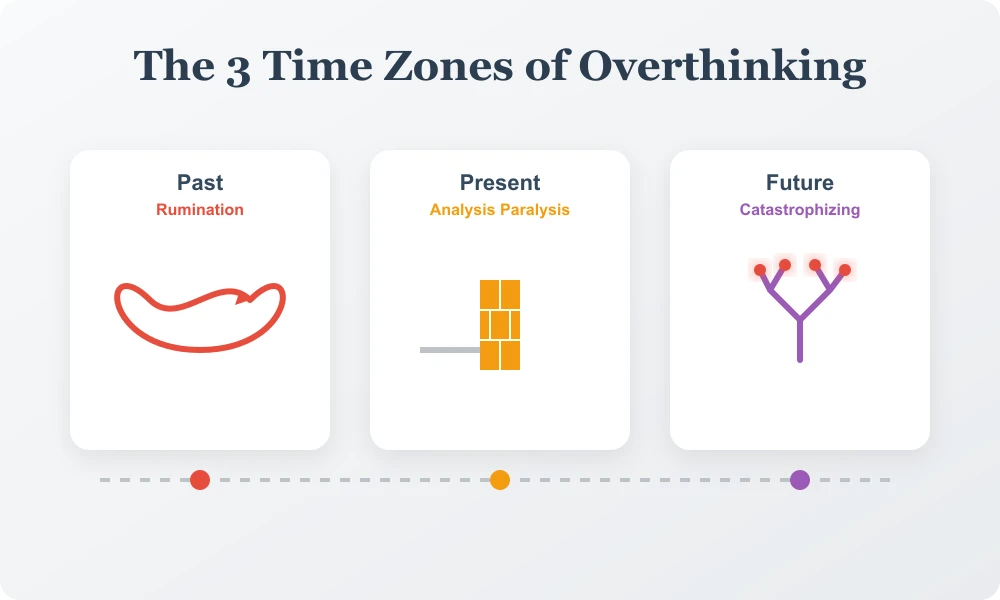
Overthinking generally falls into three temporal categories: obsessing over the past (Rumination), dreading the future (Catastrophizing), or freezing in the present (Analysis Paralysis). By identifying when your overthinking is located, you can deploy the exact circuit breaker needed to shut it down.
The American Psychiatric Association describes rumination as repetitive thinking about distress and notes that it can worsen anxiety or depression patterns. That is why the goal is not to argue with every thought, but to change your relationship to the loop.
| Where the loop is stuck | What it sounds like | Best circuit breaker |
|---|---|---|
| Past | "Why did I say that?" or "What if I ruined it?" | Cognitive defusion plus 5-4-3-2-1 grounding. |
| Future | "What if this becomes a disaster?" | Scheduled worry time and the 10-10-10 rule. |
| Present | "I cannot choose until I know the perfect answer." | Satisficing with a strict research budget. |
Circuit Breaker 1: Past-Tense Rumination
Rumination is when your brain gets stuck on a loop about something that has already happened. You replay a social rejection, a mistake at work, or an awkward encounter, desperately trying to "solve" a puzzle that cannot be changed.
The Circuit Breaker: Cognitive Defusion
1. Shift from 'Identity' to 'Data'
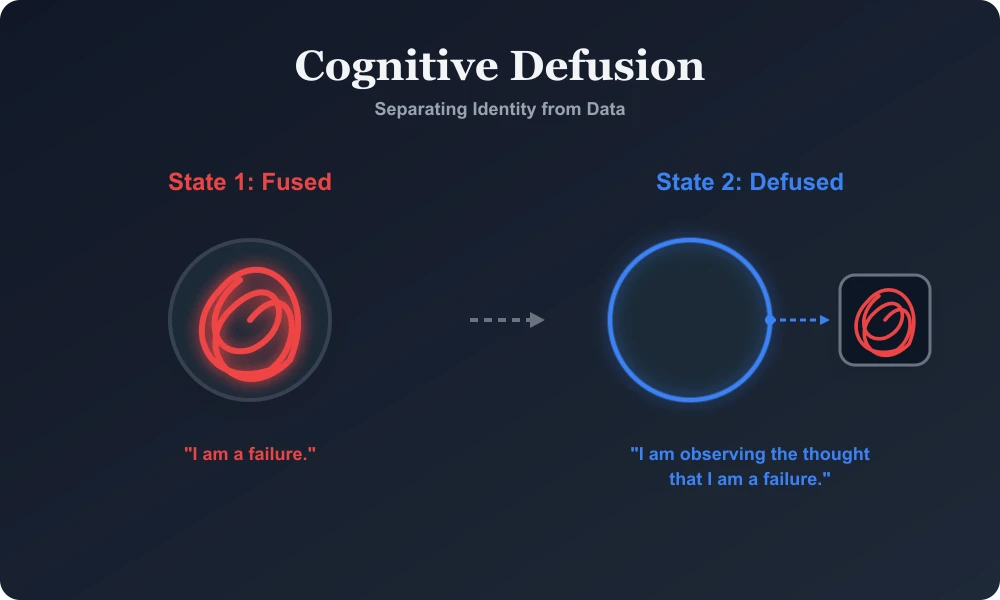
When ruminating, we often attach the past event to our identity (e.g., "I made a mistake, therefore I am stupid"). Cognitive defusion breaks this link. Instead of identifying with the thought, you label it as passing data.
2. Use the 'I Notice' Technique
The next time you catch yourself ruminating, literally say out loud: "I notice I am having the thought that I embarrassed myself." This creates psychological distance. You are no longer the thought; you are the observer of the thought.
3. The 5-4-3-2-1 Grounding Rule
If the cognitive shift isn't enough, force your brain into the present physical moment. Name 5 things you can see, 4 you can touch, 3 you can hear, 2 you can smell, and 1 you can taste. This redirects attention away from the mental replay and back toward sensory input.
If rumination turns into tears or emotional overwhelm, the three-pattern framework in how to stop crying over everything can help you identify what your nervous system is reacting to.
Circuit Breaker 2: Future-Tense Catastrophizing
Catastrophizing is when your brain attempts to predict the future by constantly jumping to the absolute worst-case scenario. "If I fail this test, I will lose my scholarship, I won't get a job, and my life will be ruined."
The Circuit Breaker: Containment (Scheduled Worry Time)
4. Schedule 'Worry Time'
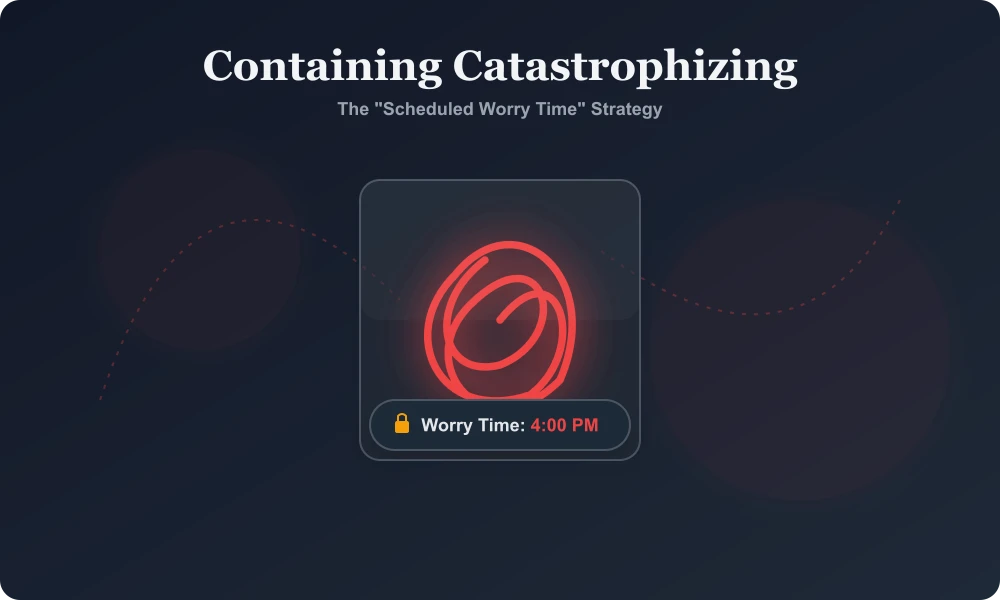
You cannot tell your brain to stop worrying completely; it will just rebel. Instead, give it a container. Schedule a strict 15-minute window (e.g., 4:00 PM to 4:15 PM) specifically for worrying.
5. Defer the Anxiety
When a catastrophic thought pops up at 9:00 AM, you don't fight it. You simply say, "I am allowed to worry about this, but I have to wait until 4:00 PM." By the time 4:00 PM rolls around, the emotional intensity of the thought has usually evaporated.
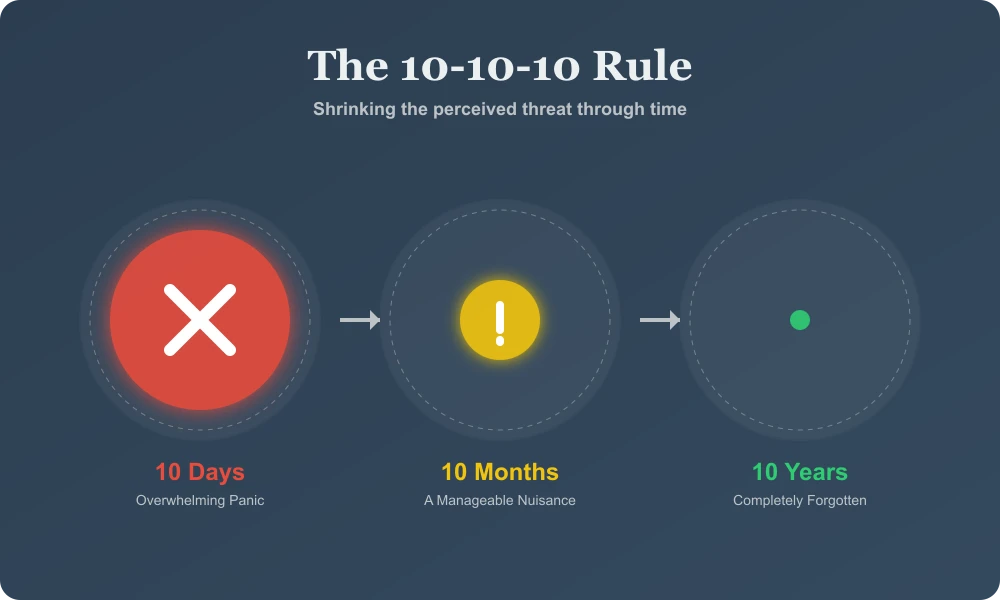
6. The 10-10-10 Rule
When catastrophizing, ask yourself: Will this matter in 10 days, 10 months, or 10 years? This adds distance between you and the fear, which can make the threat feel smaller and easier to evaluate.
Circuit Breaker 3: Present-Tense Paralysis
Analysis Paralysis occurs in the present moment when you are faced with a decision. You endlessly research, compare, and delay, terrified of making the "wrong" choice. This stems from a perfectionist mindset.
The Circuit Breaker: Satisficing
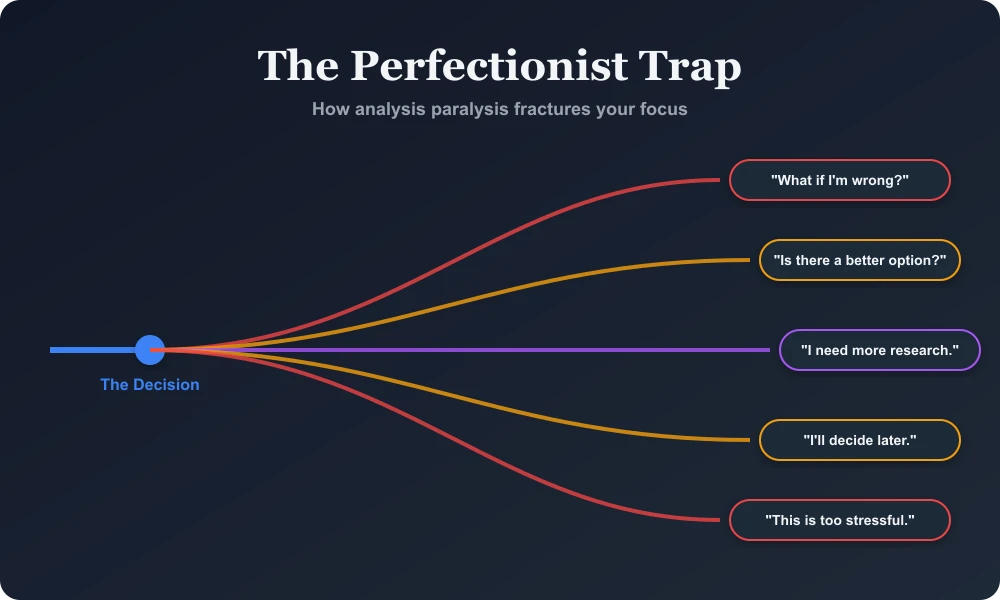
7. Embrace the 'Good Enough' Choice
"Satisficing" is a psychological principle where you establish your core criteria for a decision and choose the first option that meets them, rather than exhaustively searching for the absolute perfect option. Perfection is an illusion that breeds anxiety.
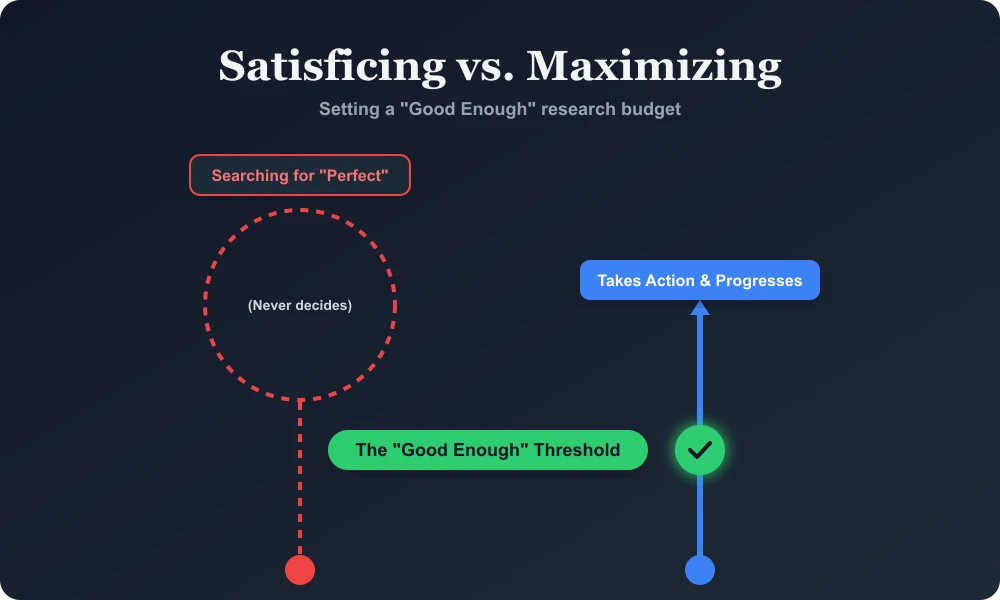
8. Set a Strict 'Research Budget'
If you are prone to over-researching (e.g., spending three hours reading reviews for a $20 coffee maker), set a time budget. Give yourself exactly 15 minutes to research. When the timer goes off, you must pick the best option you found in that window.
9. Recognize the Cost of Delay
Remind yourself that not making a decision is, in itself, a decision—and it often has a higher psychological cost than making a slightly imperfect choice. The relief of moving forward almost always outweighs the fear of being wrong.
When to Get Extra Support
Overthinking is common, especially during stress, uncertainty, and big transitions. NIMH lists excessive worry, restlessness, and sleep trouble among common anxiety symptoms in its guide to anxiety disorders. Get extra support if the thoughts feel uncontrollable, disrupt sleep for weeks, trigger panic, or make everyday decisions feel impossible.
For a gentler daily reset, pair these circuit breakers with the baseline practices in self-care ideas for women or the low-pressure activities in things to do when bored.
Frequently Asked Questions
Is overthinking a symptom of anxiety?
Yes, overthinking is often a core symptom of Generalized Anxiety Disorder (GAD). The brain uses overthinking as a flawed coping mechanism, attempting to 'solve' uncertainty by endlessly analyzing it. It provides an illusion of control, but actually increases physiological stress.
How do I stop overthinking at night?
To stop overthinking at night, implement a 'Brain Dump' 30 minutes before bed. Write down every single worry on a physical piece of paper. This externalizes the thoughts, signaling to your brain that the data is safely stored on the paper and no longer needs to be continuously looped in your working memory.
What is Cognitive Defusion?
Cognitive Defusion is a psychological technique from Acceptance and Commitment Therapy (ACT) where you distance yourself from your thoughts. Instead of believing 'I am going to fail,' you reframe it as 'I am noticing the thought that I might fail.' It turns you into a neutral observer rather than an active participant in the anxiety.